





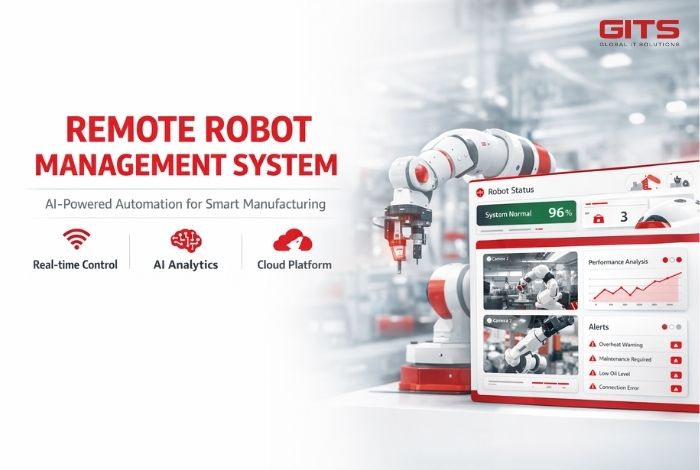
As manufacturing in Japan accelerates toward automation and labor optimization, the demand for a Remote Robot Management System has become increasingly urgent. A leading robotics manufacturer partnered with GITS to develop a scalable platform that enables real-time monitoring, remote control, and intelligent automation.
Beyond operational efficiency, the company sought to reduce human involvement in hazardous environments while maintaining precision and safety. This case study illustrates how GITS translated that vision into a practical, enterprise-ready solution.
Customer Background
The client is a robotics manufacturing company in Japan operating in the industrial automation sector, where precision, reliability, and scalability are essential. As the market shifts toward smart manufacturing, the company recognized the need to evolve beyond standalone robotic systems into a connected, data-driven ecosystem.
Internally, the organization faced increasing pressure from labor shortages and rising operational costs. Their strategic direction focused on building a centralized robot monitoring system that could unify operations across multiple facilities. At the same time, they aimed to enable remote control capabilities for robots deployed in hazardous or complex environments, ensuring both safety and efficiency. This initiative became a core part of their broader AX strategy, positioning automation as a driver of long-term competitiveness.
Technical Challenges
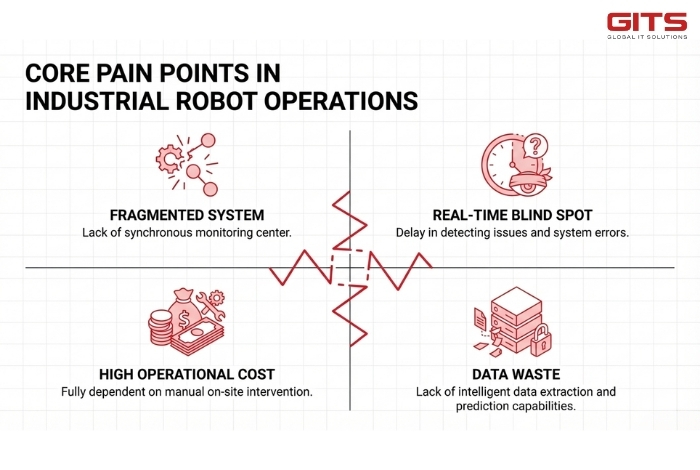
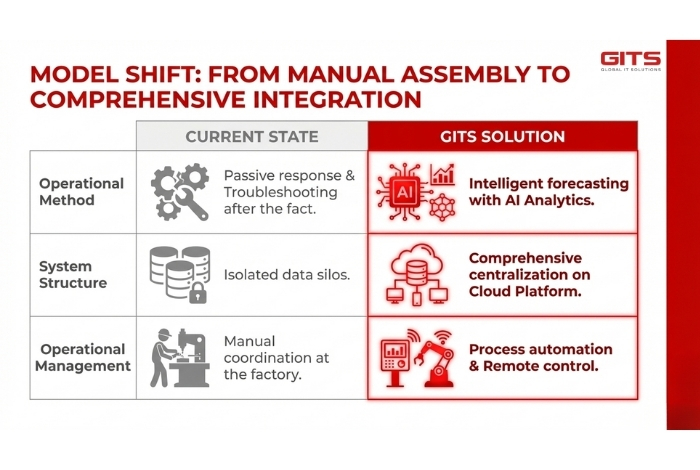
Despite strong hardware capabilities, the client’s existing system architecture revealed several structural limitations. Each robot functioned as an isolated unit, leading to fragmented monitoring and a lack of centralized visibility. This made it difficult for operators to detect issues in real time or respond proactively to anomalies.
Another critical challenge was the absence of a real-time data pipeline. Sensor data was generated continuously but could not be leveraged effectively due to the lack of streaming and analytics capabilities. As a result, decision-making remained reactive rather than predictive.
Operational inefficiencies were further amplified by the need for on-site intervention. Routine configuration and troubleshooting required physical presence, increasing downtime and labor costs. Additionally, integrating new capabilities with legacy systems such as ERP and MES proved complex, creating barriers to building a unified industrial IoT platform.
Solution Implementation
GITS approached the problem by designing a cloud-native Remote Robot Management System solution that integrates IoT, AI, and enterprise systems into a cohesive architecture. The focus was not only on technical deployment but also on aligning the solution with the client’s operational workflows and long-term transformation goals.
System Architecture
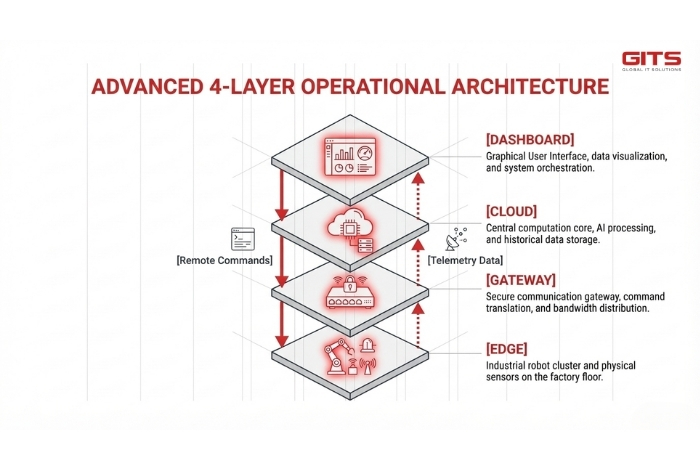
The architecture was structured in multiple layers to ensure scalability and flexibility. At the edge, robots equipped with sensors and controllers continuously collect operational data. This data is transmitted through a gateway layer that standardizes communication protocols and ensures secure connectivity.
In the cloud layer, powered by AWS, data is processed, stored, and analyzed in real time. This layer acts as the central intelligence hub, enabling both monitoring and advanced analytics. On top of this, an application layer provides intuitive web and mobile interfaces, allowing operators and managers to interact with the system seamlessly.
This layered architecture not only supports real-time operations but also enables future expansion as the number of connected devices grows.
Remote Robot Management System Features
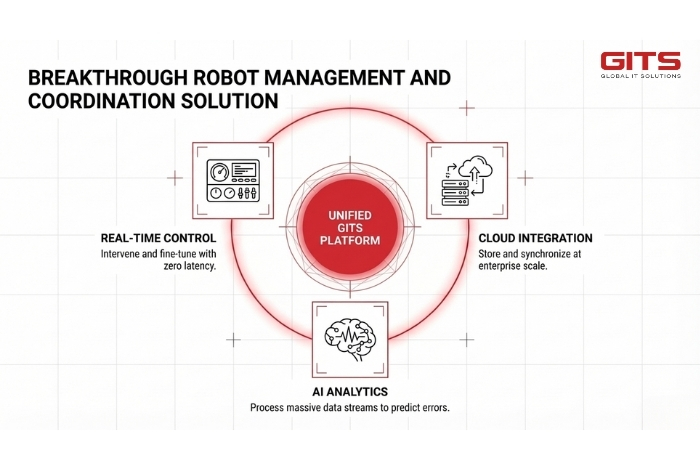
The system delivers a comprehensive set of capabilities designed to address both operational and strategic needs. It enables simultaneous monitoring and control of multiple robots, providing a unified view of system performance across locations. Operators can access real-time data streams, visualize robot status, and execute commands remotely without the need for physical intervention.
The platform also incorporates intelligent alert mechanisms. By continuously analyzing sensor data, it can detect abnormal conditions and notify stakeholders through multiple channels. This significantly reduces response time and prevents minor issues from escalating into critical failures.
AI-driven analytics play a central role in the system. By leveraging machine learning models, the platform identifies patterns in operational data and supports predictive maintenance strategies. This allows the client to move from reactive maintenance to a more proactive, cost-efficient approach.
In addition, the system integrates advanced sensing capabilities such as obstacle detection and laser-based measurement, enhancing both safety and precision in manufacturing processes. All of these features are consolidated into a unified dashboard, providing a clear and actionable overview of operations.
Technologies Used
To ensure enterprise-grade performance, GITS selected a technology stack that balances reliability, scalability, and flexibility. The system is built on AWS cloud infrastructure, enabling high availability and seamless data processing. Core development is implemented using C, C++, Python, and Java, ensuring compatibility with both low-level hardware integration and high-level application logic.
The solution runs on a Linux-based environment and integrates with hardware platforms such as Arduino Mega and Jetson TX for real-time processing. Combined with IoT frameworks and AI models, this stack forms a robust foundation for building a scalable industrial IoT platform tailored to the client’s needs.
Deployment Approach
The implementation followed a structured, phased approach to minimize risk and ensure alignment with business objectives. The project began with a detailed discovery phase, during which GITS analyzed the client’s existing systems and defined the overall architecture.
A pilot phase was then conducted to validate the system in a controlled environment. This allowed both teams to refine features and ensure stability before scaling. Once validated, the solution was deployed across multiple facilities, with continuous monitoring to ensure performance and reliability.
Finally, GITS provided training and ongoing optimization, enabling the client’s internal teams to fully leverage the system and continuously improve operations based on real-time insights.
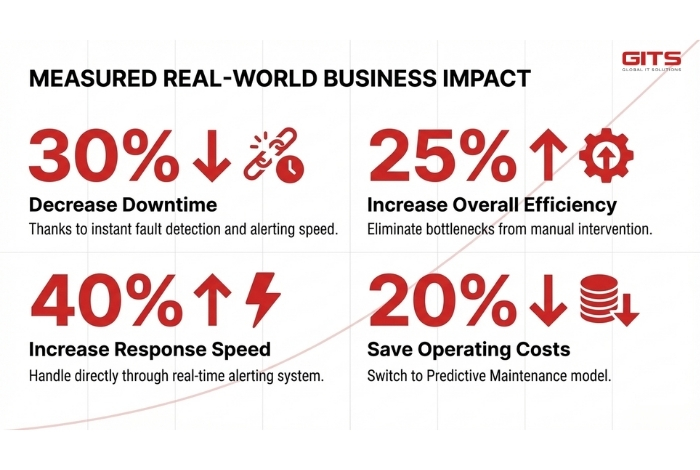
Measurable Results
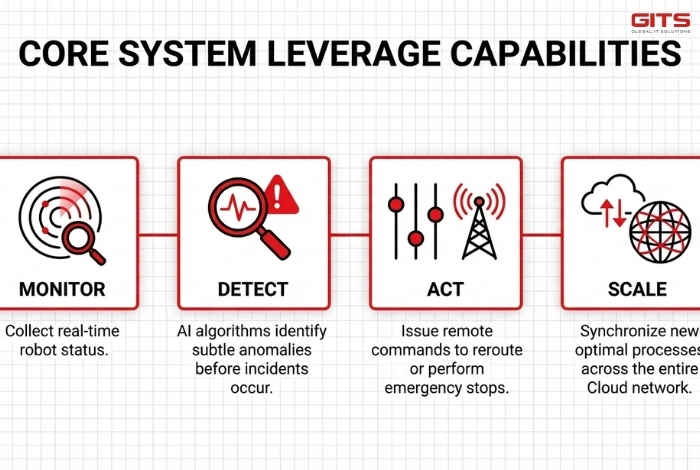
The deployment of the Remote Robot Management System resulted in tangible improvements across multiple dimensions of the client’s operations. Operational downtime was significantly reduced as real-time monitoring enabled faster detection and resolution of issues. Workforce efficiency improved as remote control capabilities minimized the need for on-site intervention.
The introduction of automated alerts and centralized dashboards accelerated incident response, allowing teams to act quickly and decisively. Maintenance costs were optimized through predictive analytics, which reduced unnecessary servicing while preventing unexpected failures.
Beyond these measurable outcomes, the system fundamentally changed how the organization approached operations. It enabled a transition toward data-driven decision-making and laid the foundation for broader AI and AX initiatives.
Project Scope and Timeline
The project was executed by a cross-functional team of engineers specializing in IoT, cloud computing, and AI. The scope included integration with existing robot control systems, sensor networks, and enterprise platforms such as ERP and MES.
The timeline was carefully structured to balance speed and quality. The initial design phase established a clear blueprint for the system, followed by a development and integration phase that translated requirements into a working solution. After pilot testing and validation, the system was rolled out across multiple sites within approximately six months.
This structured approach ensured that the solution was not only technically sound but also aligned with the client’s operational realities.
>>> See more: Smart Factory Transformation with IoT Production Monitoring
Delivering Scalable Automation Value with GITS
This case study reflects how GITS approaches enterprise challenges with a combination of technical expertise and strategic insight. By delivering a scalable Remote Robot Management System, GITS enabled the client to move beyond fragmented operations toward a unified, intelligent ecosystem.
The integration of AI, IoT, and cloud technologies created a foundation for long-term growth, supporting both immediate efficiency gains and future innovation. For enterprises in Japan and Korea navigating similar challenges, this approach demonstrates how technology can be applied pragmatically to drive measurable business outcomes.
GITS continues to partner with organizations seeking to accelerate their digital transformation journey through AI Agents, industrial IoT platforms, and cloud-based solutions delivered through high-quality Vietnam IT Outsourcing.
Explore how GITS delivers scalable enterprise solutions tailored to your business needs.