







Modern manufacturing and logistics operations increasingly rely on connected devices to collect operational data. Sensors, machines, robots, and environmental monitoring systems continuously generate telemetry that supports production monitoring, predictive maintenance, and operational optimization.
However, many organizations quickly realize that collecting data is not the primary challenge. The real challenge lies in ensuring that data flows reliably across industrial networks, edge systems, and enterprise platforms.
Industrial IoT Connectivity plays a critical role in maintaining stable data pipelines. When connectivity architecture is not designed for real industrial conditions, data loss, delayed telemetry, and synchronization errors can disrupt operational visibility. Understanding the common failure modes that affect Industrial IoT connectivity helps organizations build resilient systems that support long-term digital transformation.
Why Industrial IoT Connectivity Becomes a Reliability Challenge
In theory, IoT devices simply transmit data to central systems where it can be processed and analyzed. In reality, industrial environments present far more complex conditions.
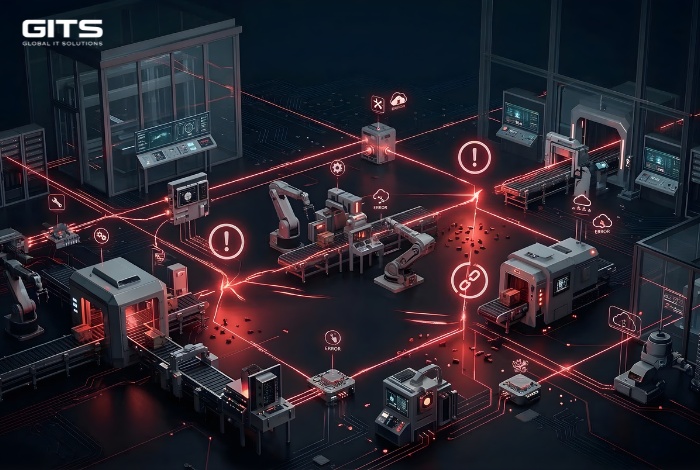
Manufacturing facilities often contain a mixture of legacy machines, modern industrial equipment, wireless networks, and edge computing infrastructure. These systems operate across different protocols and network conditions, which introduces multiple potential points of failure.
Industrial data pipelines must operate continuously across thousands of devices. Even small interruptions in connectivity can cause missing data, inconsistent telemetry, or delayed alerts. Over time, these issues reduce confidence in digital systems and limit the effectiveness of analytics or automation initiatives.
For organizations implementing smart factory, Industry 4.0, or digital manufacturing strategies, reliable Industrial IoT Connectivity becomes a foundational requirement rather than a simple networking task.
Designing Reliable Industrial IoT Connectivity in Real Operations
To address these challenges, modern Industrial IoT systems typically adopt a device–gateway–cloud architecture. This architecture separates data collection, connectivity management, and centralized processing into multiple layers.
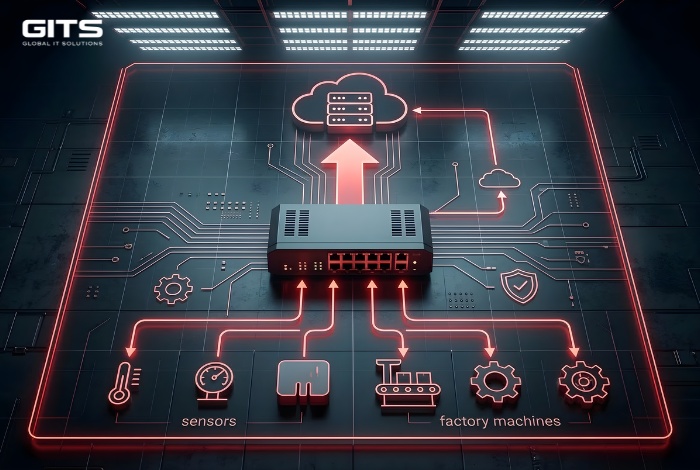
Industrial devices generate operational data, while edge gateways collect and manage data flows locally. The gateway layer helps maintain reliability by buffering data, handling protocol translation, and ensuring that connectivity interruptions do not immediately disrupt enterprise systems.
Centralized platforms—either cloud or on-premise—then process the aggregated data and integrate it into operational systems such as Manufacturing Execution Systems (MES), Enterprise Resource Planning (ERP), analytics platforms, or digital twin environments.
This layered approach improves the resilience and scalability of Industrial IoT Connectivity.
Core Components of an Industrial IoT Connectivity Architecture
A reliable Industrial IoT architecture typically includes several essential components.
Industrial Devices
Sensors, production machines, robotic systems, and environmental monitoring devices generate telemetry data across the factory floor or logistics network.
Edge Gateways
Gateways serve as intermediaries between devices and enterprise systems. They aggregate device data, normalize communication protocols, and provide local buffering when network conditions fluctuate.
Many industrial gateways implement store-and-forward mechanisms, which temporarily store data if connectivity is interrupted and automatically transmit it once the connection is restored.
Messaging and Connectivity Protocols
Protocols such as MQTT, OPC UA, and AMQP support reliable messaging across distributed IoT environments. These protocols enable secure, structured, and scalable communication between devices and platforms.
Enterprise Platforms
IoT data is ultimately consumed by enterprise platforms such as MES, ERP systems, analytics platforms, or AI-driven optimization systems. These platforms rely on accurate and continuous data streams to support operational decisions.
How Data Moves from Devices to Enterprise Systems
In a typical Industrial IoT Connectivity architecture, operational data flows through several stages.
First, industrial devices generate telemetry data such as temperature, vibration levels, machine status, or production metrics.
Second, edge gateways collect data from multiple devices and normalize communication protocols. This step ensures consistent data formatting across heterogeneous equipment.
Third, the gateway layer manages data reliability through buffering, validation, and secure transmission.
Finally, data is transmitted to enterprise platforms where it supports monitoring dashboards, analytics engines, and automation systems.
This structured data flow ensures that operational telemetry remains consistent across complex industrial environments.
Maintaining Stable Data Pipelines in Industrial Environments
Reliable Industrial IoT Connectivity depends on several mechanisms designed specifically for unstable or high-volume network conditions.
Common techniques include:
– Store-and-forward buffering to preserve data during temporary network interruptions
– Retry logic that automatically retransmits failed messages
– Quality of Service (QoS) settings that guarantee message delivery levels
– Connectivity monitoring that tracks network performance metrics such as latency, packet loss, and reconnect rates
Together, these mechanisms help maintain stable IoT data pipelines even in demanding industrial environments.
Five Industrial IoT Connectivity Failures That Break Data Reliability
Despite careful system design, several common failure modes continue to affect Industrial IoT deployments.
Packet Loss During Network Instability
Industrial environments often experience wireless interference or network congestion. Without reliable messaging protocols or buffering mechanisms, data packets may be permanently lost.
Fix: Implement gateway buffering and reliable messaging protocols such as MQTT with QoS.
Offline Devices Without Local Data Storage
Many IoT devices cannot store telemetry data locally when connectivity is interrupted. As a result, historical data may be lost before the connection is restored.
Fix: Use edge gateways that support temporary data storage and synchronization.
Protocol Mismatch Across Systems
Industrial environments frequently combine multiple communication standards. When protocols are incompatible, data translation errors may occur.
Fix: Implement protocol translation layers within gateway infrastructure.
Lack of Connectivity Monitoring
Many organizations monitor device health but overlook network-level connectivity metrics. This creates blind spots when data pipelines fail.
Fix: Monitor metrics such as data completeness, latency, and reconnect rates.
Security Interruptions Affecting Data Transmission
Firewalls, authentication systems, or network security policies can sometimes interrupt IoT communication flows.
Fix: Design secure network architectures that allow controlled but reliable device communication.
Operational Value of Reliable Industrial IoT Connectivity
When Industrial IoT Connectivity is designed with reliability and resilience in mind, organizations gain measurable operational benefits.
Key outcomes include:
– Improved operational visibility across production lines and logistics systems
– Better decision making supported by reliable and consistent data
– Reduced operational risk caused by missing or delayed telemetry
– Increased operational efficiency through automated monitoring and analytics
– Scalable system integration across MES, ERP, cloud platforms, and AI systems
Reliable data pipelines allow IoT initiatives to move beyond experimental projects and become part of mission-critical infrastructure.
>>> See More: AI-Powered IoT Systems: From Connected Device To Intelligent
Why Reliable Connectivity Is Becoming a Strategic Priority
As digital transformation initiatives scale across manufacturing and logistics organizations, the importance of reliable Industrial IoT Connectivity continues to grow.
Smart factories, predictive maintenance platforms, automated warehouses, and supply chain monitoring systems all depend on stable, continuous data flows.
Without reliable connectivity, even the most advanced analytics or automation solutions cannot deliver consistent value.
Enterprise technology leaders therefore prioritize connectivity architectures that emphasize resilience, monitoring, and integration. By investing in reliable IoT data pipelines, organizations create a stable foundation for long-term digital transformation.
Building Reliable Industrial IoT Connectivity for the Long Term
Industrial IoT technologies are transforming how organizations monitor and optimize operations. However, the effectiveness of these initiatives depends heavily on the reliability of data flows across industrial systems.
By understanding the common failure modes that disrupt Industrial IoT Connectivity—such as packet loss, offline devices, protocol mismatches, monitoring gaps, and security interruptions—organizations can design more resilient architectures.
With the right connectivity strategy, IoT systems can deliver stable, trustworthy data pipelines that support real-time monitoring, advanced analytics, and operational automation.
At GITS – Global IT Solutions, we focus on delivering practical Industrial IoT architectures designed for real manufacturing environments.