





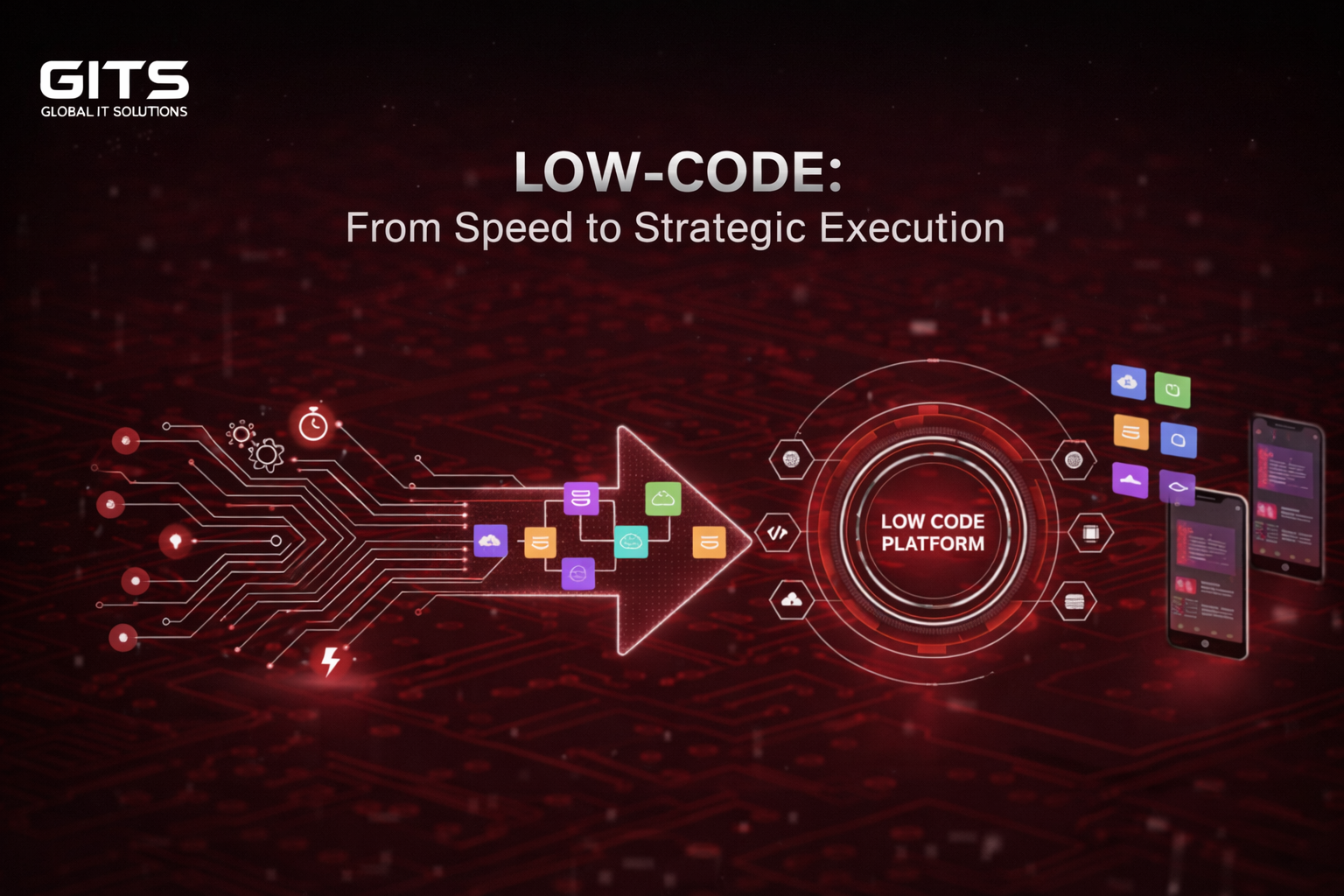
Low-code is entering a new phase of maturity. What was once viewed primarily as a way to accelerate the delivery of simple applications is now becoming a foundational element of enterprise application strategy between 2024 and 2026.
As organizations face increasing pressure from digital transformation initiatives, legacy system modernization, and ongoing IT talent shortages, traditional development approaches alone are no longer sufficient. In this context, visual development platforms has emerged as a practical option that balances speed, control, and long-term scalability.
Key Benefits of Low-Code in Application Development
Low-code platforms enable faster application delivery through visual development environments, reusable components, and pre-built templates. Development teams can reduce their reliance on manual coding and instead focus on business logic and user experience.
Beyond development speed, these platforms contributes to cost optimization by reducing the effort required for coding, testing, and maintenance. This makes it particularly suitable for projects that require rapid rollout or phased expansion.
Modern low-code platforms such as Microsoft Power Apps, Salesforce Lightning, Mendix, and OutSystems support both cloud and on-premises environments, allowing enterprises to integrate new applications without disrupting existing architectures.
Low-Code Trends for 2026
AI and generative AI are becoming deeply embedded in low-code platforms, supporting automated code generation, workflow recommendations, testing, and performance optimization. This reduces development complexity and lowers the barrier to building more sophisticated applications.
At the same time, this approach is enabling greater participation from non-IT users. Business teams are increasingly involved in building internal tools and workflows, while IT teams focus on governance and integration. Mobile and cross-platform development continues to grow in importance, with low-code enabling faster delivery across web and mobile environments from a single platform.
Security, compliance, and governance are also gaining prominence as low-code adoption expands into regulated industries. Platforms are responding with stronger access control, data encryption, and compliance management features.
Rather than replacing legacy systems entirely, many organizations are using low-code to modernize incrementally, reducing operational risk while improving usability and performance.
By 2026, low-code is no longer a temporary solution but a core pillar of enterprise application strategy.
Popular Low-Code Platforms
Microsoft Power Apps is well suited for organizations already invested in the Microsoft ecosystem, with strong integration across Microsoft 365, Dynamics, and Azure.
OutSystems stands out for enterprise-scale projects that require extensibility and integration with legacy systems.
Mendix is widely adopted in enterprise environments, offering strong support for DevOps and CI/CD practices.
Other platforms such as Salesforce Lightning, Appian, and Creatio address specific needs around CRM, BPM, and process automation.
How GITS Supports Low-Code Execution
In real-world projects, the main challenge of low-code is not the platform itself, but how resources and delivery are organized.
GITS provides experienced low-code engineers with hands-on expertise in platforms such as Mendix and OutSystems. Our teams support both new application development and legacy modernization initiatives.
In addition to remote delivery, GITS offers onsite engagement models, enabling close collaboration with internal teams—particularly valuable for complex projects that require strong alignment between business and technical stakeholders.
By applying proven delivery frameworks and execution experience, GITS helps organizations reduce project risk, shorten deployment timelines, and adjust resources as project needs evolve.