





Outsourcing vs In-House Development: How to Choose the Right IT Model for Your Business
–
–
Outsourcing vs in-house development is a common challenge for companies planning long-term IT strategy, especially in the context of digital transformation. As technology becomes deeply embedded in business operations, leaders often face a critical question: should IT systems be built internally, or developed with external partners?
–
Based on practical project experience across multiple industries, there is no universal answer. Each approach brings clear advantages and trade-offs. The right choice depends on business stage, internal capabilities, and future growth plans.
–
Outsourcing vs In-House Development: Control, Cost, and Scalability
–
In-house development: Control and deep business understanding
–
In-house development allows companies to maintain strong control over their systems and processes. Internal teams gain deep knowledge of the business, communicate efficiently with stakeholders, and can respond quickly to changes in direction or requirements.–
This approach is well suited for organizations that have stable and experienced IT talent, can secure long-term IT budgets, and operate core systems closely tied to internal operations.
–
However, in-house development also requires continuous investment. Recruiting, training, and retaining engineers can be costly, and scaling teams quickly or adopting new technologies is often difficult in a competitive IT labor market.
Outsourcing: Flexibility and cost efficiency
–
Outsourcing provides a realistic solution to talent shortages and rising development costs. Companies can quickly access specialized skills, adjust team size as needed, and control expenses more effectively.
–
Key advantages of outsourcing include faster access to experienced engineers, cost optimization through flexible engagement models, and scalability aligned with business needs.
–
That said, outsourcing success depends heavily on partner selection. A reliable outsourcing partner must understand business goals, communicate clearly, and deliver consistent quality over time.
–
The practical choice: a hybrid model
–
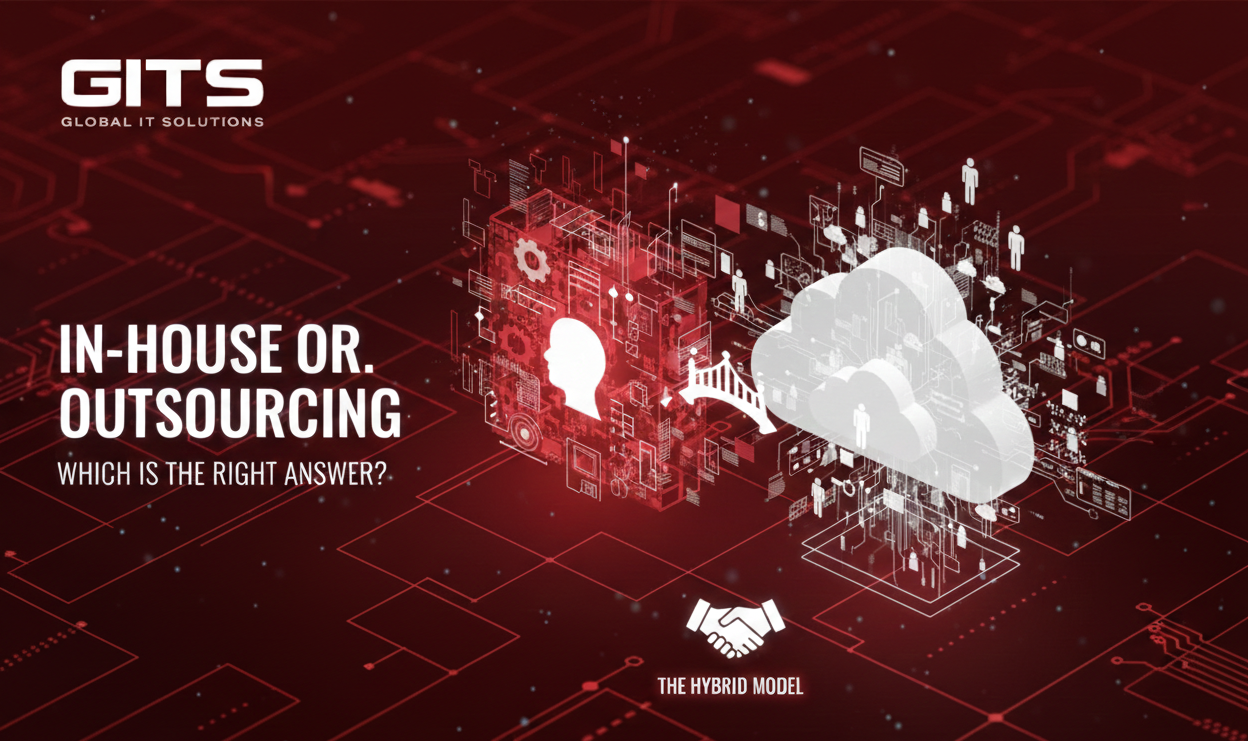
In practice, many successful companies choose a hybrid approach that combines the strengths of both models. Core planning, system design, and strategic decisions remain in-house, while development and implementation are handled by trusted outsourcing partners.
–
This structure helps reduce risk, improve delivery speed, and allow IT systems to evolve without placing excessive pressure on internal teams.
–
Conclusion
–
When evaluating outsourcing vs in-house development, companies should focus on cost, internal resources, scalability, and long-term objectives. The real question is not which model is better in general, but which one fits the business today.
–
Choosing the right IT development model at the right time can significantly impact how effectively a company grows, adapts, and stays competitive in a rapidly changing digital environment.