





As global supply chains become increasingly complex, logistics, manufacturing, and e-commerce businesses are under growing pressure to improve operational efficiency, reduce logistics costs, and gain real-time visibility across their operations. Traditional logistics models built on disconnected systems and manual workflows are no longer sufficient to support modern business growth.
This is why Digital Transformation in Logistics has become a critical strategy for enterprises aiming to build agile, intelligent, and data-driven supply chains.
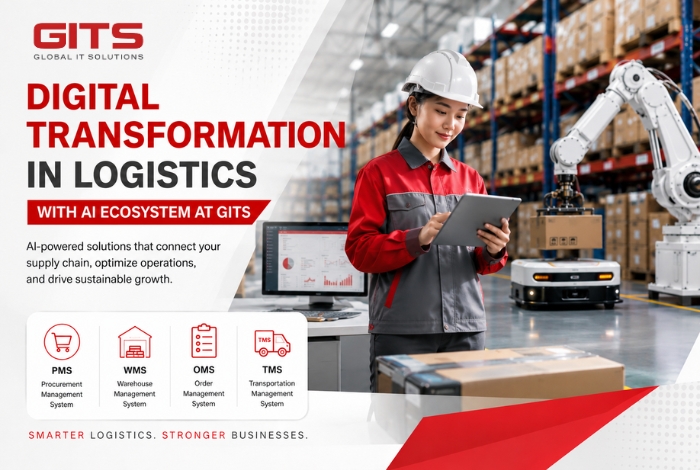
At GITS, we develop an integrated AI-powered logistics ecosystem that helps businesses digitize the entire operational flow — from procurement and warehouse management to order processing and transportation. By connecting PMS, WMS, OMS, and TMS into one unified platform, businesses can automate workflows, eliminate repetitive manual tasks, and optimize end-to-end supply chain operations.
What Is Digital Transformation in Logistics?
Digital Transformation in Logistics refers to the adoption of digital technologies, artificial intelligence, and automation to optimize logistics and supply chain operations. This includes warehouse management, transportation, procurement, order fulfillment, and real-time operational analytics.
Instead of relying on spreadsheets or disconnected software systems, businesses can build an integrated logistics ecosystem where data flows seamlessly across departments. This enables companies to improve operational visibility, reduce human errors, and make faster, data-driven decisions.
Today, AI-powered logistics platforms are helping businesses:
– Optimize inventory management
– Automate order processing
– Predict transportation demand
– Improve delivery route optimization
– Reduce logistics costs
– Enhance customer experience
Challenges in Traditional Logistics Operations
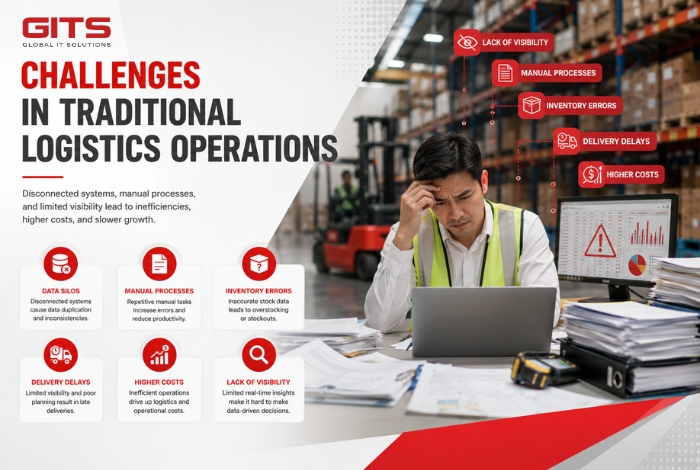
Many businesses still operate logistics systems with fragmented data across warehouse, transportation, and sales departments. This often results in inventory inaccuracies, delayed order processing, and limited real-time operational visibility.
In manufacturing and omnichannel retail businesses, employees frequently need to re-enter the same information across multiple systems. This creates several operational challenges, including:
– Inventory discrepancies
– Higher operating costs
– Delayed fulfillment processes
– Poor shipment visibility
– Difficulties in scaling logistics operations
Manufacturers also struggle with procurement tracking, transportation reconciliation, and warehouse coordination across multiple departments.
According to current supply chain transformation trends, disconnected logistics systems are one of the biggest causes of operational inefficiency in modern enterprises.
How AI Is Transforming the Logistics Industry
Artificial intelligence and automation are reshaping the logistics industry by enabling smarter, faster, and more efficient operations.
In warehouse management, AI helps businesses forecast inventory demand, detect slow-moving stock, and recommend optimal storage locations to improve picking efficiency. This significantly reduces inventory errors and accelerates order fulfillment processes.
In transportation management, AI-powered route optimization helps companies reduce fuel costs, improve delivery accuracy, and increase on-time delivery rates. Modern transportation systems can also analyze carrier performance, predict delivery times, and identify potential shipping disruptions before they occur.
At the supply chain level, predictive analytics enables businesses to move from reactive operations to intelligent, data-driven logistics management.
GITS AI-Powered Logistics Ecosystem
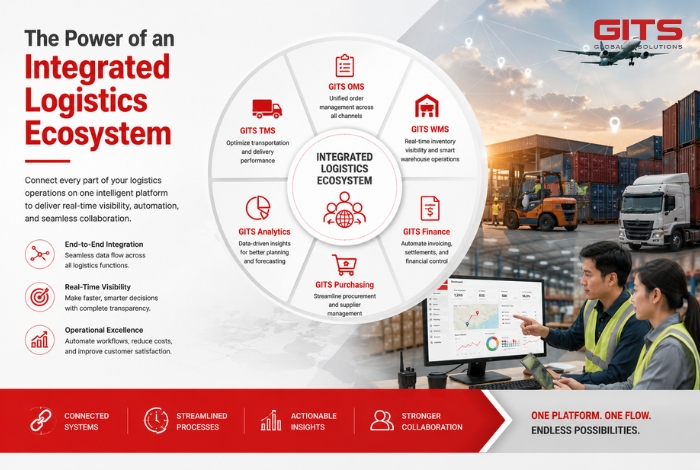
Unlike standalone logistics software solutions, the GITS ecosystem is designed as a fully integrated logistics platform. OMS, PMS, WMS, and TMS are connected through a unified data flow that enables businesses to manage their entire supply chain from a single system.
OMS — Order Management System
In the era of omnichannel commerce, OMS plays a critical role in connecting sales operations with logistics fulfillment.
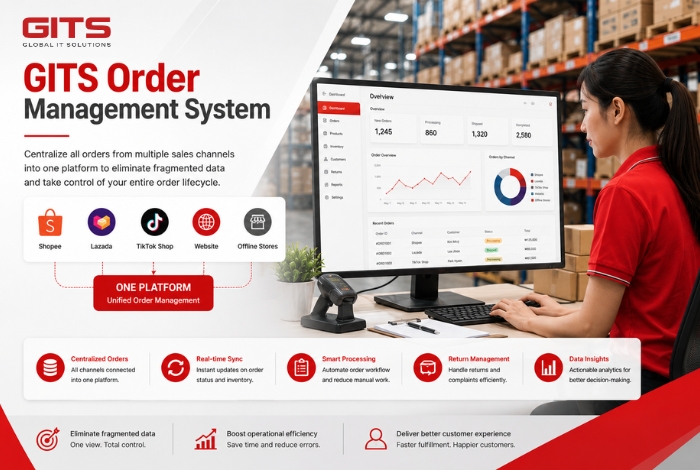
The GITS OMS enables businesses to centralize orders from Shopee, Lazada, TikTok Shop, websites, and offline stores into a single management platform. This eliminates fragmented order data across multiple sales channels.
The system automatically checks inventory availability, updates order status in real time, and synchronizes transportation data across the fulfillment process. OMS also supports return management, complaint handling, and revenue reconciliation with e-commerce platforms.
For retail and e-commerce businesses, omnichannel order management significantly improves operational efficiency while enhancing customer experience through faster and more accurate order fulfillment.
PMS — Purchasing Management System
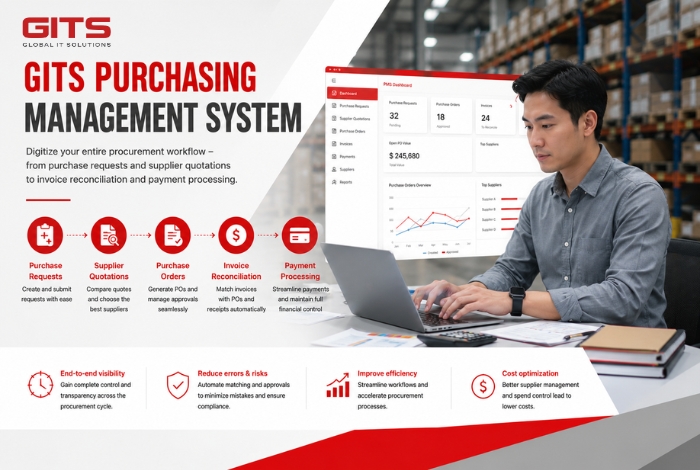
The GITS Purchasing Management System helps businesses digitize the entire procurement workflow, from purchase requests and supplier quotations to invoice reconciliation and payment processing.
The platform allows companies to manage supplier performance, track pricing history, and control procurement budgets across departments. Automated approval workflows improve transparency while reducing financial risks during purchasing operations.
One of the key advantages of PMS is automated three-way matching between purchase orders, received goods, and supplier invoices. This minimizes billing discrepancies and helps businesses avoid unnecessary financial losses.
WMS — Warehouse Management System
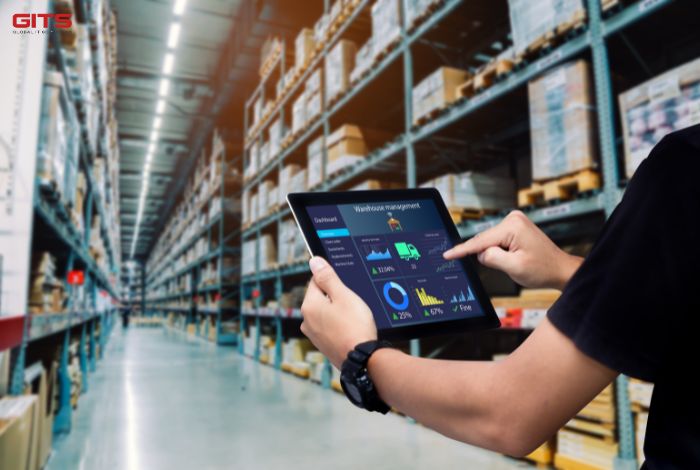
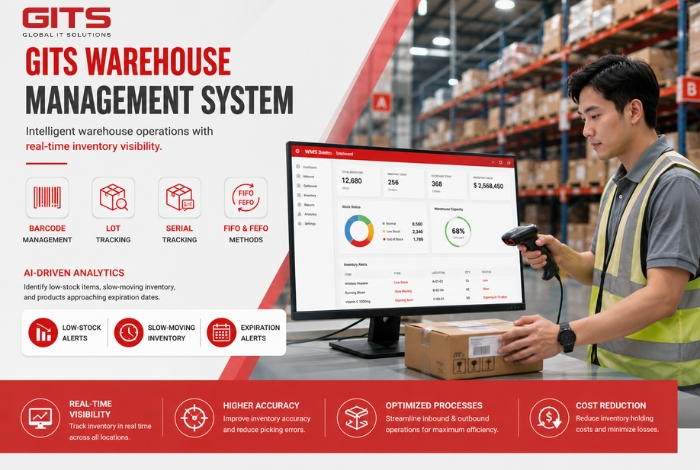
The GITS Warehouse Management System enables businesses to build intelligent warehouse operations with real-time inventory visibility.
The platform supports barcode management, lot tracking, serial tracking, and optimized inbound and outbound warehouse processes using FIFO and FEFO principles. AI-driven analytics help businesses identify low-stock items, slow-moving inventory, and products approaching expiration dates.
By implementing warehouse automation, businesses can:
– Reduce picking time
– Improve inventory accuracy
– Minimize warehouse losses
– Accelerate order processing
With real-time warehouse visibility, businesses can process orders up to 3–5 times faster compared to traditional manual workflows.
TMS — Transportation Management System
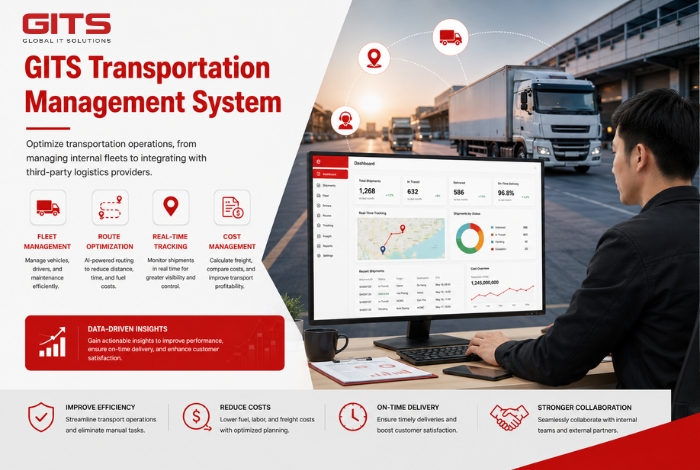
The GITS Transportation Management System helps businesses optimize transportation operations, from managing internal fleets to integrating with third-party logistics providers.
The platform supports automated freight calculation, route optimization, and real-time shipment tracking. AI-powered transportation analytics also help businesses evaluate carrier performance, predict delivery times, and reduce transportation costs across regions.
In addition, TMS supports COD management, freight reconciliation, and electronic Proof of Delivery through digital signatures, GPS verification, and image confirmation.
The Power of an Integrated Logistics Ecosystem
The biggest advantage of the GITS ecosystem lies in its ability to connect the entire logistics operation into one unified platform.
When OMS receives an order from an e-commerce platform, WMS automatically checks inventory and processes warehouse fulfillment. At the same time, TMS calculates the most efficient transportation method for delivery.
On the procurement side, when PMS creates a purchase order, data is automatically synchronized with WMS and TMS to manage inbound inventory and supplier transportation.
This integrated logistics ecosystem helps businesses:
– Reduce up to 70% of manual data entry
– Improve real-time operational visibility
– Minimize operational errors
– Optimize logistics costs
– Accelerate fulfillment speed
Real-World Use Cases for Logistics Transformation
Digital Transformation in Logistics for Manufacturing
For manufacturing companies, the GITS ecosystem helps control the entire material flow from suppliers to warehouses and production lines. PMS manages procurement operations, WMS tracks inventory, and TMS ensures on-time transportation to reduce production disruptions.
Digital Transformation in Logistics for E-Commerce
In e-commerce operations, OMS centralizes omnichannel orders while WMS and TMS streamline warehouse fulfillment and delivery processes. This is especially important for businesses handling high-volume orders during peak seasons.
Digital Transformation in Logistics for Multi-Warehouse Businesses
For enterprises operating multiple warehouses and transportation routes, the integrated logistics ecosystem synchronizes inventory and transportation data across the entire network, improving distribution efficiency and reducing logistics costs.
Frequently Asked Questions About Digital Transformation in Logistics
What is WMS in logistics?
WMS (Warehouse Management System) is a software platform that helps businesses manage inventory, optimize warehouse operations, and monitor stock levels in real time.
What is the difference between OMS and TMS?
OMS focuses on order management across sales channels, while TMS manages transportation operations, delivery routing, and shipment tracking.
Why do businesses need an integrated logistics ecosystem?
An integrated logistics ecosystem connects warehouse, transportation, procurement, and sales operations into one unified platform, reducing errors and improving operational efficiency.
How does AI improve logistics operations?
AI helps businesses optimize inventory, improve delivery routing, reduce manual processing, and enhance operational visibility through predictive analytics and automation.
GITS Supports Businesses in Digital Transformation in Logistics
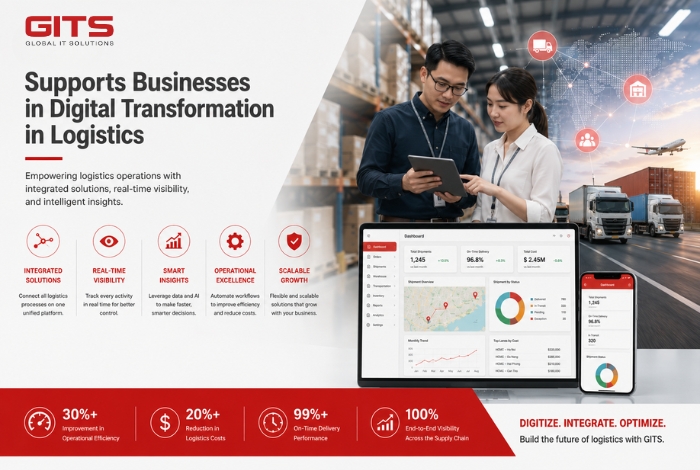
In today’s fast-moving supply chain environment, businesses need more than standalone logistics software. They need an intelligent logistics ecosystem capable of connecting the entire supply chain into one unified operational platform.
With PMS, WMS, OMS, and TMS integrated through AI and automation, GITS delivers a comprehensive Digital Transformation in Logistics solution that helps businesses optimize operations, reduce costs, improve customer experience, and build long-term scalability.
If your business is looking for a modern, scalable, and AI-powered logistics platform, GITS is the ideal technology partner for your digital transformation journey.