





Businesses across manufacturing, logistics, distribution and retail are investing in digital technologies to improve productivity, reduce operating costs and strengthen competitiveness. Yet, despite increasing technology investments, many organizations still struggle with disconnected systems, fragmented data and inefficient operational processes.
An enterprise may already have an ERP platform, warehouse management software, production systems and order management tools. However, if these systems operate independently, employees still spend valuable time transferring data, reconciling reports and coordinating activities manually.
The real challenge is therefore not simply the lack of technology. It is the inability to make existing processes, systems and data work together effectively.
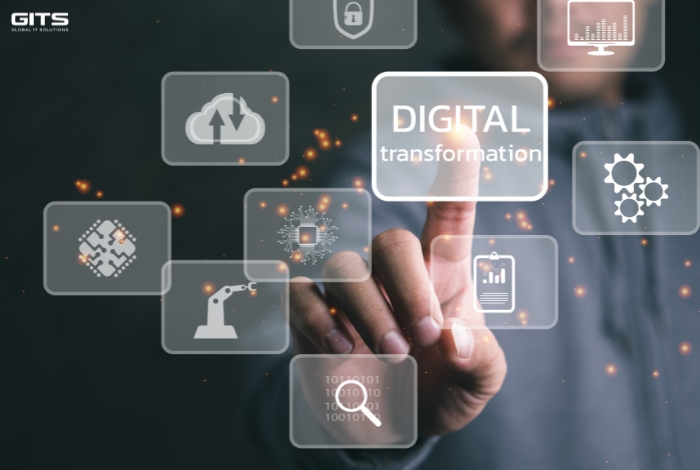
This is where Digital Transformation (DX) becomes a strategic business priority. Rather than implementing software for individual departments, organizations need an integrated digital foundation that connects business operations, enables informed decision-making and supports sustainable growth.
At GITS, we believe successful digital transformation begins with understanding business challenges, not choosing software.
Why Do Businesses Struggle to Achieve Effective Digital Transformation?
Digital transformation initiatives often face a common obstacle: technology investments do not always translate into measurable operational improvements.
Several underlying challenges explain this gap.
1. Disconnected Systems and Fragmented Business Data
When departments use different platforms without effective integration, critical information becomes scattered across the organization. Production, inventory, sales, finance and logistics teams may work with different data sources, making it difficult to establish a consistent view of business performance.
Consequently, management decisions become slower, reporting requires additional manual effort and operational visibility remains limited.
2. Manual Processes and Rising Operating Costs
Repetitive tasks such as order processing, inventory reconciliation, production reporting and delivery coordination consume significant employee resources.
Without appropriate business process automation, organizations may experience unnecessary administrative workloads, process delays and higher operating costs as their operations expand.
3. Limited Real-Time Visibility and Operational Control
Manufacturers need accurate production data. Logistics providers require shipment visibility and delivery performance monitoring. Retail businesses need synchronized inventory and order information across multiple sales channels.
When operational data is delayed or incomplete, managers cannot respond quickly to unexpected disruptions, resource constraints or changing customer demands.
4. Technology Investments Without a Clear Business Strategy
Adopting new technologies without evaluating business objectives can create unnecessary complexity and implementation costs.
A successful digital transformation strategy must establish clear priorities, identify operational bottlenecks and define measurable business outcomes before selecting technical solutions.

>>> See More: Enterprise Digital Transformation: From Disconnected Systems to Connected Operations
GITS’ Digital Transformation Approach: From Business Problems to Integrated Solutions
GITS approaches digital transformation as a structured business transformation journey, connecting organizational objectives with the right processes, technology architecture and operational capabilities.
Rather than introducing isolated software products, GITS focuses on building an integrated enterprise technology ecosystem aligned with each organization’s requirements.
The approach follows seven interconnected stages:
1. Business Assessment: Understand business objectives, operational challenges and transformation priorities.
2. Process Optimization: Identify bottlenecks, eliminate unnecessary manual activities and improve workflows.
3. Digital Architecture: Design a scalable technology architecture that supports current operations and future growth.
4. Core Systems Implementation: Select appropriate enterprise platforms to manage essential business functions.
5. System Integration: Connect applications, departments and operational processes through consistent data flows.
6. Data, AI and IoT Enablement: Turn operational data into actionable insights through analytics, intelligent automation and connected technologies.
7. Continuous Optimization: Monitor performance, evaluate outcomes and continuously improve business operations.
This approach helps organizations move beyond isolated digital projects toward connected, data-driven operations.

Enterprise Technology Solutions for Manufacturing, Logistics and Retail
Every industry has different operational priorities. Effective digital transformation therefore requires technology solutions tailored to specific business processes.
Manufacturing: Improving Production Visibility and Efficiency
Manufacturers must balance production capacity, product quality, equipment utilization and delivery schedules while controlling operating costs.
GITS supports manufacturing digitalization through solutions such as:
– PLM: Manage product lifecycles, engineering data and development processes.
– MES: Monitor production activities, shop-floor operations and manufacturing performance.
– QMS: Strengthen quality control and quality management processes.
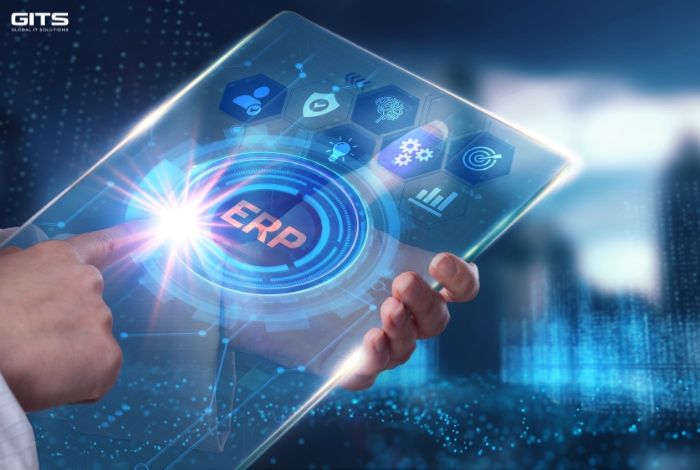
– ERP and SCM: Connect enterprise resources, procurement, inventory and supply chain operations.
By connecting these capabilities, manufacturers can improve production visibility, strengthen operational control and make more informed decisions.
Logistics: Connecting Warehousing, Transportation and Distribution
Logistics operations involve multiple interconnected activities, from inventory management and order fulfillment to transportation planning and delivery monitoring.
GITS provides technology capabilities including:
– WMS: Optimize warehouse operations, inventory visibility and order fulfillment.
– TMS: Improve transportation planning, shipment management and delivery performance.
– OMS: Centralize order management and coordinate order fulfillment processes.
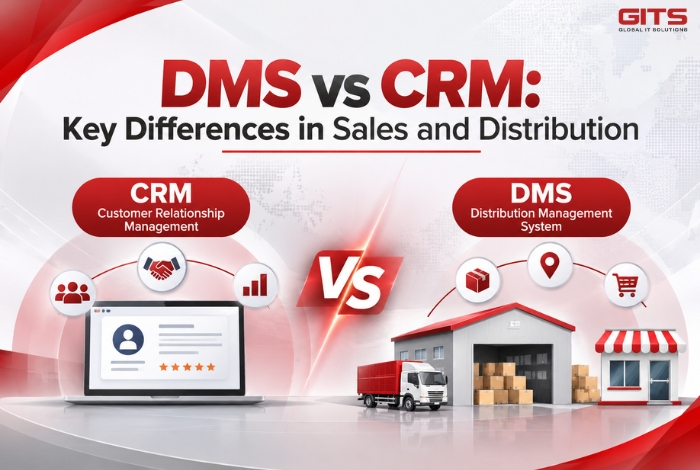
– DMS: Strengthen distribution management and coordination across sales and distribution networks.
Integrated logistics systems help businesses improve operational transparency, reduce manual coordination and manage supply chain activities more efficiently.
Retail and E-commerce: Building Connected Omnichannel Operations
Retailers and e-commerce businesses face increasing pressure to synchronize inventory, orders, customer information and sales activities across multiple channels.
GITS supports these requirements through OMS, POS, DMS, WMS and ERP capabilities, helping businesses connect stores, distribution networks and online sales channels.
With more consistent operational data, businesses can improve inventory accuracy, streamline order fulfillment and gain better visibility into commercial performance.
Beyond Traditional Automation: AI Agents and Agentic AI in Enterprise DX
The next phase of digital transformation is moving beyond basic process digitization toward intelligent, data-driven operations.
Artificial Intelligence (AI), AI Agents and Agentic AI are creating new opportunities to automate complex workflows, analyze enterprise information and support faster decision-making.
Unlike conventional automation, which typically follows predefined rules, AI Agents can interpret information, perform specific tasks and interact with connected systems within defined permissions and workflows. Agentic AI extends these capabilities by enabling agents to plan and coordinate multiple steps toward a defined objective, with appropriate human oversight.
Potential enterprise applications include production data analysis, demand forecasting, intelligent document processing, logistics coordination and automated business reporting.
However, AI adoption requires more than advanced models. Organizations also need reliable data, integrated systems, security controls and clear governance frameworks.
GITS sees AI Services, AI Solutions and intelligent automation as important capabilities within a broader digital transformation strategy, helping businesses move toward more adaptive and intelligent operations.
Why Choose GITS as Your Digital Transformation Technology Partner?
Digital transformation is not a one-time software implementation. It is a continuous process of aligning business objectives, operational processes and technology capabilities.
GITS brings together enterprise technology expertise and solution-oriented thinking to help organizations address complex operational challenges across manufacturing, logistics, distribution, retail and e-commerce.
With capabilities spanning enterprise systems, system integration, AI and IoT, GITS focuses on developing solutions that fit business requirements rather than forcing organizations into a one-size-fits-all technology model.
Whether a business needs to modernize existing systems, connect fragmented operations, automate workflows or explore AI-driven capabilities, the starting point remains the same: understanding the business problem and defining the right technical solution.

GITS – Turning Digital Transformation into Measurable Business Value
The success of digital transformation should not be measured by the number of software platforms an organization implements. It should be measured by how effectively technology improves business performance.
Connected systems, optimized processes, reliable data and intelligent automation provide the foundation for more efficient, transparent and resilient operations.
At GITS, we believe technology creates its greatest value when it solves real business challenges.
GITS – Global I.T Solutions | Building Trust & Delivering Value
Discover how GITS can help your organization move from business challenges to integrated digital solutions.
Website: https://gits.com.vn/
Email: contact@gits.com.vn
Hotline: (+84) 24 7300 0468