





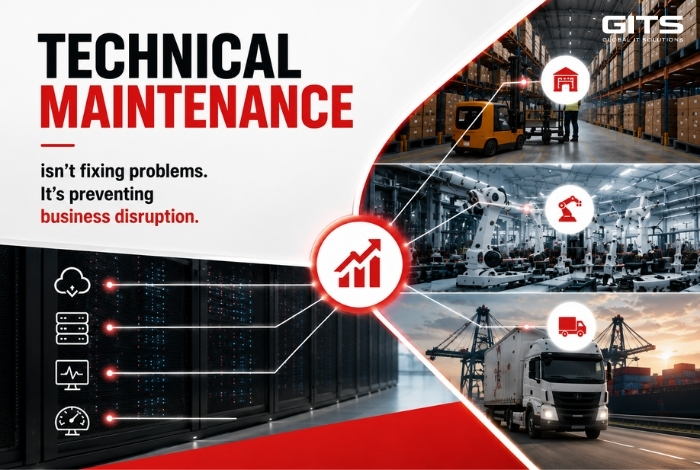
Unexpected downtime can disrupt operations, delay deliveries, interrupt services, and impact revenue. In today’s digital economy, businesses rely on interconnected systems, cloud infrastructure, and AI-powered applications that must run continuously.
Yet many organizations still treat Technical Maintenance as a reactive task. This approach increases risks, raises costs, and weakens competitiveness.
Modern enterprises are shifting to proactive strategies that combine Maintenance Services, AI Solutions, and intelligent monitoring to prevent failures before they occur. As AI Transformation (AX) accelerates, Technical Maintenance has become a strategic function supporting business continuity and long-term growth.
Why Business Continuity Depends on Technical Maintenance
Business continuity ensures operations continue despite disruptions such as system failures, cyberattacks, or human error.
Without effective Technical Maintenance, organizations face:
– Unplanned downtime
– Lost productivity
– Revenue loss
– Customer dissatisfaction
– Compliance risks
– Increased recovery costs
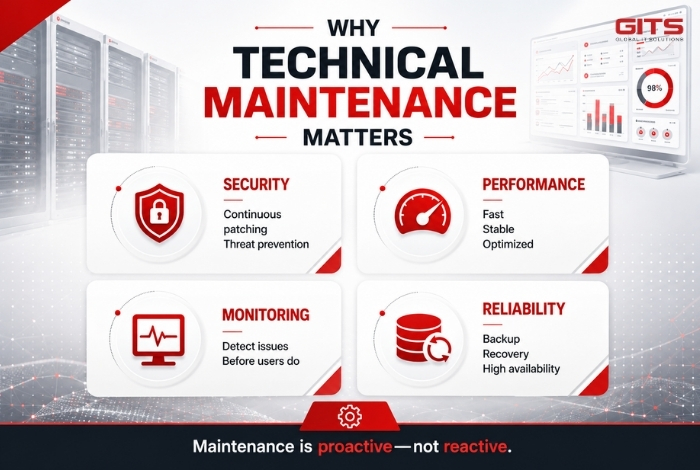
For global enterprises, even short outages can affect multiple partners and customers. Technical Maintenance reduces these risks by keeping systems stable, secure, and optimized.
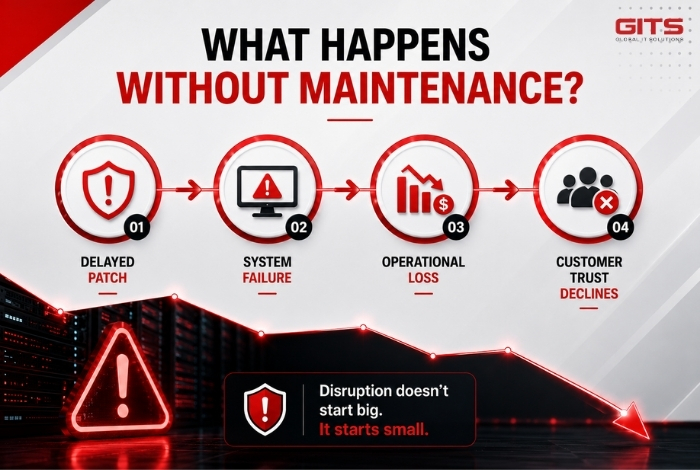
Common Risks of Poor Technical Maintenance
Many organizations operate with hidden technical debt from outdated systems and inconsistent maintenance.
Unexpected System Downtime
Systems degrade over time. Without monitoring and preventive care, failures occur during critical operations, causing costly disruptions.
Security Vulnerabilities
Delayed updates and missing patches expose systems to cyber threats. Maintenance ensures systems remain protected.
Reduced Efficiency
Poorly maintained systems slow down operations, forcing employees to spend time fixing issues instead of driving growth.
Increasing Costs
Reactive repairs are expensive, often requiring emergency fixes, hardware replacement, and data recovery.
How Technical Maintenance Has Evolved with AI
Traditional maintenance relied on manual checks and reactive fixes. Today, AI Solutions and AI Agents enable continuous monitoring and predictive maintenance.
AI can detect anomalies, analyze data, and predict failures before they happen. This shift reduces downtime and improves system reliability.
AI Agents Are Transforming Maintenance Services
Modern Maintenance Services integrate AI Agents that work alongside IT teams.
These agents can:
– Monitor systems 24/7
– Detect anomalies
– Predict failures
– Automate routine tasks
– Prioritize incidents
– Support engineers with insights
AI Agents reduce response time and allow teams to focus on innovation instead of repetitive tasks.
Technical Maintenance in the Era of AX
In AI Transformation (AX), Technical Maintenance becomes the foundation for digital operations.
It ensures:
Stable Infrastructure
Reliable computing and networking for AI systems.
High-Quality Data
Consistent data improves AI performance.
Reliable Applications
Enterprise systems like ERP and CRM remain updated and functional.
Continuous Operations
Maintenance supports uninterrupted digital services.
Best Practices for Effective Technical Maintenance
Successful organizations treat maintenance as a strategic function.
Adopt Predictive Maintenance
Use AI to detect early warning signs.
Implement Continuous Monitoring
Identify issues in real time.
Automate Routine Tasks
Examples include patching, backups, and system checks.
Strengthen Cybersecurity
Include regular updates, vulnerability checks, and access control.
Partner with Experts
Working with a Technical Solution provider ensures access to expertise and scalable support.
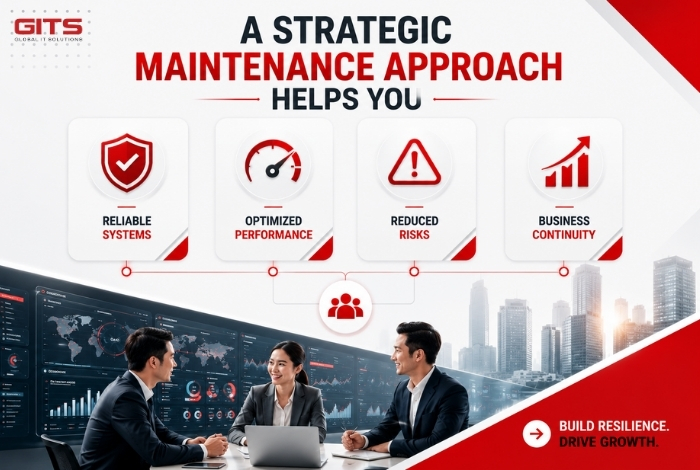
Business Benefits of Modern Technical Maintenance
Organizations investing in intelligent maintenance gain:
– Higher system availability
– Lower operational costs
– Improved security
– Faster incident response
– Better productivity
– Enhanced customer experience
– Stronger business continuity
Maintenance is no longer just a cost—it is a strategic investment.
>>> See More: Application Maintenance: The Key to Business Continuity
Industries Benefiting from AI-Powered Maintenance
AI-driven Technical Maintenance supports many industries:
– Manufacturing: reduces equipment downtime
– Logistics: maintains supply chain systems
– Retail: ensures uninterrupted transactions
– Healthcare: protects critical systems
– Finance: strengthens security and uptime
As systems become more connected, maintenance becomes essential across all operations.
Future Trends in Technical Maintenance
Technical Maintenance is becoming more intelligent and automated.
Key trends include:
– Autonomous AI Agents
– Digital Twins for simulation
– Generative AI for diagnostics
– Hyperautomation across workflows
– Edge AI for real-time monitoring
Organizations adopting these technologies will gain a competitive advantage.
Technical Maintenance Is No Longer Optional
Technical Maintenance has evolved into a critical business capability that supports operations, AI Transformation, and growth.
Organizations that adopt proactive, AI-driven maintenance reduce disruptions, lower costs, and improve resilience.
In an always-on digital world, investing in modern Maintenance Services, AI Solutions, and AI Agents is essential for long-term success.