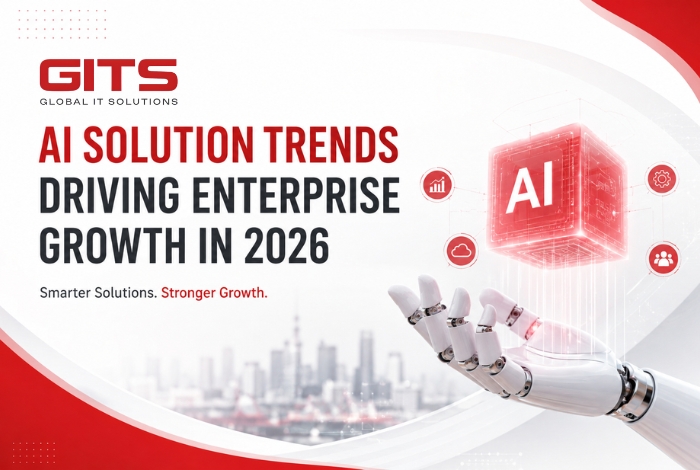
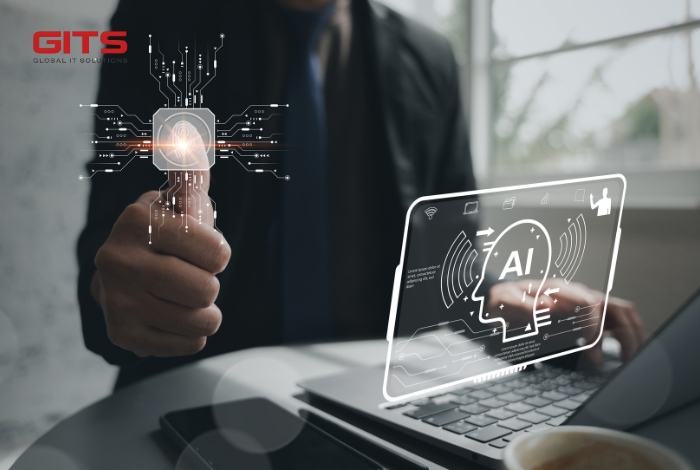
AI Solution is becoming a critical technology foundation for modern enterprise digital transformation. As global competition continues to intensify, businesses are under pressure to optimize operational costs, improve efficiency, and deliver better customer experiences. This is why AI adoption is rapidly increasing across industries such as Logistics, Manufacturing, Healthcare, and Retail.
In 2026, enterprise AI is evolving far beyond traditional chatbots or basic automation tools. Companies are now investing in intelligent AI ecosystems capable of real time analytics, workflow automation, predictive decision making, and operational optimization.
For many enterprises in Japan, South Korea, and other advanced markets, AI Solution is no longer viewed as an optional technology upgrade. Instead, it has become a strategic driver for long term business growth and operational excellence.
AI Solution is transforming enterprise operations
AI Solution refers to a combination of artificial intelligence technologies designed to solve operational challenges and improve business performance. These solutions enable organizations to automate repetitive tasks, process large volumes of data, and optimize workflows with greater speed and accuracy.
In the past, many businesses relied heavily on manual operations and traditional systems that required significant time and labor. Today, AI powered platforms can automate inventory management, order processing, customer support, and demand forecasting with far greater efficiency.
One of the key reasons behind the rapid growth of AI in 2026 is the increasing volume of enterprise data. Without AI driven systems, businesses often struggle to extract meaningful insights from massive datasets. AI enables organizations to transform raw data into actionable intelligence that supports faster and smarter decision making.
AI Agents are emerging as one of the most important AI technologies in modern business operations. Unlike traditional chatbots that only respond to predefined questions, AI Agents can independently perform multiple connected tasks and interact with different enterprise systems.
In the Logistics industry, AI Agents can monitor shipments, optimize delivery routes, and provide real time transportation updates. This helps businesses reduce operational pressure while improving delivery speed and customer satisfaction.
Within Healthcare operations, AI Agents support patient scheduling, medical data processing, and workflow coordination. Hospitals and healthcare providers are increasingly adopting AI to improve operational efficiency and reduce administrative workload.
Many enterprises now view AI Agents as a new form of digital workforce capable of supporting continuous business operations while increasing productivity and scalability.
AI Agents are becoming a major enterprise trend
Predictive Analytics is optimizing supply chain performance
Predictive Analytics is becoming a core component of modern AI ecosystems. This technology enables businesses to forecast market trends, customer demand, and operational risks based on real business data.
In Supply Chain and Warehouse Management, Predictive Analytics helps companies optimize inventory levels, reduce stock shortages, and improve procurement planning. This is particularly valuable for eCommerce businesses and retail enterprises that manage large scale inventory systems.
AI driven forecasting also enables organizations to respond faster to market changes and customer demand fluctuations. As a result, many enterprises in Japan and South Korea are prioritizing predictive AI systems as part of their long term operational strategy.
Predictive Analytics is optimizing supply chain performance
AI Solution is reshaping Logistics and warehouse management
Logistics is one of the industries experiencing the strongest impact from AI transformation. Businesses are using AI Solution to improve warehouse visibility, optimize transportation, and enhance overall supply chain efficiency.
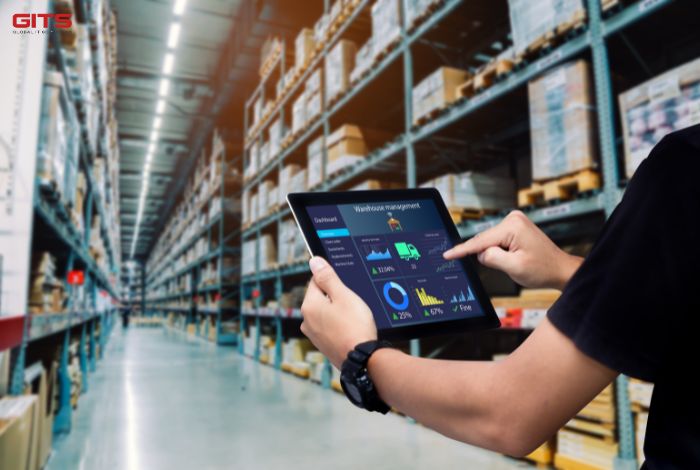
AI powered warehouse systems can monitor inventory in real time, analyze product movement patterns, and recommend optimized storage locations. Some organizations are also integrating Computer Vision technology to automate stock counting and detect inventory discrepancies.
In transportation management, AI supports route optimization, fuel cost reduction, and delivery scheduling improvements. These capabilities allow Logistics companies to enhance service quality while reducing operational expenses.
For eCommerce businesses, AI also plays a major role in order management and last mile delivery optimization, helping companies improve customer experiences in highly competitive markets.
AI Solution is reshaping Logistics and warehouse management
AI is accelerating innovation in Healthcare and Retail
In the Healthcare sector, AI is helping hospitals and medical providers improve operational efficiency and patient experiences. AI powered systems can process healthcare data, coordinate patient appointments, and forecast medical supply demand more effectively.
Healthcare AI also reduces the administrative burden on hospital staff, allowing organizations to focus more on patient care and service quality. This trend is becoming increasingly important in countries facing rising healthcare demands and workforce shortages.
In the Retail industry, AI helps businesses analyze customer behavior, personalize shopping experiences, and optimize sales strategies. Modern recommendation engines can provide highly personalized product suggestions based on customer preferences and purchasing history.
AI is also improving omnichannel retail operations by synchronizing data between online and offline platforms, enabling businesses to deliver more seamless customer experiences.
AI is accelerating innovation in Healthcare and Retail
Why businesses should invest in AI early
Early AI adoption provides businesses with a strong competitive advantage in rapidly changing markets. As operational speed and data intelligence become increasingly important, companies with advanced AI capabilities will be better positioned to adapt and grow.
AI Solution not only reduces operational costs but also improves service quality, customer satisfaction, and business scalability. These benefits are essential for organizations seeking sustainable long term growth.
In addition, AI enables enterprises to strengthen decision making through real time analytics and intelligent forecasting. This is particularly valuable in industries facing continuous market disruption and evolving customer expectations.
AI Solution is fundamentally changing how businesses operate, manage data, and optimize enterprise performance
The future outlook of AI Solution
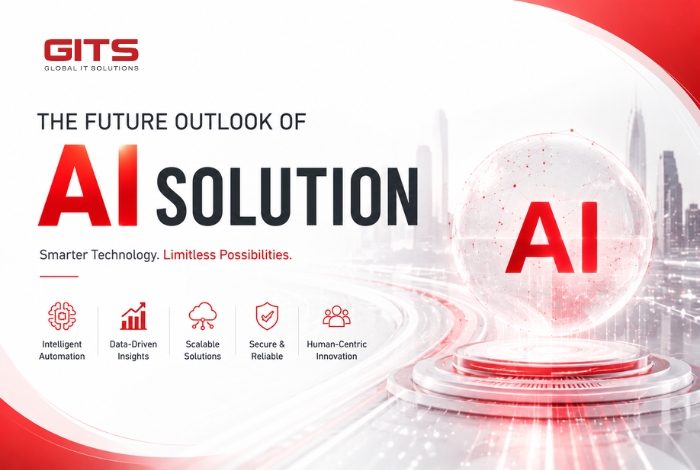
AI Solution is fundamentally changing how businesses operate, manage data, and optimize enterprise performance. From AI Agents and Predictive Analytics to intelligent warehouse automation, AI technologies are becoming central to modern business strategies.
Over the next few years, AI adoption will continue expanding across multiple industries and operational areas. Companies that invest in AI early will gain stronger market positioning, greater operational flexibility, and long term competitive advantages in the digital economy.
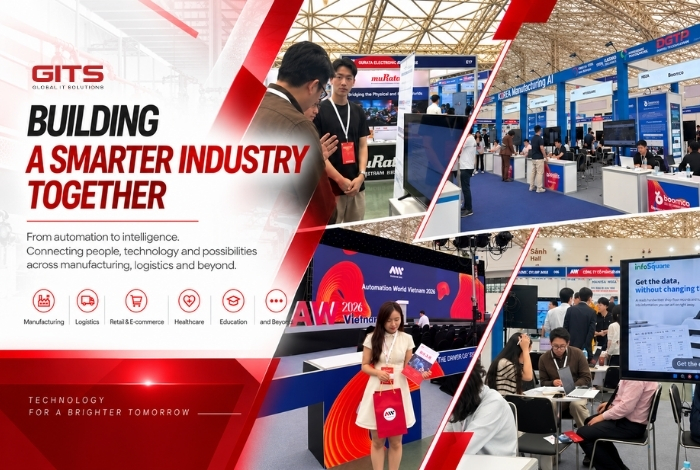
The future of industry is no longer a distant vision. It is being built today through automation, artificial intelligence, connected data, and digital transformation. GITS
Healthcare organizations are under pressure to deliver faster, more personalized care while managing rising operational complexity, staffing shortages, fragmented systems, and growing administrative workloads. For
The automotive industry is undergoing one of its most significant transformations in decades. As vehicles become increasingly connected, manufacturers are shifting beyond hardware production to
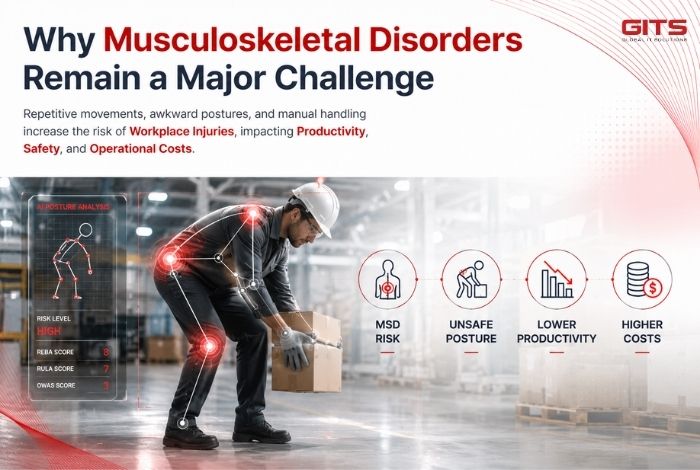
Industrial workplaces are becoming increasingly automated, yet one challenge remains difficult to eliminate: work-related musculoskeletal disorders (MSDs) caused by repetitive movements and improper working postures.
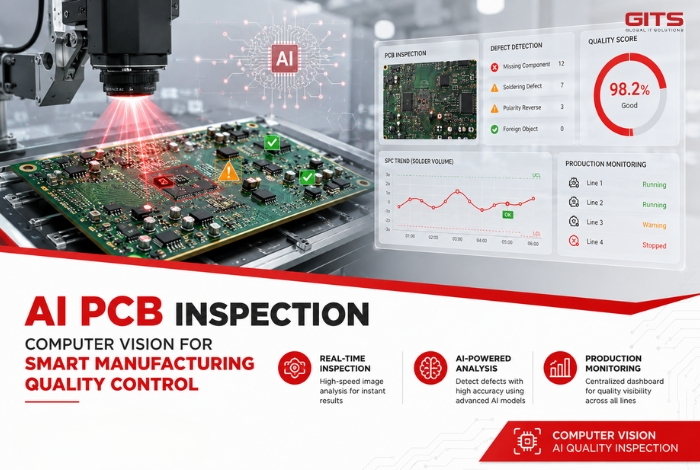
In today’s electronics manufacturing industry, every defective PCB that reaches the next production stage can trigger expensive rework, production downtime, delayed deliveries, and even product
Manufacturing, energy, logistics, and industrial enterprises continue to face growing pressure to improve procurement efficiency while maintaining full visibility across increasingly complex supply chains. As