






In modern logistics, speed is no longer just a performance metric. It directly impacts customer satisfaction, operational costs, and business scalability.
Across Vietnam, Japan, Korea, and global markets, businesses are facing the same reality: order volumes continue to grow, but labor shortages, fragmented systems, and increasing customer expectations are making fulfillment more difficult than ever.
Many companies are still relying on manual order processing, disconnected inventory systems, and isolated sales channels. As order complexity increases, these outdated workflows create delays, errors, and operational blind spots.
This is where an Order Management System (OMS) becomes a critical business infrastructure.
An Order Management System is a centralized platform that automates order capture, inventory synchronization, fulfillment orchestration, order exception management, and delivery tracking across multiple channels.
For businesses looking to scale faster while maintaining operational precision, OMS has become the foundation of modern logistics transformation.
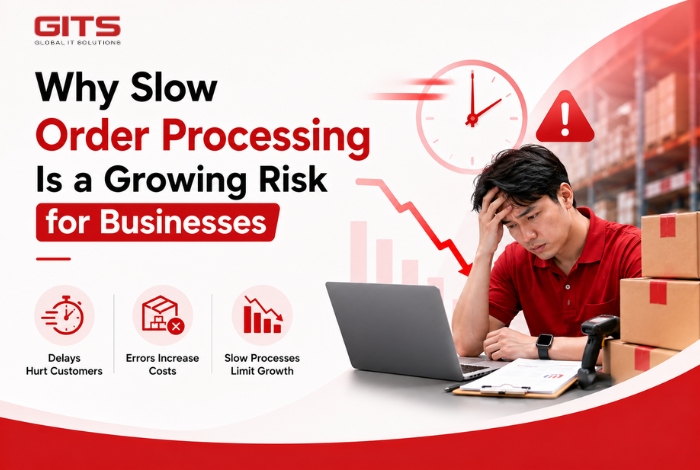
Why Slow Order Processing Is a Growing Risk for Businesses
The biggest challenge in logistics today is no longer demand generation.
The real challenge is operational execution.
As businesses scale, common bottlenecks begin to appear.
• Manual order confirmation creates delays
• Inventory is not updated in real time
• Multi-channel orders are processed separately
• Warehouse visibility is fragmented
• Order exceptions are handled manually
• Labor dependency increases operational costs
These issues become even more serious in markets like Japan and Korea, where labor shortages and service expectations are among the highest in the world.
For example, one omnichannel retailer processing over 500 orders per day faced major operational inefficiencies:
| KPI | Before OMS |
|---|---|
| Order processing time | 12 minutes per order |
| Order error rate | 18% |
| Inventory visibility | 65% |
| Manual intervention rate | High |
Without optimization, scaling order volume often means increasing manpower, increasing costs, and increasing risk.
How An Order Management System Improves Order Speed
An Order Management System acts as the central control tower of fulfillment operations.
Instead of manually managing orders across multiple platforms, OMS automatically orchestrates the entire order flow.
This creates faster, more accurate, and more scalable operations.
Centralized Multi-Channel Order Management
Orders from eCommerce websites, marketplaces, retail stores, ERP systems, and B2B channels are consolidated into one unified platform.
This eliminates data silos and improves operational visibility.
For enterprises managing omnichannel sales, this is one of the most critical functions of an Order Management System.
Intelligent Order Routing Based on SLA and Inventory
OMS automatically routes orders based on:
• Warehouse location
• Inventory availability
• Shipping deadlines
• Customer priority
• Delivery SLA
This reduces delays and improves delivery performance.
This is especially important for same-day delivery and cross-border logistics.
Real-Time Inventory Synchronization with WMS
By integrating OMS with WMS, inventory is updated instantly across all channels.
This prevents overselling, stockouts, and inaccurate replenishment planning.
For businesses operating across multiple warehouses, this level of visibility is essential.
Order Exception Management for Faster Recovery
One of the most overlooked OMS functions is exception management.
OMS can automatically detect and respond to issues such as:
• Failed payments
• Out-of-stock items
• Split shipments
• Backorders
• Delivery delays
This significantly reduces disruption and improves customer experience.
OMS vs WMS: What Is the Difference?
Many companies confuse OMS and WMS.
But they serve different purposes.
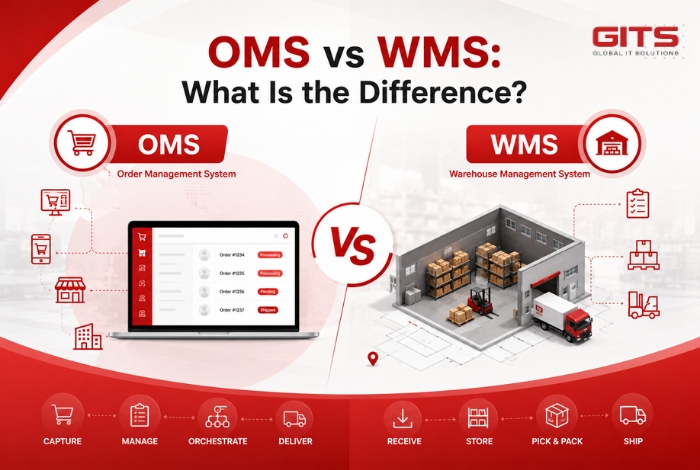
An Order Management System manages order flow across channels, while a Warehouse Management System manages warehouse execution.
OMS focuses on:
• Order orchestration
• Channel integration
• Delivery routing
• Customer order visibility
WMS focuses on:
• Picking
• Packing
• Inventory location
• Warehouse movement
When integrated together, they create a complete fulfillment ecosystem.
Real Business Results After OMS Implementation
In a recent logistics transformation case, implementing a unified Order Management System with WMS integration delivered measurable results.
| KPI | Before OMS | After OMS |
| Order processing speed | 12 mins | 7 mins |
| Order error rate | 18% | 7% |
| Inventory accuracy | 65% | 95% |
| Fulfillment efficiency | Low | High |
Business outcomes included:
• 40% faster order processing
• 60% fewer fulfillment errors
• 30% higher inventory accuracy
• Better scalability during peak seasons
• Reduced labor dependency
This is why more enterprises across Japan, Korea, and Southeast Asia are investing in OMS as part of their logistics digital transformation strategy.
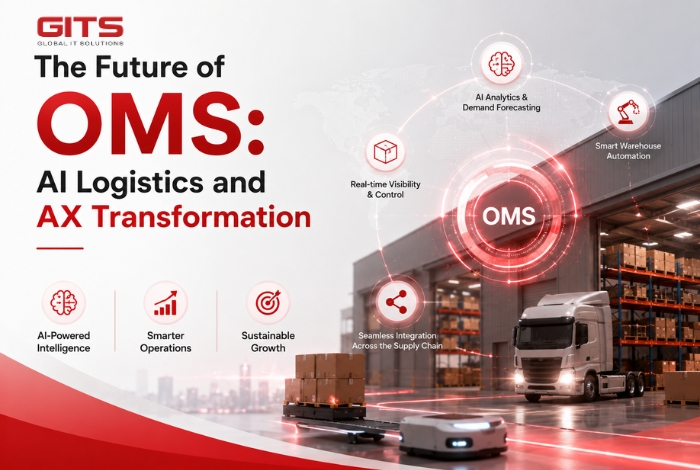
The Future of OMS: AI Logistics and AX Transformation
The next evolution of logistics is no longer basic automation.
It is intelligent orchestration.
Leading companies are now combining:
Order Management System + AI Logistics + AX (AI Transformation)
to build smarter and more resilient supply chains.
AI-Powered Demand Forecasting
Predict future order volumes and optimize workforce planning.
Predictive Inventory Optimization
Reduce stockouts and overstock through AI-based forecasting.
Smart Warehouse Automation
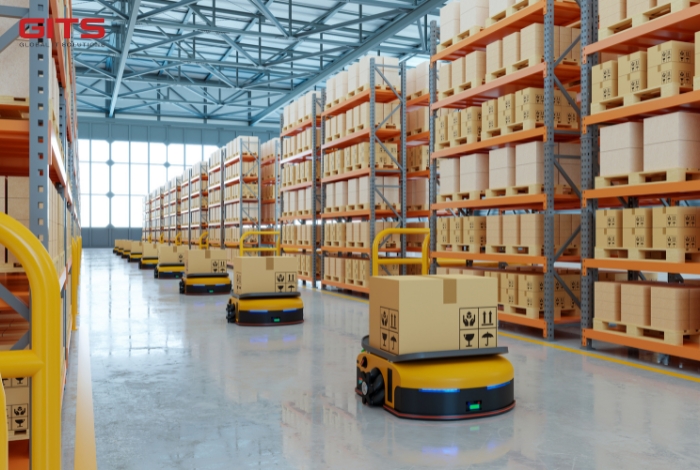
Combine OMS, WMS, AGV, AMR, and AI analytics to optimize fulfillment speed.
Distributed Order Management (DOM)
For enterprises with multiple warehouses, DOM helps route orders to the best fulfillment location based on cost, speed, and inventory.
This is becoming a major strategy in cross-border logistics and global retail.
Why Businesses in Japan, Korea, and Vietnam Are Investing in OMS
The business environment across Asia is changing rapidly.
Japanese enterprises are focusing on operational standardization, precision, and visibility.
Korean businesses are investing heavily in logistics automation, speed optimization, and digital transformation.
Vietnamese companies are scaling rapidly in eCommerce, retail, and manufacturing.
Across all markets, the priorities remain the same:
Faster fulfillment
Higher inventory accuracy
Lower labor dependency
Better customer satisfaction
Scalable operations
An Order Management System helps businesses achieve all of these.
>>> See More: Unified OMS Strategy for Omnichannel Retail Success
Frequently Asked Questions About Order Management System
What is an Order Management System?
An Order Management System is software that automates and manages the full order lifecycle from order capture to fulfillment and delivery.
How does OMS improve order processing speed?
OMS reduces manual tasks, automates routing, synchronizes inventory, and improves visibility across channels.
What is the difference between OMS and WMS?
OMS manages orders across channels. WMS manages warehouse execution and inventory movement.
Can OMS integrate with ERP and eCommerce systems?
Yes. Modern OMS platforms can integrate with ERP, CRM, WMS, marketplaces, and eCommerce platforms.
OMS Is the Core of Faster, Smarter Logistics
As order volumes increase and labor challenges continue to rise, businesses can no longer rely on fragmented systems or manual workflows.
A modern Order Management System helps companies process orders faster, reduce operational risks, improve fulfillment accuracy, and scale efficiently.
For businesses across Vietnam, Japan, Korea, and global markets, OMS is no longer just a technology investment.
It is a business growth strategy.
The question is not whether your business needs an Order Management System. The real question is how much growth your current operation is losing without one.