






Warehouses are no longer just storage facilities. They are becoming intelligent operational hubs where speed, accuracy, and real-time decision-making define business performance.
Yet many enterprises across manufacturing, retail, e-commerce, and logistics still struggle with the same warehouse challenges. Inventory inaccuracies continue to create costly stock imbalances, while labor shortages are slowing fulfillment. At the same time, order volumes are becoming harder to predict, and disconnected systems make warehouse operations increasingly difficult to scale.
For companies in Japan, South Korea, Vietnam, and global markets, these operational pressures are growing faster than traditional warehouse systems can adapt. This is why the role of the Warehouse Management System (WMS) is changing.
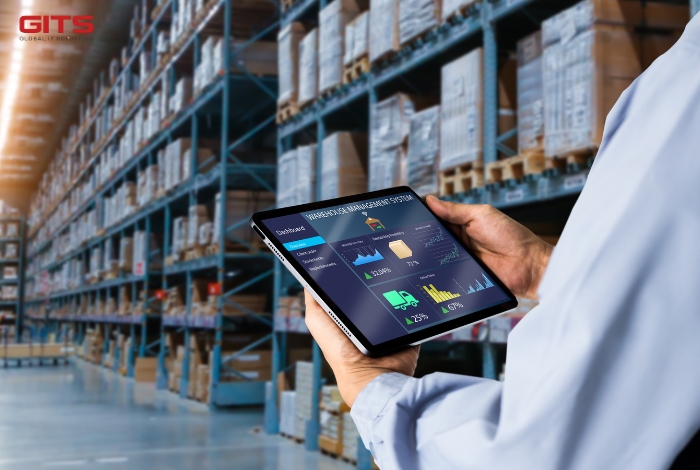
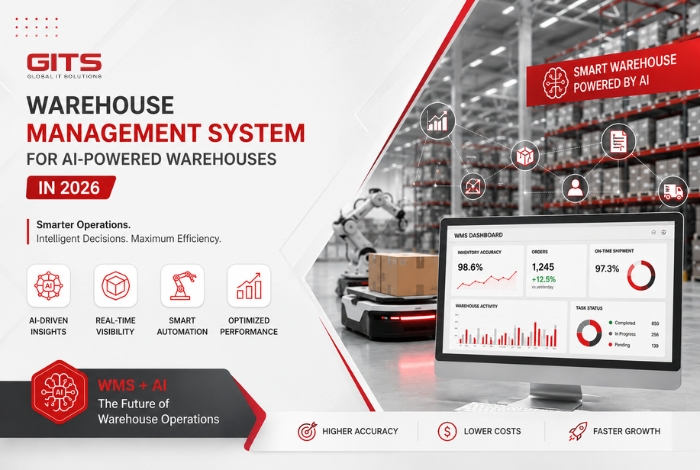
A modern Warehouse Management System is no longer just an inventory tracking tool. When integrated with AI engines, AI Agents, and warehouse automation, it becomes the operational intelligence hub that powers the next generation of smart warehouses.
In the era of AX (AI Transformation), this shift is becoming a competitive necessity.
What Is a Warehouse Management System in Modern Logistics?
A Warehouse Management System is a software platform designed to manage and optimize warehouse operations, including inventory tracking, order fulfillment, labor management, and warehouse workflows.
Traditionally, WMS focused on operational control.
Its primary functions included:
• Receiving and putaway
• Inventory management
• Picking and packing
• Shipping management
• Replenishment control
But modern supply chains require more than control. They require intelligence. According to Gartner, supply chain leaders are increasingly prioritizing predictive decision-making and automation as part of digital transformation strategies.
This is where WMS is evolving. Today, the Warehouse Management System is becoming the core system that connects warehouse execution, automation systems, and AI-driven decision layers.
Why Traditional Warehouse Operations Are Reaching Their Limits
The warehouse environment has changed dramatically, driven by e-commerce growth, omnichannel fulfillment, and rising customer expectations shaped by companies like Amazon, pushing businesses to operate faster than ever; however, many warehouses still rely on outdated systems and manual decision-making, leading to several critical problems.
Limited Real-Time Inventory Visibility
Without a connected Warehouse Management System, inventory data is often fragmented.
This leads to:
• Stock discrepancies
• Slow cycle counting
• Inventory blind spots
• Higher fulfillment errors
For manufacturers like Toyota, inventory precision directly impacts production continuity.
Labor Shortages Are Increasing Operational Risk
In Japan and Korea, labor shortages are becoming one of the biggest operational risks in logistics.
Warehouse managers are under pressure to maintain speed while reducing labor dependency.
This is accelerating demand for AI-powered warehouse automation.
Reactive Operations Increase Costs
Many warehouses still solve problems after they happen.
By the time stockouts, congestion, or picking inefficiencies are detected, the cost impact is already growing.
Reactive warehouses are expensive warehouses.
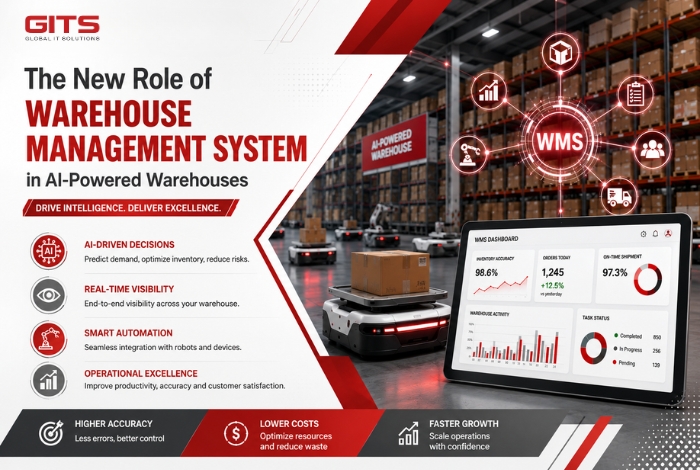
The New Role of Warehouse Management System in AI-Powered Warehouses
The modern Warehouse Management System is evolving into an operational intelligence hub.
Instead of acting as a standalone software layer, WMS now integrates with AI engines, automation systems, and execution layers to enable smarter warehouse decisions.
Its role now extends far beyond inventory control.
Real-Time Decision Intelligence
Modern WMS platforms process warehouse data continuously.
With AI integration, they can detect patterns, identify inefficiencies, and recommend actions in real time.
For example:
If inbound shipments are delayed, WMS can automatically reprioritize outbound orders and adjust labor allocation.
This improves agility and reduces operational disruption.
This is one of the core foundations of AI Logistics.
AI-Driven Inventory Optimization
Inventory remains one of the most expensive warehouse assets.
AI-enhanced Warehouse Management System platforms can analyze:
• Demand fluctuations
• Seasonal trends
• Supplier lead times
• Order frequency
• SKU velocity
This helps businesses improve inventory accuracy and reduce unnecessary stock costs.
For example:
A retail warehouse preparing for peak holiday demand can use AI forecasting to optimize stock levels before demand surges.
According to McKinsey & Company, AI-powered supply chain forecasting can significantly improve inventory performance and reduce waste.
AI Agents in Warehouse Operations
AI Agents are emerging as a powerful layer inside warehouse ecosystems.
Rather than replacing warehouse teams, they support decision-intensive workflows.
AI Agents can assist with:
• Dynamic slotting recommendations
• Picking path optimization
• Workforce balancing
• Replenishment prioritization
• Exception management
For example:
A 3PL warehouse managing thousands of daily orders can use AI Agents to dynamically balance labor during peak demand windows.
This improves speed while reducing operational bottlenecks.
This is one of the fastest-growing enterprise AI Solution trends in logistics.
Warehouse Management System, WCS, and Automation: How They Work Together
A common misconception is that WMS controls robots directly. In reality, warehouse architecture follows a layered structure where ERP connects to OMS, which then connects to WMS, followed by WCS (Warehouse Control System), and finally the automation layer including AGV, AMR, and conveyors.
Within this structure, the Warehouse Management System is responsible for managing workflows and inventory logic, while the WCS translates these workflows into machine-level execution. Understanding this distinction is critical for businesses planning smart warehouse investments, as a lack of clarity in this architecture often leads to fragmented and inefficient automation projects.
How AI Logistics Is Changing Warehouse KPIs
The rise of AI Logistics is changing how warehouse performance is measured.
In the past, companies focused mostly on labor efficiency.
Today, AI-powered warehouses are measured differently.
Predictive Fulfillment Speed
AI forecasting allows warehouses to prepare before order spikes happen.
This improves same-day fulfillment performance.
Intelligent Space Optimization
AI can analyze SKU movement and dynamically optimize warehouse slotting.
This reduces travel distance and increases storage efficiency.
Risk Prediction and Exception Detection
Modern Warehouse Management System platforms can detect:
• Inventory anomalies
• Picking inconsistencies
• Delayed replenishment
• Equipment downtime
This allows businesses to solve problems earlier.
>>> See More: Warehouse Management System: 7 Signs Your Business Needs One in 2026
Why Enterprises in Japan, Korea, and Vietnam Are Investing in Smart WMS
The market priorities are different, but the need is the same.
In Japan, businesses prioritize:
• Precision
• Traceability
• Compliance
• Standardization
In Korea, enterprises focus on:
• Hyperautomation
• Speed
• Smart factory integration
Companies like CJ Logistics are accelerating AI logistics innovation.
In Vietnam, businesses are rapidly adopting WMS to support:
• E-commerce growth
• Cost optimization
• Supply chain modernization
Across all markets, the Warehouse Management System is becoming a strategic digital infrastructure.
How to Choose the Right Warehouse Management System for AI Transformation
Not all WMS platforms are designed for future warehouse operations.
Businesses should evaluate four key areas.
Scalability for AI Agents and Automation
The system must support future integration with AI Agents, robotics, and automation.
Open API Architecture
A modern Technical Solution should integrate easily with ERP, OMS, TMS, and AI platforms.
Predictive Analytics Capability
Without predictive intelligence, WMS remains operationally limited.
Industry Flexibility
The right system must adapt across:
• Manufacturing
• Healthcare
• Retail
• E-commerce
• Logistics
This flexibility is essential for enterprise growth.
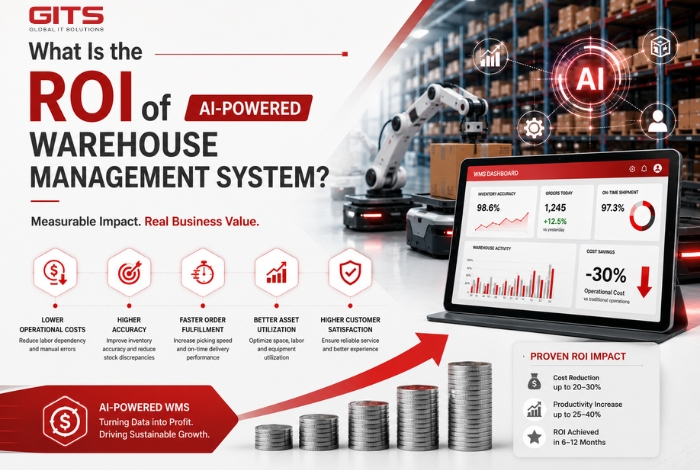
What Is the ROI of AI-Powered Warehouse Management System?
The ROI of intelligent WMS adoption can be significant.
Businesses often see:
• Faster order fulfillment
• Lower labor dependency
• Higher inventory accuracy
• Better warehouse utilization
• Reduced stock losses
• Improved customer satisfaction
For many enterprises, WMS is no longer just a logistics tool.
It is a long-term growth enabler.
Frequently Asked Questions About Warehouse Management System
What is the main purpose of a Warehouse Management System?
A Warehouse Management System helps businesses manage inventory, warehouse workflows, order fulfillment, and labor efficiency in real time.
How does AI improve Warehouse Management System performance?
AI improves WMS by enabling predictive analytics, inventory optimization, real-time decision support, and workflow automation.
What is the difference between WMS and WCS?
WMS manages warehouse workflows and inventory logic, while WCS controls automation equipment such as conveyors, AGVs, and AMRs.
Can AI Agents replace warehouse workers?
No. AI Agents are designed to support warehouse teams by automating repetitive decision-making and improving efficiency.
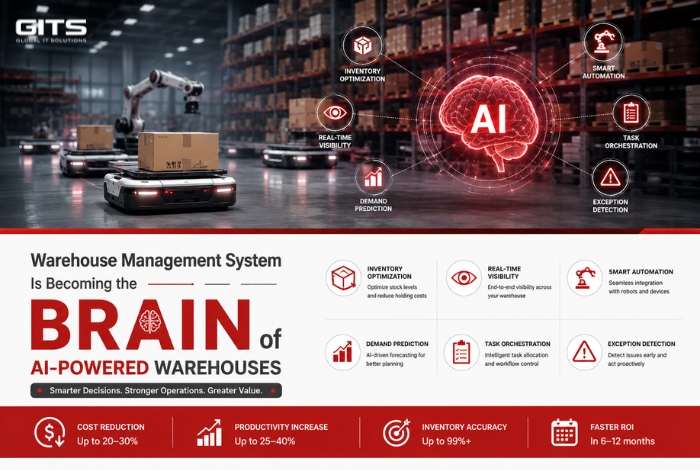
Warehouse Management System Is Becoming the Brain of AI-Powered Warehouses
The future warehouse will not be built on manual workflows alone. It will be built on intelligence. The Warehouse Management System is evolving from a control platform into the operational brain of AI-powered warehouses. By integrating AI, automation, and predictive decision-making, WMS is becoming the foundation of smarter logistics operations.
For enterprises across Japan, Korea, Vietnam, and global markets, the question is no longer whether to modernize warehouse systems. The real question is how fast they can transform before competitors move first. In the age of AI Logistics and AX, intelligent WMS is no longer optional. It is the infrastructure of future supply chain competitiveness.