






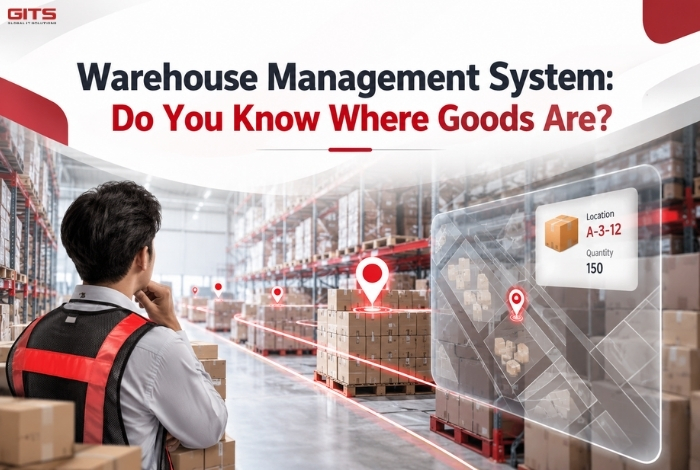
A warehouse can be full of products and still leave a business struggling to fulfill orders. Inventory may exist on paper, but finding the right items, confirming their availability, or identifying their exact location can take hours.
For manufacturers, logistics providers, distributors, and retailers, this is more than an operational inconvenience. It directly affects delivery performance, inventory costs, customer satisfaction, and business growth.
The real question is not simply how much inventory a business holds. It is whether the business knows exactly where its goods are, how they move, and when they are available.
When Inventory Exists but Visibility Is Missing
Many businesses still rely on spreadsheets, disconnected systems, or manual warehouse processes to manage inventory. These methods may work when operations are small, but become increasingly difficult to control as product volumes, warehouse locations, and order complexity grow.
The problem often appears in everyday operations. Staff spend valuable time searching for misplaced goods. Inventory records do not match physical stock. Teams cannot confirm available quantities with confidence, while orders are delayed because the system does not reflect actual warehouse conditions.
For businesses operating across multiple warehouses or distribution centers, these issues become even more complicated. Without a unified view of inventory, managers may struggle to balance stock, coordinate replenishment, or respond quickly to changing demand.
The result is a costly gap between inventory data and operational reality.
Why Traditional Inventory Management Is No Longer Enough
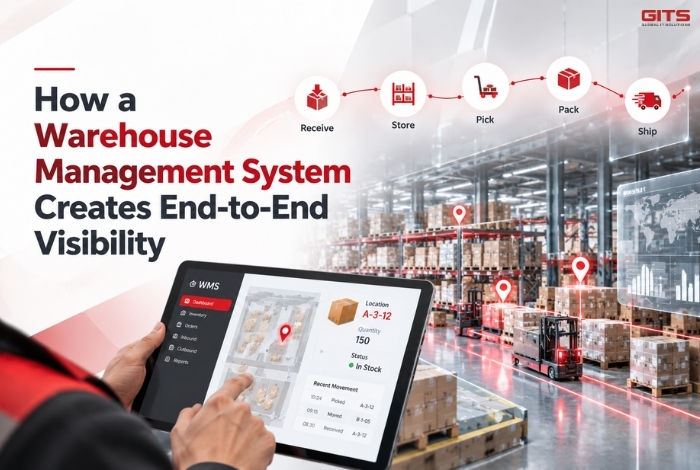
Inventory management is often mistaken for simply recording incoming and outgoing goods. In reality, effective warehouse operations require continuous coordination across receiving, putaway, storage, picking, packing, and shipping.
When these processes operate independently, even small errors can spread throughout the supply chain. An incorrect receiving record can lead to inaccurate stock levels. Poor storage visibility can slow down picking. Delayed updates can cause overselling or unnecessary replenishment.
Three challenges are particularly common:
1. Limited real-time visibility: Inventory information is frequently updated after activities occur, leaving decision-makers with outdated data.
2. Inefficient warehouse workflows: Manual location tracking and paper-based processes increase search time, repetitive work, and the risk of human error.
3. Disconnected operational systems: Warehouse data may not synchronize smoothly with ERP, OMS, TMS, or other enterprise platforms, creating inconsistencies across departments.
As supply chains become more dynamic, businesses need more than inventory records. They need operational visibility that connects physical goods with reliable, timely data.

How a Warehouse Management System Creates End-to-End Visibility
A Warehouse Management System (WMS) provides structured control over warehouse activities, from receiving goods to final dispatch. By connecting inventory records with real warehouse movements, a WMS helps businesses understand not only what they own but also where products are located and how they flow through operations.
Real-Time Inventory Tracking and Location Management
A WMS assigns and tracks inventory by warehouse, zone, storage location, and product attributes. Barcode scanning, RFID, and mobile devices can capture inventory movements as they happen, helping teams maintain accurate stock records.
Instead of searching multiple systems or relying on staff memory, warehouse operators can identify product locations and verify stock availability through a centralized platform.
Smarter Warehouse Execution
A WMS can optimize putaway, picking routes, replenishment, and order fulfillment based on warehouse rules and real-time operational data. These capabilities reduce unnecessary movement, improve labor utilization, and help teams process orders more consistently.
For businesses handling high order volumes or multiple product categories, workflow optimization can make a measurable difference in daily productivity.
Connected Operations Across the Supply Chain
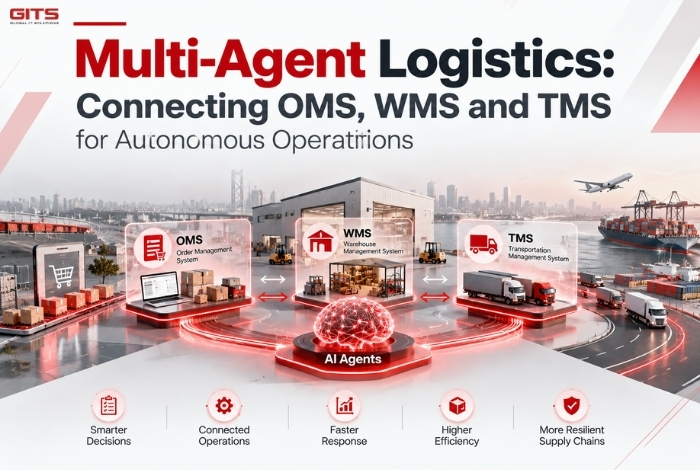
Integrating a WMS with ERP, OMS, and TMS allows inventory and order information to flow across business functions. Sales teams can access more reliable stock information, logistics teams can coordinate dispatch more effectively, and managers can make decisions using a more consistent operational picture.
This integration is particularly valuable for enterprises managing multiple facilities, sales channels, or complex distribution networks.
From Warehouse Automation to AI-Driven Operations
While a WMS improves process control and inventory visibility, AI introduces new opportunities to make warehouse operations more adaptive and predictive.
AI-powered analytics can identify demand patterns, detect unusual inventory movements, and support more accurate replenishment planning. AI Agents can extend these capabilities by monitoring operational events, identifying exceptions, and recommending or executing predefined actions within authorized workflows.
For example, an Inventory AI Agent could detect a potential stock shortage and notify the responsible team. A predictive operations agent could identify recurring picking delays and suggest adjustments to warehouse workflows.
With Agentic AI, multiple specialized agents may coordinate tasks across connected systems, subject to business rules, permissions, and human oversight.
However, AI cannot compensate for unreliable inventory data or poorly defined processes. A well-integrated WMS, consistent data standards, and clear operational rules remain essential foundations for meaningful AI adoption.

What Businesses Should Consider When Choosing a WMS
Selecting a WMS is not just a software decision. It is a long-term operational investment that should reflect the company’s business model, warehouse complexity, and digital transformation roadmap.
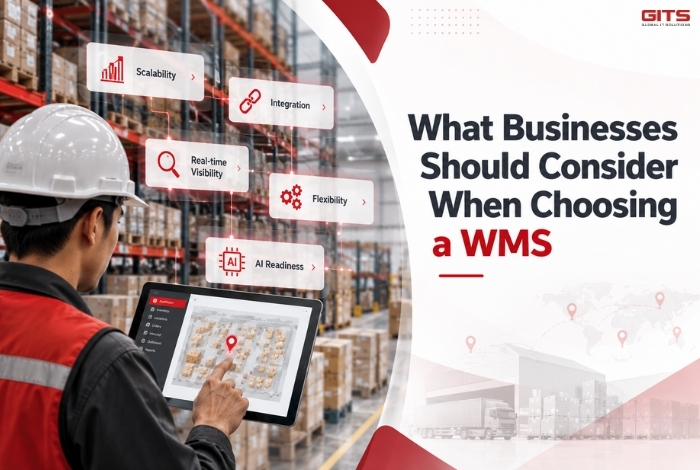
Key considerations include:
– Scalability: Can the system support additional warehouses, higher order volumes, and future business expansion?
– Integration capabilities: Can it connect with existing ERP, OMS, TMS, automation equipment, and enterprise applications?
– Real-time visibility: Does it provide accurate inventory information and traceability across warehouse activities?
– Flexibility: Can workflows and business rules adapt to different products, facilities, and operating requirements?
– AI readiness: Can the system support reliable data exchange, analytics, and future AI-driven automation?
For companies in Japan and South Korea, where operational standardization, traceability, quality control, and process consistency are important considerations, implementation should also account for existing business practices and local operational requirements. In Vietnam and global markets, flexibility and scalability may be equally important as businesses expand across facilities and distribution channels.
A successful WMS implementation should improve daily execution while supporting broader enterprise digital transformation (DX).
>>> See More: Multi-Agent Logistics: Connecting OMS, WMS and TMS
Knowing Where Your Goods Are Is the First Step Toward Smarter Operations
Having inventory does not automatically mean having control over it. When businesses cannot locate products, verify stock availability, or track warehouse movements reliably, operational efficiency and customer commitments are put at risk.
A modern Warehouse Management System bridges the gap between physical inventory and digital visibility. By connecting warehouse processes, improving inventory accuracy, and enabling real-time decision-making, it creates a stronger foundation for automation and AI-driven operations.
For businesses looking to move toward a smart warehouse, the starting point is straightforward: establish clear visibility into every product, every location, and every movement.
Because a warehouse becomes truly intelligent not when it simply holds more goods, but when the business knows exactly what is happening inside it.
GITS: Turning Warehouse Visibility into Smarter Operations
Improving warehouse visibility requires more than implementing new software. Businesses need a technology partner that understands operational complexity and can translate business requirements into practical digital solutions.
At GITS, we approach warehouse digital transformation through tailored Warehouse Management System (WMS) solutions designed to improve inventory accuracy, streamline warehouse workflows, and connect operational data across the supply chain.
Our capabilities extend beyond inventory tracking. By integrating WMS with ERP, OMS, TMS, and other enterprise systems, GITS helps businesses build a more connected operational environment that supports real-time visibility, process standardization, and scalable growth.
As a DX consultant for manufacturing, logistics, and wholesale and retail businesses, GITS also explores the potential of AI, automation, and AI Agents to support smarter warehouse operations. This creates opportunities for businesses to move progressively from manual processes toward more data-driven and intelligent workflows.
Whether your business is addressing inventory discrepancies, managing multiple warehouse locations, or preparing for AI-driven operations, the right solution starts with understanding your current challenges and long-term objectives.
Discover how GITS WMS can help your business improve warehouse visibility and build a smarter, more connected supply chain. Explore our WMS solutions to learn more about our approach to warehouse digital transformation.