







Enterprise AI is entering a new phase of evolution, where intelligence is no longer limited to generating insights but is increasingly expected to take action. Across Japan, Korea, Vietnam, and global markets, businesses are under constant pressure to improve operational efficiency, reduce costs, and adapt faster to market volatility. Over the last decade, companies have invested heavily in AI transformation, implementing machine learning, predictive analytics, and intelligent automation into their core systems.
However, despite these investments, many enterprises still face the same structural limitation. Their AI systems can process data, predict trends, and identify patterns, but execution still relies heavily on human intervention. This disconnect between intelligence and action creates delays, inefficiencies, and lost opportunities, especially in industries where speed directly impacts competitiveness.
This is where Agentic AI is becoming a game changer. Rather than functioning as a passive analytical tool, Agentic AI introduces autonomous execution into enterprise workflows, enabling businesses to move beyond insight-driven operations into action-driven transformation. For organizations pursuing AX (AI Transformation), this shift is becoming less of an option and more of a competitive necessity.
According to Gartner, by 2028, nearly one-third of enterprise software applications will incorporate Agentic AI capabilities. At the same time, McKinsey & Company estimates that AI-driven workflow automation can reduce operational costs by as much as 30%, highlighting why autonomous AI is rapidly gaining traction across enterprise sectors.
What Is Agentic AI?
Agentic AI refers to a new generation of AI systems designed to operate with greater autonomy, decision-making capability, and contextual understanding. Unlike traditional AI models that are often limited to a single task or predefined workflow, Agentic AI can break down complex objectives into multiple actions, execute them independently, and continuously optimize performance based on new information.
This ability fundamentally changes how enterprises interact with AI. Instead of using AI as a tool that assists employees, businesses can deploy AI Agents as operational entities capable of managing workflows, coordinating systems, and making decisions in real time. This transforms AI from a support function into an active part of the enterprise infrastructure.
For example, in logistics, an AI Agent can detect shipping disruptions, analyze alternative routes, adjust warehouse allocations, and notify stakeholders automatically. In manufacturing, the same concept can be applied to identify production bottlenecks, reschedule workloads, and rebalance supply chain operations without waiting for manual approval.
This is the foundation of modern AI Transformation, where execution speed becomes as important as intelligence itself.
Why Agentic AI Is Surging in 2026
The rapid growth of Agentic AI is being driven by a convergence of several technology trends that are reshaping enterprise systems. The first major driver is the maturity of Large Language Models (LLMs), which have evolved from experimental tools into enterprise-grade infrastructure.
Companies such as OpenAI, Google, and Anthropic have accelerated the capabilities of LLMs, allowing them to understand context, reason across multiple steps, and interact with enterprise systems more effectively. This makes them a critical building block for Agentic AI.
At the same time, multi-agent architectures are becoming increasingly practical. Platforms developed by Microsoft, IBM, and NVIDIA are enabling enterprises to orchestrate multiple AI Agents across different workflows, creating collaborative AI ecosystems rather than isolated automation tools.
Another factor is the growing connectivity of enterprise software. As ERP, CRM, WMS, and TMS systems become more API-driven, AI Agents now have the ability to move across business functions, connect data streams, and execute actions without system silos. This interoperability is one of the biggest enablers of enterprise-scale Agentic AI adoption.
For markets like Japan and Korea, labor shortages and aging populations are also accelerating this transition. Businesses are increasingly seeking autonomous systems that can maintain operational continuity without relying on workforce expansion.
Agentic AI vs Traditional AI: What Has Changed?
Traditional AI and Agentic AI differ not only in capability but in business impact. Traditional AI is largely designed for analysis, prediction, or recommendation. It can tell businesses what might happen, but it rarely takes the next step.
Agentic AI, by contrast, is built around execution. It can move from identifying a problem to taking action, adapting as conditions change, and collaborating across systems. This creates a much more dynamic operational model where workflows can continue with minimal interruption.
For enterprises, this distinction is significant. Traditional AI often improves decision quality, but Agentic AI improves both decision quality and operational speed. This dual advantage is what makes it so valuable for businesses undergoing AX.

Why Traditional Enterprise AI Is No Longer Enough
Many enterprise AI projects fail to deliver their expected ROI because they remain fragmented. AI tools are often deployed in isolated departments, solving individual problems without creating connected business value.
This fragmentation creates several major pain points. First, decision-making remains slow because human teams still need to validate and execute AI recommendations. In sectors like logistics and manufacturing, even minor delays can have cascading effects across the supply chain.
Second, operational costs continue to rise as businesses scale. In fast-growing markets like Vietnam and Southeast Asia, many companies find themselves increasing labor dependency rather than reducing it, which limits margin growth.
Third, scalability becomes difficult. Disconnected AI systems may work in small environments, but they struggle to support complex, cross-functional enterprise workflows. This is where Agentic AI provides a stronger foundation.
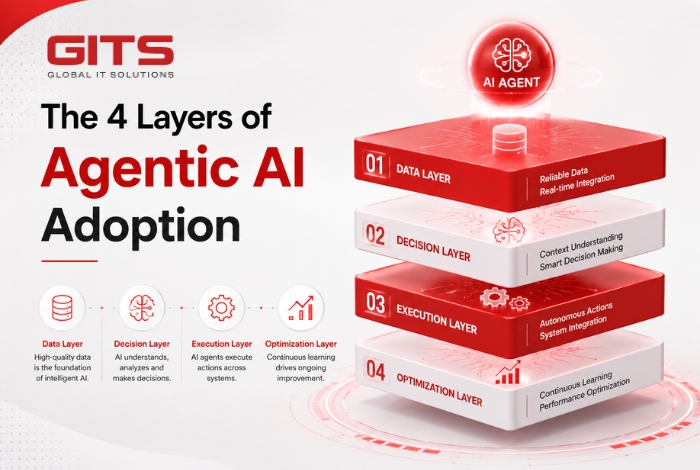
The 4 Layers of Agentic AI Adoption
To implement Agentic AI successfully, enterprises need a structured framework that supports autonomous execution while maintaining governance and operational control.
The first layer is the Data Layer, which acts as the foundation for all Agentic AI systems. Clean, accessible, and real-time data ensures that AI Agents can make accurate decisions and respond quickly to operational changes.
The second layer is the Decision Layer, where AI models interpret information, evaluate possible actions, and align decisions with business logic. This is where intelligence becomes contextual.
The third layer is the Execution Layer, where AI Agents interact with systems such as ERP, CRM, WMS, and TMS to perform tasks autonomously. This is the operational core of Agentic AI.
The final layer is the Optimization Layer, which enables continuous feedback and learning. Through performance analysis and new data inputs, AI Agents can improve over time, creating self-optimizing business operations.
Together, these four layers create a scalable roadmap for enterprise AX.
How Agentic AI Powers Enterprise AX
Agentic AI changes the nature of enterprise operations by transforming workflows from reactive to autonomous. Instead of waiting for issues to arise and then responding manually, businesses can create systems that proactively identify risks and act immediately.
In warehouse operations, for example, an AI Agent can detect inventory shortages, trigger replenishment requests, optimize picking paths, and predict delivery risks simultaneously. This reduces delays and improves service reliability.
In enterprise environments powered by platforms such as SAP, Oracle, and Salesforce, Agentic AI enables cross-platform collaboration, allowing workflows to move seamlessly between departments.
This ability to execute in real time is one of the strongest drivers of enterprise competitiveness, especially in volatile and high-demand markets.

Industry Use Cases of Agentic AI
In logistics and supply chain management, Agentic AI is improving transportation planning, warehouse allocation, and route optimization. This allows businesses to reduce costs while increasing delivery reliability.
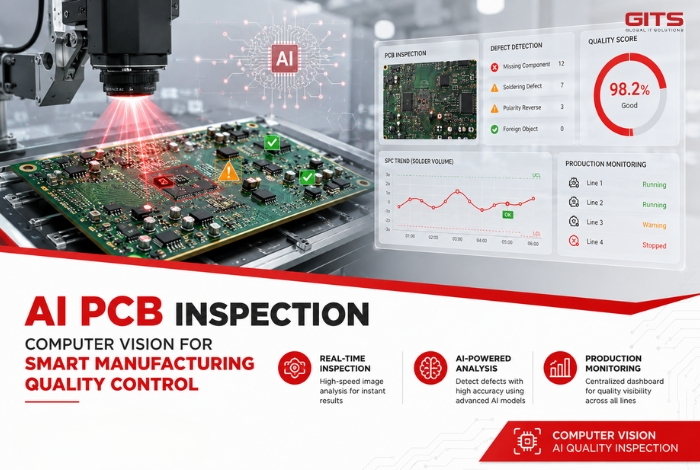
In manufacturing, Agentic AI is supporting predictive maintenance, production scheduling, and quality assurance. This aligns particularly well with smart factory initiatives in Japan and Korea, where precision and uptime are critical.
Retail and ecommerce companies are using Agentic AI to optimize pricing, manage inventory dynamically, and personalize customer experiences. These capabilities directly improve customer retention and revenue growth.
In healthcare, Agentic AI is helping improve patient scheduling, diagnostics support, and operational resource planning. As healthcare systems face growing demand, especially in aging societies, this becomes increasingly valuable.
Why IT Outsourcing Is Accelerating Agentic AI Adoption
Building enterprise-grade Agentic AI internally requires a combination of AI engineering, data architecture, integration capability, and domain expertise. For many businesses, developing all of these capabilities in-house can be expensive and time-consuming.
This is why IT outsourcing has become an increasingly strategic pathway for Agentic AI adoption. Vietnam, in particular, is emerging as a strong destination for AI development due to its growing engineering talent, cost competitiveness, and strong expertise across logistics, manufacturing, and ecommerce.
For Japanese and Korean enterprises, partnering with Vietnam-based IT outsourcing companies provides a practical route to accelerate AX initiatives without increasing internal complexity. This model reduces time-to-market while maintaining scalability.
>>> See More: Agentic AI Frameworks: What Enterprises Need Before Scaling AI
How to Prepare Your Business for Agentic AI
Before adopting Agentic AI, businesses need to assess their readiness carefully. Data quality remains the first priority, as autonomous AI depends heavily on clean and connected information.
Workflow complexity should also be evaluated to identify high-friction processes where Agentic AI can deliver the highest ROI. These often include supply chain operations, customer service workflows, and internal resource planning.
System connectivity is equally critical. Enterprise platforms must be able to exchange data through APIs to allow AI Agents to move seamlessly across workflows.
Finally, governance and security should be established from the beginning. As Agentic AI becomes more autonomous, maintaining compliance, transparency, and control becomes essential, particularly in regulated industries.
The Future of Enterprise Belongs to Autonomous Operations
The next generation of enterprise transformation will not simply be defined by who uses AI, but by who can operationalize AI at scale. Agentic AI is introducing a new model where intelligence, execution, and optimization happen continuously within the same ecosystem.
This shift represents more than just automation. It marks the beginning of autonomous enterprise infrastructure, where business systems can think, act, and adapt in real time.
For enterprises across Japan, Korea, Vietnam, and global markets, the transition is already underway. Businesses that move early will build stronger resilience, faster operations, and deeper competitive advantages.
Agentic AI Is No Longer Optional
Agentic AI is rapidly becoming the foundation of next-generation enterprise transformation. As competition intensifies and operational complexity grows, businesses can no longer rely on AI systems that stop at recommendations.
The ability to move from insight to action is becoming the defining advantage of modern enterprises. Companies adopting Agentic AI today are positioning themselves to achieve faster decision-making, lower operational costs, greater scalability, and stronger customer experiences.
The future belongs to businesses that can operate autonomously, adapt continuously, and scale intelligently. In that future, Agentic AI will not just be a supporting technology. It will be the engine powering enterprise growth.