





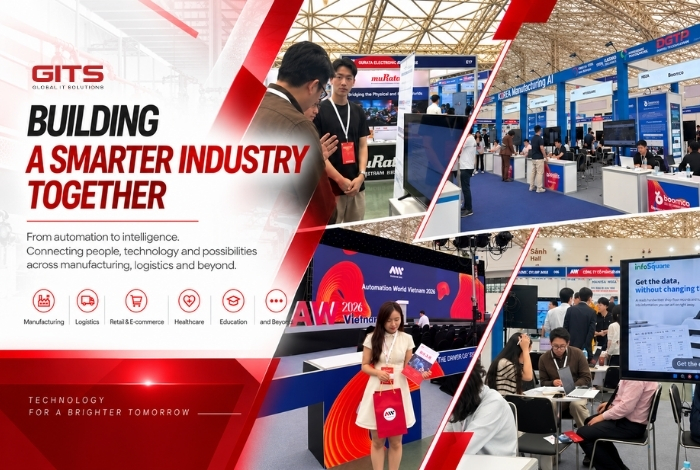
The future of industry is no longer a distant vision. It is being built today through automation, artificial intelligence, connected data, and digital transformation.
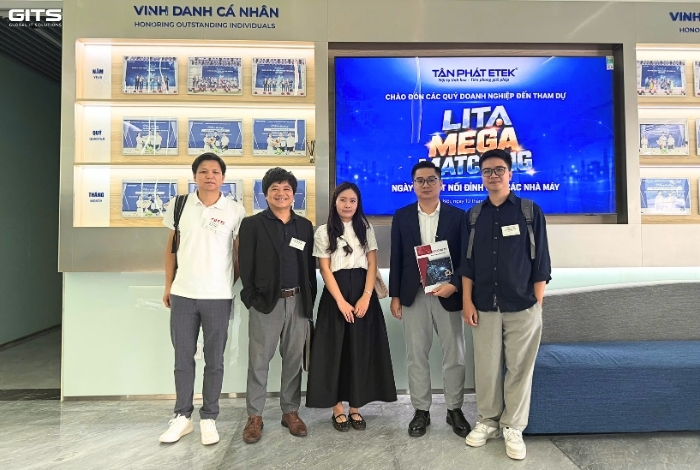
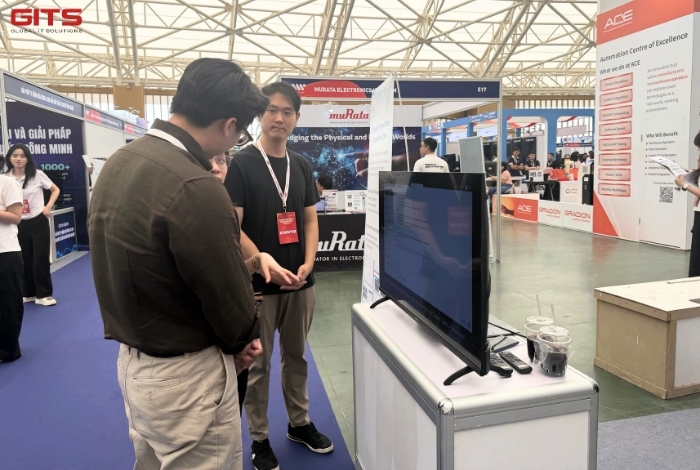
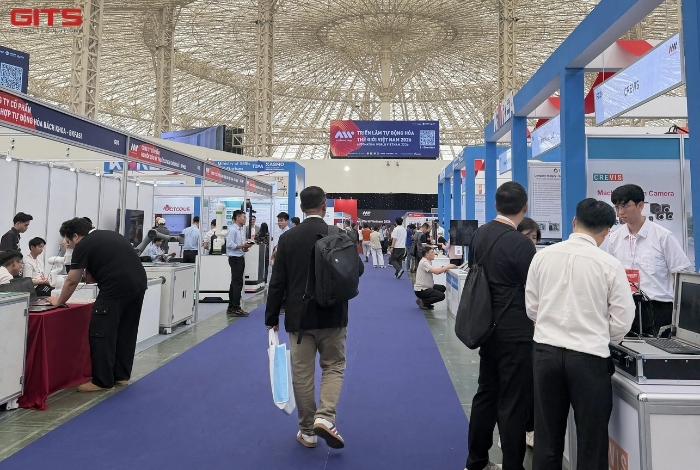
GITS was pleased to participate in Automation World Vietnam 2026, a leading industry event bringing together technologies and solutions across smart manufacturing, robotics, industrial automation, logistics, and AI.
For GITS, the event represented more than an opportunity to explore emerging technologies. It provided valuable insight into how businesses are redefining their operational models and moving toward a new stage of industrial transformation — from automation to intelligence, and from traditional DX to AI-driven transformation.
From Automation to Intelligent Operations
Industrial automation has already transformed how businesses manufacture products, manage warehouses, and move goods. However, automation alone is no longer sufficient to address the increasingly complex demands of modern enterprises.
Businesses today need systems that can not only execute processes, but also connect information, analyze operational data, identify opportunities, and support better decisions.
This shift is driving the evolution from conventional automation toward intelligent operations.
For manufacturers and logistics providers, the next generation of digital transformation is increasingly focused on:
– Real-time operational visibility
– Intelligent process optimization
– Data-driven decision-making
– AI-powered forecasting and planning
– Connected manufacturing and supply chain systems
– Scalable digital infrastructure
The combination of Digital Transformation (DX) and AI Transformation (AX) is therefore becoming a strategic priority for enterprises seeking sustainable competitiveness.
Smart Manufacturing Requires Connected Data
One of the key themes highlighted at Automation World Vietnam 2026 was the growing convergence between manufacturing, AI, robotics, and data.
A smart factory is not simply a factory equipped with automated machines. Its real value comes from the ability to connect data across production processes and turn that data into actionable intelligence.
Manufacturing enterprises increasingly need to connect information from:
Production → Inventory → Warehouse → Orders → Transportation → Distribution
When these operational layers remain fragmented, businesses may struggle with limited visibility, duplicated data, manual coordination, and delayed decision-making.
GITS focuses on addressing this challenge by developing technology solutions that connect people, processes, and data across manufacturing and logistics operations.
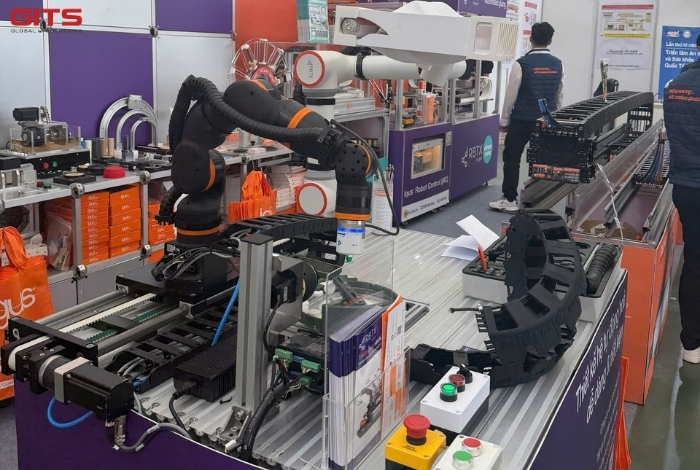
Connecting Manufacturing and Logistics Through Digital Transformation
Manufacturing efficiency cannot be separated from supply chain performance.
Production planning, inventory availability, warehouse operations, order fulfillment, transportation, and distribution are interconnected. A disruption in one area can quickly affect the entire supply chain.
For this reason, GITS is continuously expanding its capabilities across Manufacturing and Logistics, with a focus on creating connected digital ecosystems rather than isolated software applications.
Our technology solutions are designed to support key operational areas including:
– Distribution Management
– Production and operational optimization
By connecting these functions, enterprises can establish a more comprehensive view of their operations and create a stronger foundation for AI-driven optimization.
AI Transformation: The Next Stage of Industrial DX
Digital transformation has traditionally focused on digitizing processes and improving operational efficiency.
The next stage is about making those digital systems more intelligent.
AI Transformation enables enterprises to move beyond simply collecting and visualizing data toward using data to support predictions, recommendations, optimization, and decision-making.
For example, AI can contribute to areas such as:
– Demand forecasting
– Production planning
– Inventory optimization
– Warehouse operations
– Transportation planning
– Resource allocation
– Operational risk analysis
The objective is not to replace existing business processes with AI overnight. Instead, enterprises can progressively integrate intelligence into their existing digital infrastructure.
This approach is particularly relevant for organizations in Japan and Korea, where operational reliability, process consistency, data utilization, and long-term technology scalability are essential to successful DX initiatives.
Building Scalable Technology for Global Enterprises
Every organization has different operational structures and transformation priorities.
A manufacturing enterprise may prioritize production efficiency and planning, while a logistics company may focus on warehouse visibility, transportation optimization, or distribution performance.
Therefore, effective digital transformation requires more than implementing a standardized system. It requires technology that can adapt to the business processes, industry requirements, and growth strategies of each organization.
GITS aims to support enterprises through this transformation by combining technology capabilities with practical business understanding.
Our ambition is to build solutions that are:
– Connected — bringing people, processes, and data together.
– Intelligent — enabling businesses to leverage AI and data more effectively.
– Scalable — supporting organizations as their operations and markets grow.
>>> See More: AI Transformation Roadmap 2026 for Enterprise
Building the Next Chapter of Industrial Transformation
Automation World Vietnam 2026 offered a valuable perspective on where the industry is heading.
The direction is clear: automation is becoming more intelligent, data is becoming more strategic, and AI is increasingly embedded in business operations.
At GITS, we believe the next generation of industrial transformation will be defined not by individual technologies, but by how effectively businesses connect these technologies to create measurable operational value.
From Manufacturing DX and smart factories to logistics automation and AI-driven supply chains, GITS continues to expand its capabilities to support enterprises on this journey.
The next chapter of industrial transformation has already begun.
GITS is ready to build it together.