





Legacy system modernization has become a strategic priority for enterprises across Japan, Korea, and global markets. As business environments grow more dynamic, organizations can no longer rely on outdated platforms that limit scalability, integration, and responsiveness.
In many enterprises, Lotus Notes—once a reliable foundation—has evolved into a constraint. Disconnected workflows, limited integration capabilities, and increasing maintenance risks are no longer just technical concerns. They directly impact operational efficiency, compliance, and the ability to respond quickly to market changes.
Modernization is no longer an optional upgrade. It is a critical enabler of enterprise agility and long-term competitiveness.
Enterprise context and transformation drivers
The enterprise in this case operated a large ecosystem of internal applications built on Lotus Notes over several years. These systems supported essential business processes, including approvals, internal coordination, and reporting across multiple departments.
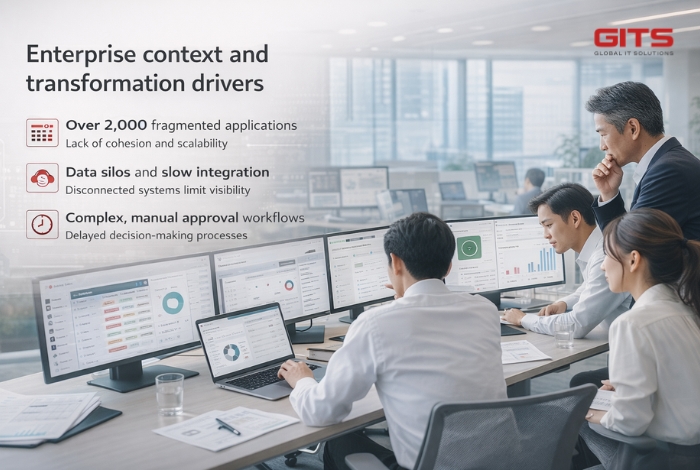
As the organization scaled, the system landscape became increasingly complex. More than 2,000 applications were in operation, serving over 3,500 users. While functional, the system lacked cohesion and scalability.
The turning point came when the organization recognized that its legacy architecture was slowing down decision-making, limiting visibility across departments, and increasing operational risk. The need for a unified, scalable, and future-ready platform became urgent.
Critical limitations of legacy architecture
The existing system environment revealed several structural limitations that extended beyond technical inefficiencies.
Fragmentation across applications created inconsistencies in data and workflows. Since systems were developed independently, duplication became inevitable, increasing both maintenance effort and the risk of errors.
Integration constraints further compounded the problem. The inability to seamlessly connect with ERP systems, cloud services, and external APIs resulted in data silos. This lack of real-time visibility directly impacted management decision-making and reporting accuracy.
Development agility was also significantly restricted. The organization relied on specialized Lotus Notes expertise, making it difficult to scale development resources or adapt quickly to new business requirements.
From a user perspective, outdated interfaces reduced productivity and created friction in daily operations. This gap between system capability and user expectation became increasingly unsustainable.
Strategic approach to Out Systems migration
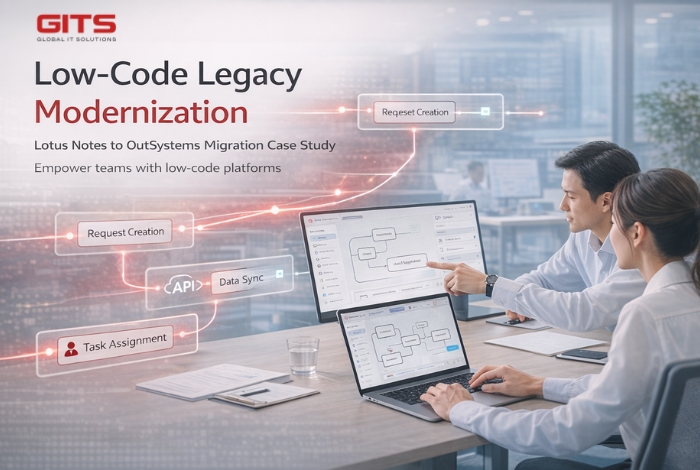
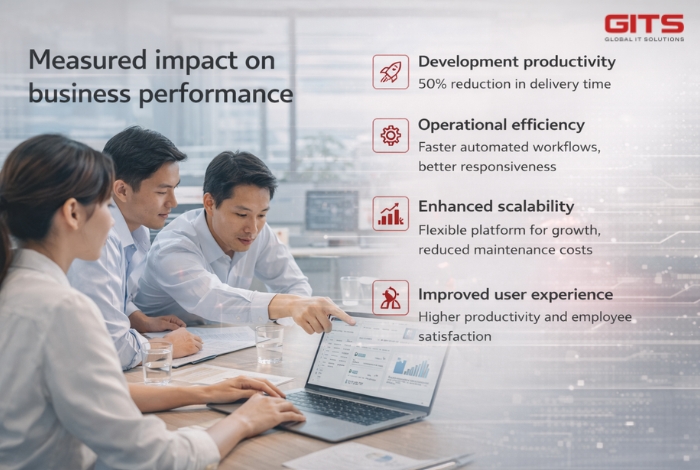
To address these challenges, the enterprise adopted a low-code development strategy using Out Systems as the core platform for modernization.
Rather than executing a full replacement at once, the organization implemented a phased migration strategy. High-impact applications were prioritized, allowing the business to achieve early results while maintaining operational stability.
A key focus was the standardization of application architecture. By introducing reusable components and unified data models, the enterprise reduced duplication and established a consistent foundation for future development.
At the same time, an API-driven integration layer was implemented. This enabled seamless connectivity with existing enterprise systems, ensuring real-time data flow and improving cross-functional collaboration.
The adoption of low-code development significantly accelerated delivery cycles. Rapid prototyping and iteration allowed the organization to respond quickly to evolving business needs without compromising system quality.
Vietnam IT outsourcing played a central role in execution. By leveraging highly skilled engineering teams with expertise in Out Systems, the enterprise was able to scale development efficiently while maintaining cost control.
Measured impact on business performance
The modernization initiative delivered clear and measurable outcomes across multiple dimensions.
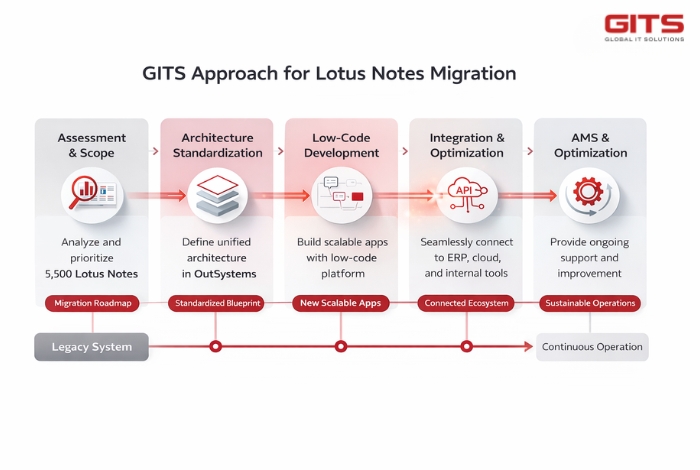
Development productivity improved substantially, with application delivery time reduced by approximately 50 percent. This enabled faster deployment of new features and reduced backlog pressure on internal teams.
Operational efficiency increased as manual processes were automated and redundant workflows eliminated. Approval cycles that previously took days were shortened to hours, improving responsiveness across departments.
System performance and scalability were significantly enhanced. The new architecture provided a stable and flexible foundation capable of supporting future growth and integration requirements.
From a financial perspective, the organization reduced long-term maintenance costs by minimizing reliance on legacy technologies and specialized resources. At the same time, improved user experience contributed to higher employee productivity and satisfaction.
Project scale and execution timeline
This transformation was executed at enterprise scale, involving thousands of applications and users across multiple business units.
The project began with a comprehensive assessment phase, during which applications were evaluated and prioritized based on business impact. A pilot migration established technical standards and validated the approach.
The subsequent phase focused on migrating core systems and critical workflows. This stage delivered the majority of business value while ensuring continuity of operations.
The final phase centered on optimization, performance enhancement, and full system integration. This structured approach allowed the organization to continuously deliver value while minimizing risk throughout the transformation journey.
Vietnam IT outsourcing as a strategic enabler
Vietnam IT outsourcing was not simply a cost optimization choice. It was a strategic enabler of transformation success.
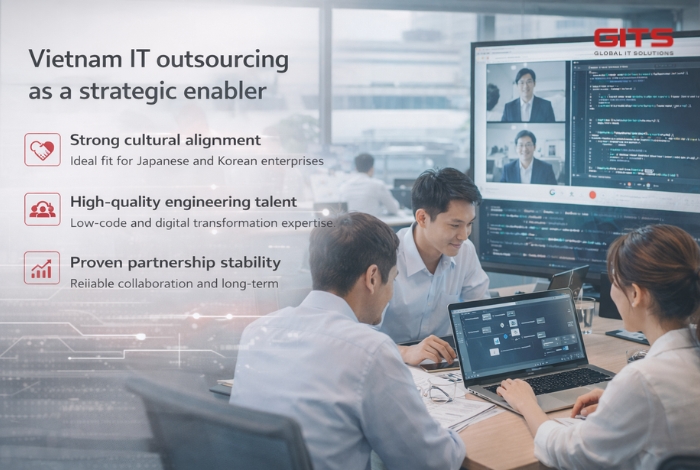
Vietnam offers a strong combination of technical expertise, particularly in low-code platforms, and the ability to scale engineering teams rapidly. This allowed the enterprise to accelerate development without compromising quality.
For Japanese and Korean enterprises, Vietnam also provides a high level of cultural and operational alignment. Strong collaboration capabilities, disciplined delivery models, and a focus on long-term partnership make it an ideal outsourcing destination.
Compared to traditional outsourcing markets, Vietnam delivers a balanced value proposition that combines cost efficiency with high-quality engineering and reliable execution.
>>> See More: Low-code invoice processing
A proven model for enterprise modernization
This case demonstrates that legacy system modernization, when executed strategically, can deliver far more than technical improvement. It enables enterprises to transform how they operate, innovate, and scale.
By combining a phased migration strategy, a low-code platform like Out-Systems, and the strengths of Vietnam IT outsourcing, organizations can reduce risk while accelerating transformation.
For enterprises facing similar challenges with legacy systems, this approach provides a proven and practical pathway toward building a modern, agile, and future-ready digital ecosystem.