





Vietnam is rapidly emerging as a strategic destination for AI development, particularly for enterprises in Japan and South Korea that are seeking scalable, reliable, and cost-efficient technology partners. In recent years, the country has moved beyond traditional IT outsourcing and is now actively contributing to high-value AI initiatives across multiple industries.
Understanding Vietnam’s AI development capability is no longer just about evaluating technical skills. It requires a broader view that includes execution capability, system integration expertise, and the ability to deliver measurable business outcomes in real operational environments.
What is Vietnam’s AI development capability
Vietnam’s AI development capability refers to its ability to design, build, and deploy end-to-end AI solutions aligned with enterprise needs. This capability is driven by a combination of skilled engineering talent, flexible delivery models, and strong experience in integrating AI into existing systems.
Compared to Japan and South Korea, Vietnam offers a more efficient cost structure while maintaining a high level of technical quality. At the same time, development teams are able to move quickly from proof of concept to production, which is critical for enterprises aiming to accelerate innovation without increasing operational risk.
Vietnamese companies also demonstrate strong experience in working with enterprise platforms such as ERP, WMS, and TMS. This makes them particularly effective in deploying AI solutions within complex business environments.
Vietnam’s AI development capability in the global context
Over the past decade, Vietnam has evolved from a conventional outsourcing destination into a capable AI development partner. This transformation reflects both the growth of technical expertise and a deeper understanding of business-driven technology solutions.
For enterprises in Japan and South Korea, this shift creates a clear advantage. Companies can access a workforce that is not only technically capable but also able to support continuous innovation. This enables faster experimentation, shorter development cycles, and a smoother transition from concept to implementation.
Core strengths driving AI development in Vietnam
High quality talent with strong execution capability
Vietnam’s engineering talent is one of its most important assets. AI engineers in Vietnam are known for their strong technical foundation and their ability to quickly adapt to new technologies. Instead of focusing solely on theoretical models, they emphasize practical implementation, which is essential for enterprise applications.
This approach allows businesses to move beyond experimentation and focus on solutions that can be deployed and scaled effectively. As a result, enterprises can shorten time to market while maintaining technical reliability.
Cost efficiency with measurable business impact
Cost efficiency in Vietnam should be understood as a driver of value rather than simply a reduction in expenses. By lowering development costs, enterprises can allocate more resources toward innovation, testing, and scaling.
For Japanese and Korean companies, this creates a balanced approach to AI adoption. They can pursue advanced initiatives while maintaining strict control over budgets and risks, which is a key requirement in enterprise decision-making.
Mature collaboration with Japanese and Korean enterprises
Vietnam has a long history of working with Japanese and Korean companies, resulting in strong alignment with their business culture and operational expectations. Development teams are familiar with structured workflows, quality standards, and communication practices that are essential for these markets.
This alignment reduces friction in collaboration and ensures consistency in project execution. In complex AI projects, where precision and clarity are critical, this compatibility becomes a major advantage.

AI outsourcing Vietnam as a strategic advantage
From outsourcing to strategic AI partnership
Vietnam is increasingly taking on the role of a strategic AI partner rather than a simple outsourcing destination. Companies now participate in the full lifecycle of AI development, from initial consulting to deployment and ongoing optimization.
This shift is particularly valuable for enterprises that aim to build long-term capabilities rather than isolated solutions. By working with partners who understand both technology and business context, companies can ensure that their AI initiatives deliver sustainable results.
Industry specific AI applications
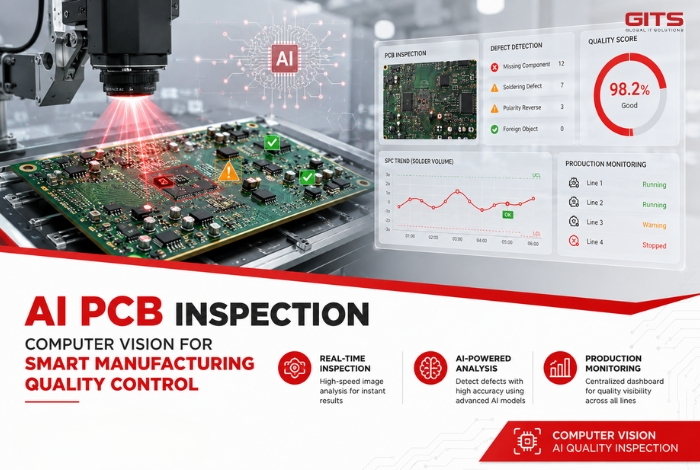
Vietnam’s AI ecosystem is characterized by its ability to deliver solutions tailored to specific industries. In logistics, AI is applied to optimize routes and forecast demand, helping companies improve efficiency. In manufacturing, computer vision is used to detect defects and maintain quality. Retail businesses benefit from personalized recommendation systems, while healthcare organizations leverage AI for data analysis and diagnostic support.
These use cases demonstrate a strong focus on solving real business problems and delivering measurable value.
Seamless integration into enterprise systems
One of the biggest challenges in AI adoption is integration with existing systems. Vietnamese teams have developed strong expertise in connecting AI models with enterprise platforms such as ERP, WMS, and TMS.
By implementing AI in a phased and controlled manner, they ensure that solutions are introduced without disrupting operations. This approach minimizes risk while enabling enterprises to gradually unlock the full potential of AI.
Reliability and governance in AI development partnerships
For enterprises in Japan and South Korea, reliability and risk control are essential. AI projects must be stable, secure, and governed by clear processes. Vietnamese technology partners are increasingly addressing these requirements by implementing structured quality assurance practices, data governance frameworks, and transparent project management.
This focus on reliability ensures that AI systems can be maintained and scaled over time. It also builds the trust necessary for long-term strategic partnerships.
GITS approach to AI development
At GITS, AI development is approached from a business-first perspective. Instead of focusing solely on technology, we prioritize solutions that address real operational challenges and deliver measurable outcomes.
Our team works closely with clients to ensure seamless integration of AI into existing systems. With strong experience in logistics, manufacturing, and enterprise platforms, we help organizations transform AI concepts into scalable and sustainable solutions.
AI delivery model for enterprise adoption
Successful AI adoption requires a structured delivery model. The process typically begins with a proof of concept to validate feasibility and define clear success metrics. This is followed by the development of a minimum viable product that aligns with business requirements. Once validated, the solution is scaled and continuously optimized to improve performance.
This phased approach allows enterprises to manage risk effectively while ensuring that each stage delivers tangible value.
Challenges and opportunities in Vietnam’s AI ecosystem
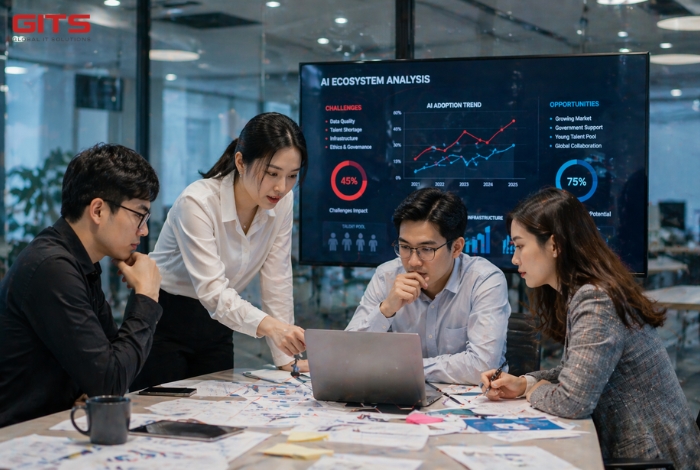
Despite its rapid progress, Vietnam still faces certain challenges. The number of highly experienced AI architects remains limited, and data standardization can vary across industries. In addition, the country has yet to produce a large number of globally recognized AI products.
However, these challenges also create opportunities for collaboration. International enterprises can partner with Vietnamese companies to co-develop advanced solutions and shape the future of AI innovation.
Future outlook of AI development in Vietnam
Looking ahead, Vietnam is expected to continue its transition from digital transformation to full-scale AI transformation. Enterprises will increasingly rely on AI to automate processes, enhance decision-making, and improve efficiency.
At the same time, the adoption of generative AI is expanding across areas such as customer service, content creation, and internal knowledge management. As these trends accelerate, Vietnam is well positioned to become a major AI hub in the Asia Pacific region.
>>> See More: How Outsourcing Partners Help Businesses Turn AI Ambition into Real Impact
FAQ
Is Vietnam a reliable destination for AI outsourcing
Vietnam is considered a reliable destination due to its combination of skilled talent, cost efficiency, and strong system integration capabilities. These factors make it suitable for long-term AI development initiatives.
Why do Japanese and Korean companies choose Vietnam for AI development
Companies from Japan and South Korea choose Vietnam because it offers a balance of quality, cost efficiency, and cultural alignment. This combination enables them to execute complex projects with greater confidence and efficiency.
Conclusion and strategic implications for enterprises
Vietnam’s AI development capability has evolved into a strategic advantage for enterprises seeking to innovate while maintaining operational stability. The country offers a strong combination of technical expertise, cost efficiency, and integration capability, making it an ideal partner for long-term AI initiatives.
At GITS, we are committed to delivering AI solutions that are practical, scalable, and aligned with business goals. As part of the growing Vietnam IT outsourcing ecosystem, we help enterprises move beyond experimentation and achieve real, measurable transformation.
For businesses in Japan and South Korea, engaging with Vietnam is not just an operational decision. It is a strategic move toward building sustainable competitive advantage in the AI-driven future.