






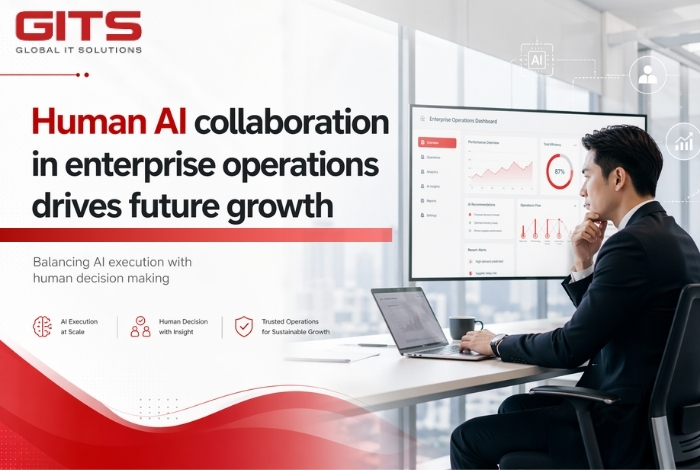
Human AI collaboration in enterprise operations is rapidly becoming a core strategy for modern businesses. Enterprises are no longer asking whether to adopt AI, but how to integrate it effectively into their operations.
In many organizations, AI automation has been implemented, but without clear structure. This often leads to confusion between human responsibilities and machine execution.
Human AI collaboration in enterprise operations addresses this gap. It defines how AI and humans work together, ensuring that operations are both scalable and controlled.
For enterprises in Japan and Korea, this approach is especially relevant. These markets demand high precision, strong governance, and long term reliability.
Human AI collaboration in enterprise operations as a future model
Human AI collaboration in enterprise operations is not just about adding AI into workflows. It is about redesigning how operations function.
In this model, AI focuses on execution. Humans focus on decision making. This creates a structured system where each role is clearly defined.
Human AI collaboration in enterprise operations enables faster execution while maintaining control over outcomes. This balance is essential for enterprise scale.
Organizations that adopt this model can improve efficiency without increasing operational risk.
The role of AI in enterprise operations
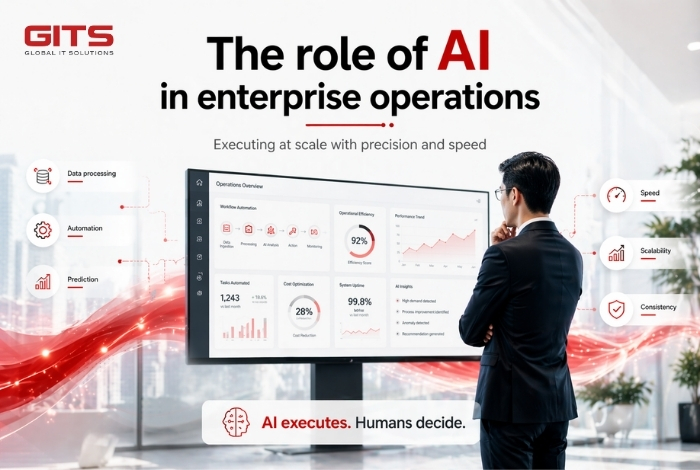
In Human AI collaboration in enterprise operations, AI acts as the execution engine.
AI is responsible for handling tasks that require speed, consistency, and scale. These include data processing, automation, and prediction.
For example, AI can process large datasets in real time. It can automate workflows such as invoice handling or logistics planning. It can also generate forecasts based on historical data.
AI automation enterprise systems are particularly effective in repetitive and rule based processes. They reduce manual workload and improve consistency.
However, AI has limitations. It operates based on data and predefined logic. It cannot fully understand context or handle unexpected scenarios.
This is why Human AI collaboration in enterprise operations requires a strong human layer.
The role of humans in enterprise operations
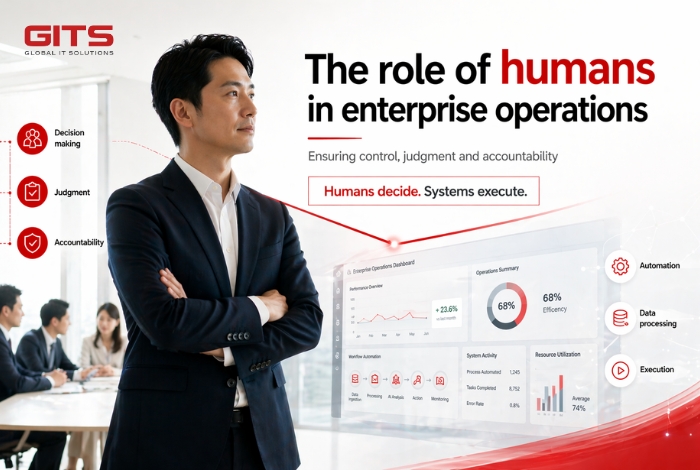
Humans play a critical role in Human AI collaboration in enterprise operations. They are responsible for decision making, validation, and control. Humans review AI outputs, especially in high impact situations. They handle exceptions that AI cannot process. They also ensure that decisions align with business goals.
In financial operations, humans approve high value transactions. In supply chain, they resolve disruptions. In healthcare, they make final diagnoses. Human in the loop AI ensures that automation does not compromise accuracy or compliance.
Human AI collaboration in enterprise operations depends on this balance. AI executes, but humans remain accountable.
Human AI collaboration in enterprise operations workflow model
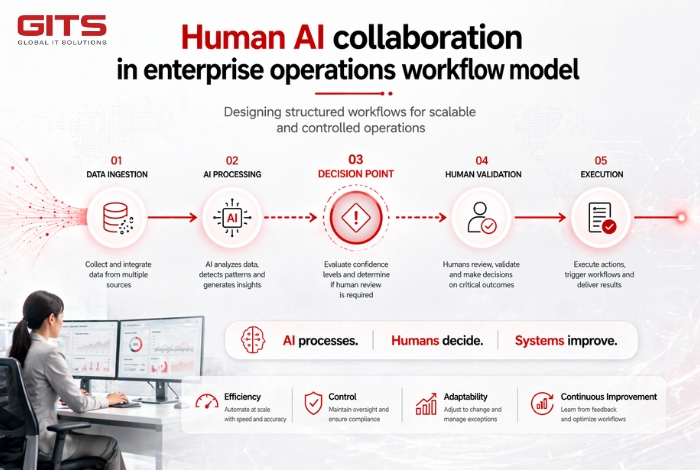
The success of Human AI collaboration in enterprise operations lies in how workflows are designed. A typical workflow begins with AI processing data. AI then generates recommendations or actions based on predefined logic. The system evaluates risk levels. If the situation is complex or high risk, human intervention is triggered.
Humans review the recommendation. They may approve, adjust, or reject it. Their decision is recorded and fed back into the system.
Over time, AI improves based on this feedback. This creates a continuous learning loop. Human AI collaboration in enterprise operations ensures that workflows are both efficient and adaptable.
Why Human AI collaboration in enterprise operations is critical for Japan and Korea
Human AI collaboration in enterprise operations aligns well with the needs of enterprises in Japan and Korea.
First, these markets require high operational precision. Human oversight ensures that AI outputs meet strict standards.
Second, governance and compliance are critical. Human AI collaboration in enterprise operations provides clear accountability and traceability.
Third, trust is essential for AI adoption. Organizations are more willing to adopt AI when humans remain in control.
This is why Human AI collaboration in enterprise operations is not just a trend. It is a necessity for these markets.
Industry applications of Human AI collaboration in enterprise operations
Human AI collaboration in enterprise operations can be applied across multiple industries.
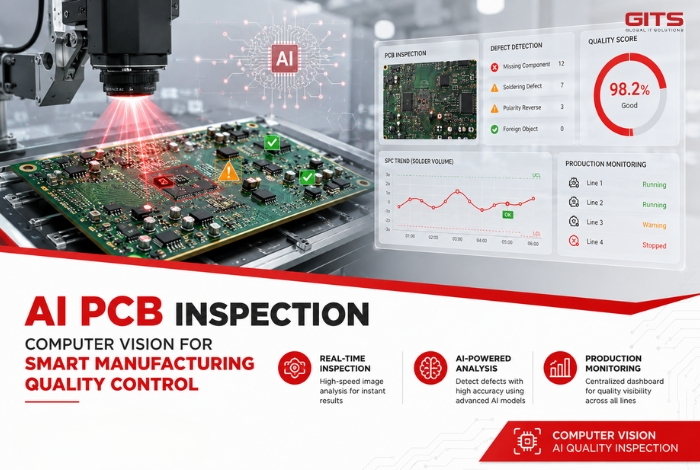
In manufacturing, AI predicts equipment failures and optimizes production. Humans validate and adjust plans.
In logistics, AI optimizes routes and delivery schedules. Humans handle disruptions and exceptions.
In retail, AI analyzes customer behavior and recommends products. Humans refine strategies and ensure brand alignment.
In healthcare, AI supports diagnosis and data analysis. Humans make final decisions to ensure safety.
These examples show how Human AI collaboration in enterprise operations delivers both efficiency and control.
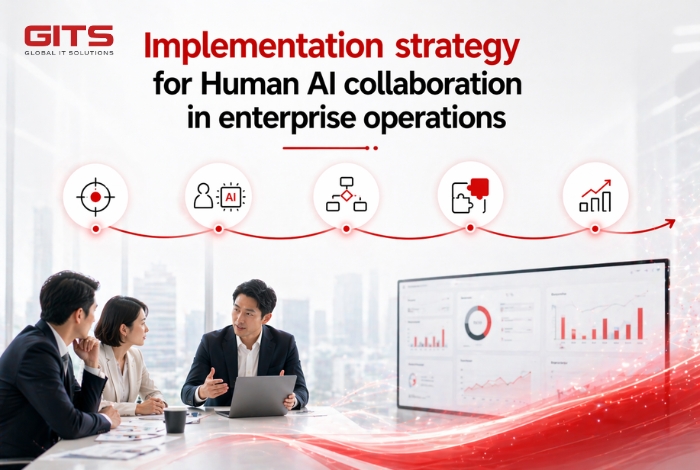
Implementation strategy for Human AI collaboration in enterprise operations
To implement Human AI collaboration in enterprise operations, enterprises need a structured approach.
First, identify high impact processes. Focus on areas where AI can deliver immediate value.
Second, define clear roles between human and AI. Establish boundaries for execution and decision making.
Third, integrate AI into existing systems. AI should enhance ERP and operational platforms, not replace them.
Fourth, build governance frameworks. Ensure that all AI decisions are traceable and explainable.
Finally, train employees to work with AI systems. Human AI collaboration in enterprise operations requires a shift in mindset.
Challenges in Human AI collaboration in enterprise operations
Despite its benefits, Human AI collaboration in enterprise operations presents challenges.
Resistance to change is common. Employees may be uncertain about working with AI.
Data quality is another issue. AI requires reliable data to function effectively.
Integration can also be complex. Enterprises must ensure that AI works seamlessly with existing systems.
However, these challenges can be addressed with proper planning and execution.
Human AI collaboration in enterprise operations is achievable with the right strategy.
>>> See More: Turning AI Into Real Enterprise Value with Vietnam AX Capability
Conclusion on Human AI collaboration in enterprise operations
Human AI collaboration in enterprise operations is shaping the future of enterprise transformation.
By combining AI driven execution with human decision making, businesses can achieve both efficiency and control. This balance is essential for sustainable growth.
For enterprises in Japan and Korea, Human AI collaboration in enterprise operations provides a practical way to scale while maintaining trust and compliance.
GITS delivers advanced solutions that enable seamless Human AI collaboration, helping enterprises design intelligent workflows and maintain full operational control.
With strong expertise in Vietnam IT outsourcing, GITS supports organizations in building scalable, reliable, and future ready enterprise operations powered by the right balance of human and AI.