





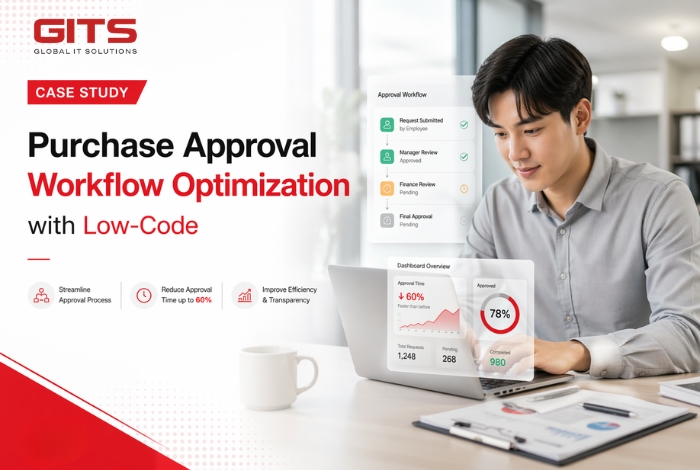
In manufacturing and logistics environments, inefficiencies in approval workflows often remain invisible until they begin to impact production timelines and operational costs. Manual validations, fragmented systems, and limited visibility can gradually slow down decision-making processes, creating bottlenecks that affect the entire organization.
This case study presents how a large enterprise addressed these challenges through purchase approval workflow optimization, leveraging low-code technology and Vietnam IT outsourcing to deliver a solution aligned with the high standards of Japanese and Korean businesses.
Client Background and Transformation Objectives
The client operates in a process-driven industry where procurement efficiency directly influences operational continuity. Over time, their system evolved into a complex structure of disconnected modules, making it difficult to manage approval workflows across departments.
Their primary objective was not only to shorten approval cycles but also to establish a more transparent and standardized process. At a strategic level, the company aimed to build a scalable system that could support long-term digital transformation while ensuring stability and reliability.

Technical Challenges in Legacy Workflow Systems
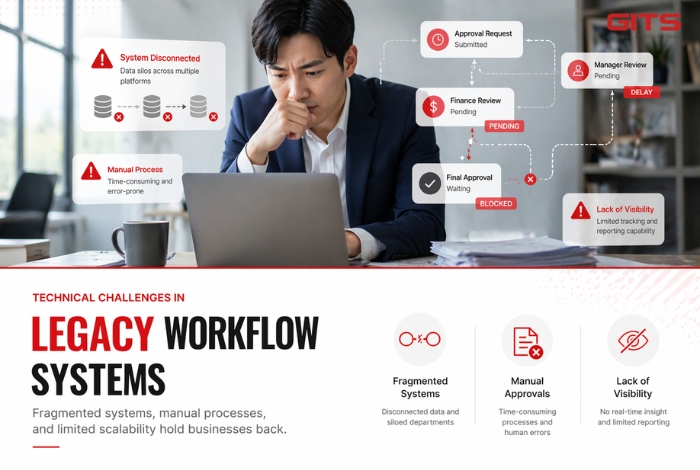
A comprehensive assessment revealed that the existing system struggled to support growing operational demands. The architecture lacked integration, leading to inconsistencies in data across departments. Approval processes were heavily dependent on manual coordination, increasing both processing time and the likelihood of errors.
Additionally, the system offered limited flexibility, making it difficult to implement changes without significant time and cost. The absence of real-time monitoring further reduced transparency, while insufficient audit mechanisms raised concerns about compliance and operational risk. These limitations are common in legacy environments and highlight the need for modern workflow automation solutions.
Low-Code Approach to Workflow Optimization
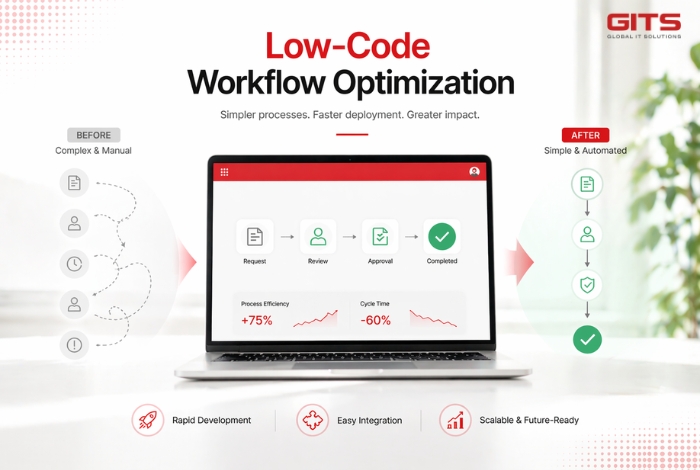
To overcome these challenges, the solution was designed using a low-code platform, enabling rapid development while maintaining enterprise-grade quality. The new system introduced a centralized workflow engine that seamlessly connected user interfaces, backend processing, and existing systems.
The user experience was simplified to ensure ease of adoption, allowing employees to submit and track requests efficiently. At the same time, approval processes were automated based on predefined business rules, significantly reducing manual intervention. Real-time dashboards provided visibility into every stage of the workflow, enabling faster and more informed decision-making.
A key priority throughout implementation was ensuring system reliability and risk control. Structured testing processes, secure data handling, and clear audit trails were incorporated to meet the expectations of enterprises in Japan and Korea, where stability and compliance are critical factors in technology adoption.
>>> See More: Low-Code invoice processing
The Strategic Value of Vietnam IT Outsourcing
The project leveraged Vietnam IT outsourcing as a strategic advantage, combining cost efficiency with high technical expertise. Rather than focusing solely on cost reduction, the approach emphasized delivering consistent quality, strong process discipline, and long-term system maintainability.
Engineering teams followed a structured delivery model with clear communication and governance, ensuring alignment with client expectations throughout the project lifecycle. This balance between flexibility and control is particularly important for Japanese and Korean enterprises seeking reliable offshore partners.
Measured Impact on Business Performance
Following implementation, the organization experienced a significant improvement in operational efficiency. Approval cycle times were reduced by up to 60%, allowing faster response to procurement needs and minimizing delays in production processes.
The system also improved accuracy by reducing manual errors and standardizing workflows across departments. Real-time visibility enhanced transparency, enabling better accountability and more effective decision-making. At the same time, the new architecture provided the flexibility needed to support future expansion and integration with advanced technologies such as AI-driven automation.
From a risk management perspective, the introduction of audit trails and controlled workflows strengthened compliance and reduced operational uncertainties.

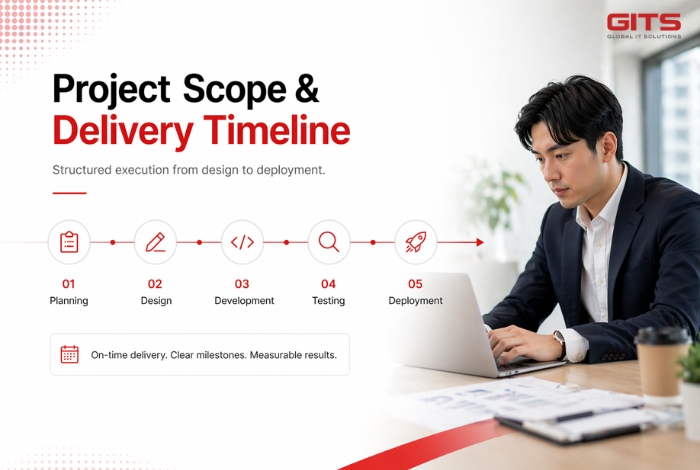
Project Scope and Delivery Timeline
The project covered the full development lifecycle, from requirement analysis to system deployment and optimization. It involved building a new workflow platform, integrating it with existing systems, and refining the user experience to ensure usability across departments.
A dedicated team including project management, business analysis, development, and quality assurance worked collaboratively under a hybrid delivery model that combined agile execution with structured governance. This approach ensured both speed and reliability throughout the implementation process.
The entire project was completed within approximately six months, supporting over 50 internal users and handling a high volume of procurement transactions without disrupting ongoing operations.
From Workflow Optimization to Long-Term Digital Strategy
This case study demonstrates that purchase approval workflow optimization is not merely a process improvement initiative but a foundational step toward broader digital transformation. By adopting low-code technology and leveraging Vietnam IT outsourcing, the client successfully built a system that balances efficiency, scalability, and reliability.
For enterprises in Japan and Korea, where operational stability and long-term value are critical, this approach provides a practical pathway from digital transformation to future-ready, AI-enabled operations.