






Global enterprises are under increasing pressure to modernize technology while controlling development costs, accelerating time-to-market, and addressing the shortage of skilled IT talent. Traditional outsourcing, however, is no longer enough.
Businesses today need technology partners capable of delivering AI Solutions, Agentic AI, cloud platforms, automation, and scalable Technical Solutions, not simply additional developers.
This is where Vietnam IT Outsourcing is becoming a strategic option for enterprises looking to build, modernize, and scale technology capabilities.
Why Vietnam IT Outsourcing Is Gaining Global Attention
Vietnam has evolved from a cost-focused outsourcing destination into a technology development hub supporting software engineering, cloud, data, AI, and digital transformation initiatives.
Current industry reports highlight Vietnam’s competitive development costs, growing engineering talent pool, and increasing capabilities in emerging technologies. Some 2026 market estimates place outsourced developer rates substantially below Western markets, while Vietnam continues to attract global technology investment.
For enterprises in Japan, South Korea, and global markets, the value proposition is increasingly straightforward: access strong technical capabilities without carrying the full cost and complexity of building an in-house team.
More Than Cost Reduction
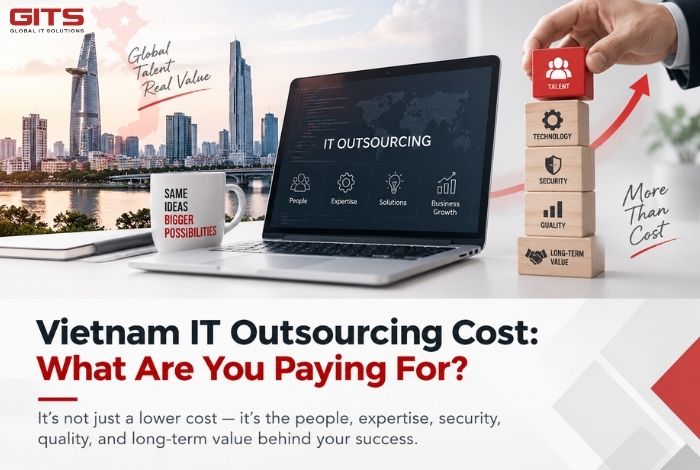
Cost efficiency remains important, but leading enterprises are looking beyond hourly rates. The real business value comes from combining:
• Skilled software engineers and technical specialists
• Flexible development capacity
• AI, cloud, data, and automation expertise
• Faster product and system delivery
• Long-term technical support and modernization
This shift transforms IT outsourcing from a staffing model into a strategic technology partnership.
What Can Enterprises Outsource to Vietnam?
Vietnam IT Outsourcing can support projects ranging from conventional software development to advanced enterprise transformation.
Common services include:
– Software Development: Web, mobile, enterprise applications, ERP, CRM, and custom platforms.
– Cloud & Data: Cloud migration, DevOps, data platforms, analytics, and system modernization.
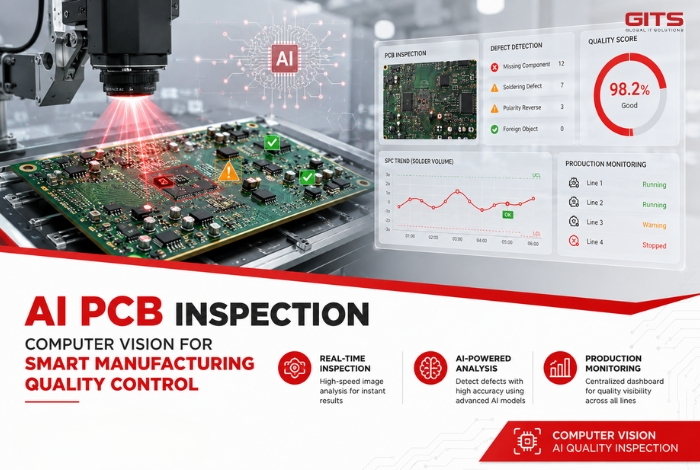
– AI Services: Generative AI, Machine Learning, Computer Vision, AI Chatbots, and intelligent automation.
– AI Agents & Agentic AI: Enterprises can move beyond standalone AI tools toward AI Agents capable of reasoning, interacting with systems, executing workflows, and supporting business operations.
– Digital Transformation & AX: Outsourcing partners can help organizations redesign processes, integrate AI into existing systems, and move toward AI-driven operations.
For industries such as manufacturing, logistics, healthcare, retail, e-commerce, and education, this creates opportunities to embed intelligence directly into operational systems rather than treating AI as an isolated experiment.
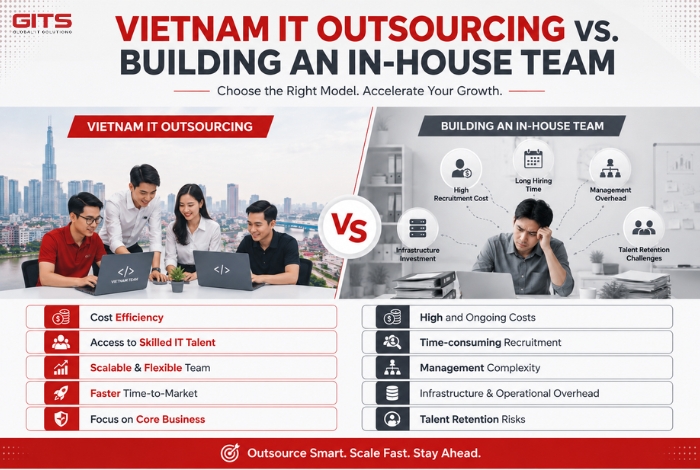
Vietnam IT Outsourcing vs. Building an In-House Team
Building an internal technology team provides control, but it can also create significant challenges: recruitment, retention, infrastructure, management overhead, and long hiring cycles.
An outsourcing model provides a more flexible alternative.
| Model | Best for | Key advantage |
|---|---|---|
| Project-based outsourcing | Defined projects | Predictable scope and cost |
| Dedicated team | Long-term development | Flexible scaling |
| Staff augmentation | Skill gaps | Rapid access to specialists |
| BOT model | Long-term local presence | Build and eventually own the team |
For Japanese and Korean enterprises, a dedicated team or BOT approach can be particularly effective when the objective is not simply to outsource development but to establish a sustainable technology capability in Vietnam.
How to Choose the Right Vietnam IT Outsourcing Partner
The biggest outsourcing risk is not choosing Vietnam. It is choosing a partner based only on price.
Before starting a project, enterprises should evaluate:
– Technical capability: Does the provider have experience with your technology stack, architecture, cloud environment, AI, or industry?
– Communication: Can teams collaborate effectively across languages, cultures, and time zones?
– Security & quality: Does the provider have appropriate development processes, security controls, testing, and compliance practices?
– Scalability: Can the team expand when requirements change?
– Business understanding: Can the partner translate business requirements into a practical Technical Solution instead of simply executing specifications?
For Japanese and Korean enterprises, communication quality, reporting transparency, documentation, and long-term relationship management can be just as important as engineering capability.
The Next Stage: From IT Outsourcing to AI-Powered Transformation
The outsourcing market is entering a new phase.
AI is changing the traditional relationship between headcount and software delivery. Global technology companies are increasingly moving from labor-based models toward AI-augmented engineering and higher-value technology services.
This creates a new opportunity for Vietnam.
Instead of outsourcing only coding tasks, enterprises can work with Vietnam-based technology teams to build AI Agents, Agentic AI workflows, AI-powered applications, intelligent automation, and enterprise AI infrastructure.
The question is therefore no longer simply: “How much can we save by outsourcing IT to Vietnam?”
A more strategic question is:
“How much faster can Vietnam help us build our next generation of technology?”
Vietnam IT Outsourcing: A Strategic Technology Advantage
Vietnam IT Outsourcing is evolving beyond the traditional offshore development model. For global enterprises, the opportunity lies in combining cost efficiency, engineering talent, AI capabilities, scalability, and long-term technology partnership.
The right partner can help enterprises reduce development pressure while accelerating software modernization, AI adoption, and digital transformation.
For businesses in Japan, South Korea, and global markets, Vietnam is increasingly not just an outsourcing destination, but a potential technology extension of the enterprise itself.