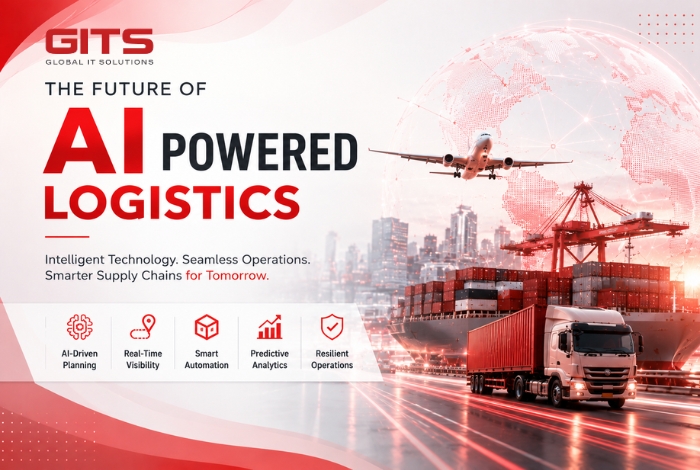
Global supply chains are becoming more complex as businesses face increasing pressure from rising operational costs, changing customer expectations, and unpredictable market disruptions. Traditional logistics models that rely heavily on manual processes and fragmented systems are no longer sufficient for modern operations.
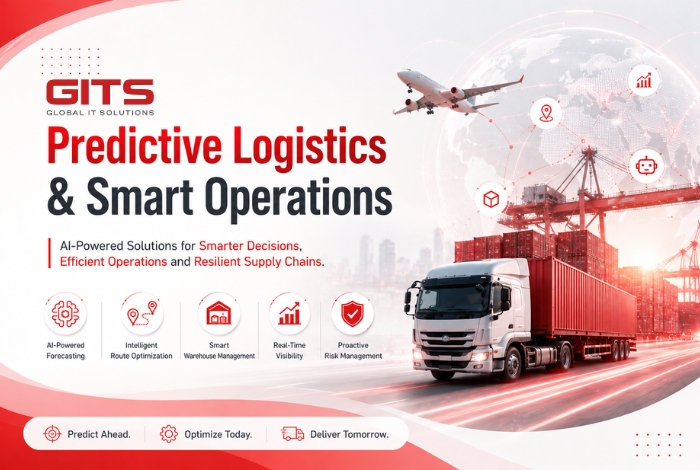
AI in logistics is emerging as a strategic solution for companies seeking smarter, faster, and more efficient supply chain management. By combining AI Agents, predictive analytics, machine learning, and real time operational data, businesses can transform logistics operations from reactive management into proactive optimization.
For companies across Japan, South Korea, Vietnam, and global markets, AI powered logistics is no longer just a technology trend. It is becoming a core competitive advantage for achieving operational resilience and sustainable growth.
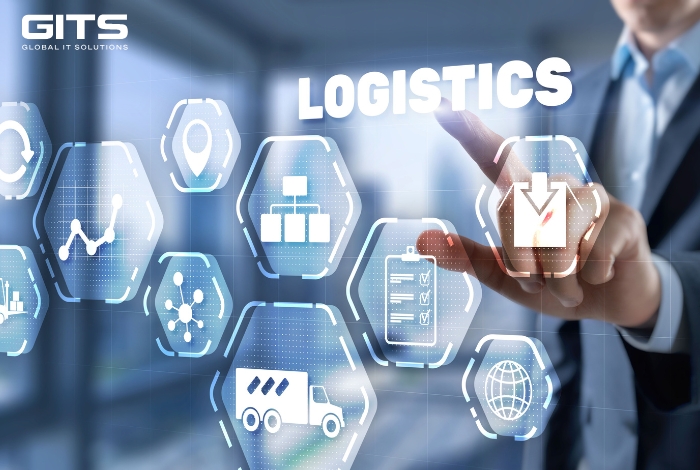
AI in Logistics for Smart Supply Chain Operations
AI in logistics refers to the use of artificial intelligence technologies to optimize transportation, warehouse management, inventory planning, and supply chain operations.
Smart supply chain operations use AI, IoT, automation, and data intelligence to create a connected and adaptive logistics ecosystem capable of making real time operational decisions.
Unlike traditional logistics systems, AI driven platforms can continuously analyze operational data, detect risks early, and automatically recommend the best actions to improve efficiency.
This allows businesses to reduce delays, improve forecasting accuracy, and maintain stable supply chain performance even during market fluctuations.
AI in Logistics for Smart Supply Chain Operations
Why AI Logistics Is Becoming a Global Trend
The logistics industry is under constant pressure to deliver faster services while reducing operational costs. At the same time, businesses must handle supply chain disruptions, labor shortages, fuel price increases, and growing customer demands.
AI logistics helps companies solve these challenges through intelligent automation and predictive decision making.
AI systems can analyze massive volumes of data from transportation history, customer behavior, traffic conditions, weather forecasts, and market demand patterns to improve operational planning.
For highly competitive markets such as Japan and South Korea, operational precision and consistency are critical factors for long term business success.
AI Logistics Is Becoming a Global Trend
How AI Agents Are Transforming Logistics Operations
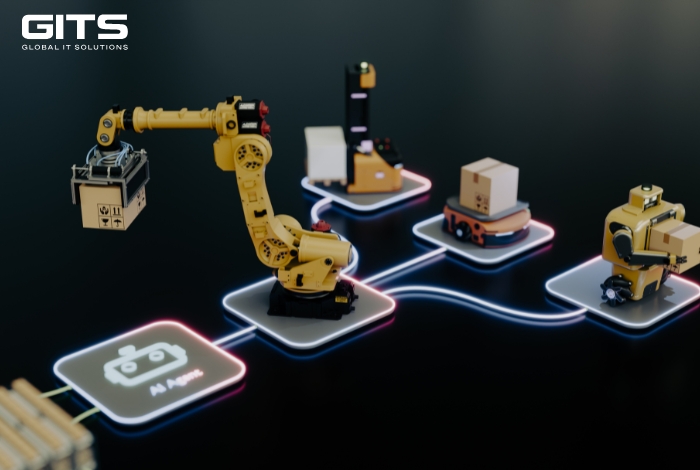
AI Agents are becoming the core engine of next generation logistics systems.
Unlike conventional automation tools, AI Agents can independently analyze data, learn from operational patterns, and make intelligent decisions in real time.
Smart Inventory Management
AI powered systems can monitor inventory levels continuously and predict product demand based on market behavior and historical data.
Businesses can avoid overstocking and stock shortages while improving warehouse utilization and reducing storage costs.
This is especially important for e commerce, manufacturing, and retail supply chains that require accurate inventory planning.
Intelligent Route Optimization
AI can evaluate traffic conditions, delivery schedules, weather data, and transportation capacity to identify the most efficient delivery routes.
This reduces fuel consumption, shortens delivery times, and improves overall transportation efficiency.
For international logistics providers, real time route optimization creates a significant competitive advantage.
Predictive Risk Management
One of the most valuable benefits of AI in logistics is predictive risk management.
AI systems can detect abnormal operational signals and identify potential disruptions before they impact supply chain performance.
This includes risks such as delayed shipments, supplier issues, warehouse bottlenecks, or transportation interruptions.
With predictive insights, businesses can prepare alternative solutions faster and reduce operational downtime.
AI Agents Are Transforming Logistics Operations
Smart Operations Improve Supply Chain Efficiency
Smart operations are not only about automation. They are about creating intelligent and connected supply chain ecosystems.
Modern AI logistics platforms integrate data from warehouses, transportation networks, procurement systems, and customer service into a single operational environment.
This provides businesses with real time visibility across the entire supply chain.
Companies adopting smart logistics operations can achieve:
As global e commerce continues to grow rapidly, businesses need flexible logistics systems capable of responding instantly to changing market conditions.
AI Logistics Trends in Japan, South Korea, and Vietnam
Japan and South Korea are among the leading countries in Asia adopting AI driven logistics technologies.
Many enterprises are investing heavily in:
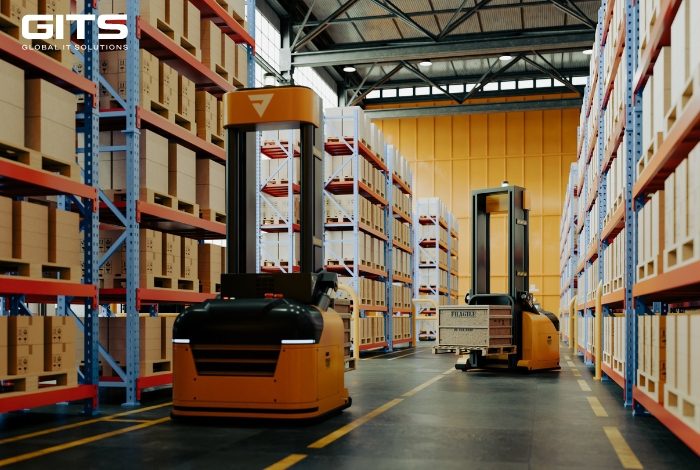
• Smart warehouses • AI demand forecasting • Robotics automation • Real time supply chain monitoring • Autonomous logistics systems
These technologies help businesses maintain operational precision while reducing long term logistics costs.
In Vietnam, digital transformation in logistics is accelerating due to the rapid expansion of e commerce and cross border trade.
More businesses are adopting AI logistics platforms to improve supply chain efficiency, optimize operations, and compete in international markets.
This presents a major opportunity for logistics providers and technology companies across Southeast Asia.
Challenges of Implementing AI in Logistics
Despite its advantages, implementing AI logistics solutions still presents several challenges.
Data quality remains one of the most important factors.
AI systems require accurate, structured, and synchronized operational data to deliver reliable predictions and automation capabilities.
Businesses also need to invest in digital infrastructure, cybersecurity, and skilled teams capable of managing AI based logistics systems.
However, compared to the long term operational benefits, AI logistics remains a high value strategic investment for future growth.
The Future of AI Powered Logistics
AI powered logistics will continue to reshape global supply chain operations over the next decade.
AI Agents will become increasingly important for autonomous decision making, predictive planning, and intelligent operational management.
Businesses that adopt AI logistics early will gain stronger advantages in operational speed, cost optimization, customer experience, and supply chain resilience.
As supply chains become more connected and data driven, AI will play a critical role in building smarter, more sustainable, and more adaptive logistics ecosystems.
AI powered logistics will continue to reshape global supply chain operations over the next decade
Building Smarter Supply Chains With AI
AI in logistics is transforming the future of supply chain management. Businesses are moving beyond traditional operations toward intelligent logistics ecosystems powered by AI Agents, predictive analytics, and smart automation.
For companies in Japan, South Korea, Vietnam, and global markets, investing in AI logistics solutions is becoming essential for improving operational efficiency, reducing logistics costs, and maintaining long term competitiveness in the digital economy.
On October 9, 2026, GITS and HONGIK IT officially signed a Memorandum of Understanding (MOU), marking a new milestone in their relationship. The signing reflects
A business is more than a collection of departments, software platforms, and operational tasks. It is a connected flow of decisions, information, materials, and activities
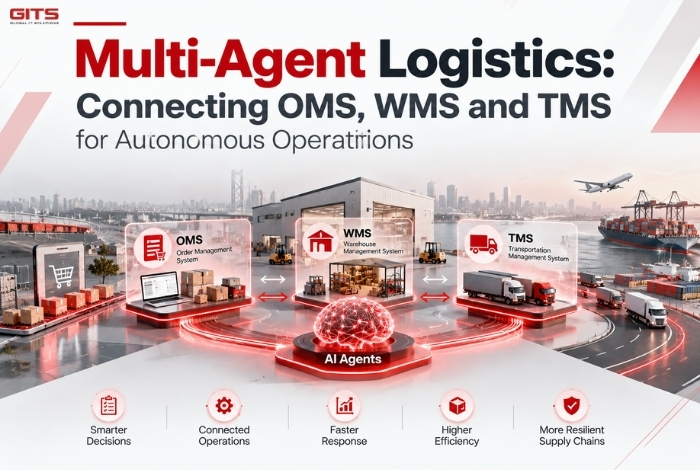
Modern logistics operations are becoming too complex for disconnected systems and manual decision-making. Orders change in real time, inventory moves across multiple locations, transportation capacity
The automotive industry is undergoing one of its most significant transformations in decades. As vehicles become increasingly connected, manufacturers are shifting beyond hardware production to
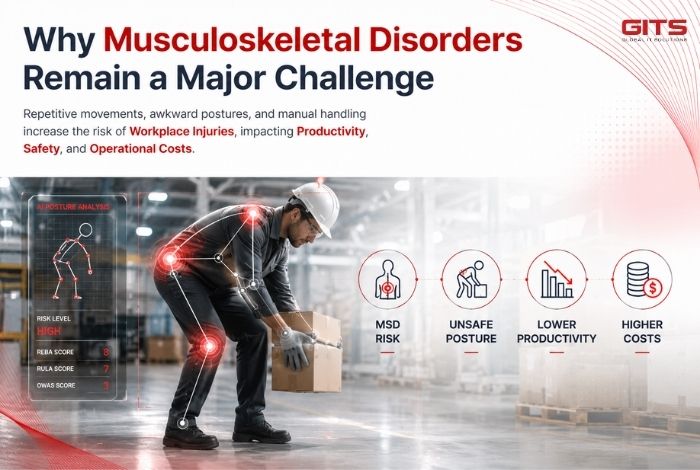
Industrial workplaces are becoming increasingly automated, yet one challenge remains difficult to eliminate: work-related musculoskeletal disorders (MSDs) caused by repetitive movements and improper working postures.
In today’s electronics manufacturing industry, every defective PCB that reaches the next production stage can trigger expensive rework, production downtime, delayed deliveries, and even product
Manufacturing, energy, logistics, and industrial enterprises continue to face growing pressure to improve procurement efficiency while maintaining full visibility across increasingly complex supply chains. As