







Across Vietnam and around the world, enterprises are investing heavily in Generative AI, AI Agents, and automation solutions to improve operational efficiency and gain a competitive advantage. However, most organizations still struggle to scale AI initiatives from the pilot stage to enterprise-wide deployment, preventing them from realizing the full business value they expect.
The root cause is often not the AI model itself, but the lack of a robust Enterprise AI Infrastructure capable of supporting data management, governance, security, and AI operations in a unified manner. This article explores the role of Enterprise AI Infrastructure, its core components, the readiness requirements organizations must address, and how to build the right foundation to accelerate AI Transformation (AX) and successfully deploy AI Agents across the enterprise.
What Is Enterprise AI Infrastructure?
Enterprise AI Infrastructure is the integrated framework of technologies, data systems, governance models, operational processes, and computing resources that enable organizations to develop, deploy, manage, and scale AI solutions securely and efficiently.
Unlike traditional IT infrastructure, AI infrastructure must support intelligent systems that continuously learn, process vast amounts of data, make predictions, and increasingly operate through autonomous AI Agents.
A modern Enterprise AI Infrastructure typically includes:
– Data platforms and knowledge repositories
– Cloud, hybrid, and edge computing environments
– AI development and deployment platforms
– Large Language Model (LLM) integration capabilities
– Vector databases and retrieval systems
– AI governance and compliance frameworks
– Monitoring and observability tools
– Agent orchestration and management systems
Together, these components create the foundation necessary for enterprise-wide AI adoption.
Enterprise AI Infrastructure as the Foundation of AX
Organizations around the world are entering a new phase of digital evolution.
The first wave focused on Digital Transformation, where businesses digitized processes and modernized systems. The next wave is AI Transformation, or AX, where organizations redesign operations, decision-making processes, and business models around artificial intelligence.
The journey can be viewed as a progression: Digital Transformation → AI Transformation (AX) → Autonomous Enterprise
Enterprise AI Infrastructure serves as the bridge between digital transformation and AI transformation.
Without scalable infrastructure, organizations cannot effectively deploy AI across multiple business functions. They cannot govern AI responsibly, integrate enterprise data efficiently, or support the growing number of AI Agents operating across the organization.
As a result, infrastructure becomes one of the most important strategic investments in any AX roadmap.

Assessing Enterprise AI Readiness Before Building Infrastructure
Before implementing technology, organizations should evaluate their AI readiness.
Many enterprises invest heavily in AI platforms without first understanding whether their existing capabilities can support long-term success.
Data Readiness
AI systems are only as effective as the data they consume.
Organizations should evaluate:
– Data quality
– Data accessibility
– Data consistency
– Data governance
– Knowledge management maturity
Poor data readiness remains one of the leading causes of failed AI initiatives.
Technology Readiness
Organizations must determine whether their existing technology stack can support AI workloads.
Key considerations include:
– Cloud infrastructure
– Integration capabilities
– API availability
– Computing resources
– Security architecture
Technology readiness directly impacts scalability and deployment speed.
Organizational Readiness
Successful AI adoption requires more than technology.
Organizations should assess:
– Leadership alignment
– Employee readiness
– AI literacy
– Change management capabilities
– Cross-functional collaboration
Human factors often determine the long-term success of AI Transformation initiatives.
Governance Readiness
As AI becomes embedded into critical business operations, governance becomes essential.
Organizations should establish frameworks covering:
– Data privacy
– Regulatory compliance
– Ethical AI usage
– Risk management
– Model accountability
Strong governance creates trust and accelerates adoption.
Core Components of Enterprise AI Infrastructure
Data Foundation Layer
Data serves as the foundation of every successful AI initiative.
Organizations should build centralized and governed environments capable of managing structured and unstructured information across departments.
Core components include:
– Data lakes
– Data warehouses
– Knowledge bases
– Data pipelines
– Metadata management systems
A strong data foundation improves AI accuracy, reliability, and scalability.
AI Platform Layer
The AI platform layer provides the tools required to build, train, deploy, and manage AI solutions.
Capabilities typically include:
– Model development
– Model deployment
– Experiment tracking
– Prompt management
– MLOps and LLMOps
– AI observability
A standardized platform reduces complexity while accelerating innovation.
AI Agent Layer
The rapid rise of Agentic AI has introduced a new architectural layer.
Modern organizations increasingly deploy AI Agents capable of reasoning, planning, and executing business tasks autonomously.
The AI Agent layer includes:
– Agent orchestration
– Agent memory systems
– Tool integration
– Workflow automation
– Multi-Agent coordination
This layer transforms AI from a passive assistant into an active digital workforce.
Governance and Security Layer
Enterprise AI cannot succeed without trust.
Governance and security capabilities should include:
– Identity and access management
– Policy enforcement
– Audit trails
– Explainability mechanisms
– Compliance monitoring
– Risk management controls
This layer ensures AI remains secure, transparent, and compliant.
Building Infrastructure for Enterprise AI Agents
AI Agents are rapidly becoming one of the most transformative technologies in the enterprise landscape.
Unlike traditional automation systems, AI Agents can understand context, interact with applications, retrieve information, and execute complex workflows with minimal human intervention.
However, deploying AI Agents at scale requires specialized infrastructure.
Agent Runtime Environment
AI Agents require secure environments where they can execute tasks reliably.
This includes:
– Compute resources
– API connectivity
– Workflow orchestration
– Monitoring systems
Agent Memory and Knowledge Systems
Effective AI Agents must retain context and access enterprise knowledge.
Organizations should establish:
– Vector databases
– Knowledge repositories
– Retrieval-Augmented Generation (RAG) frameworks
– Document intelligence systems
These capabilities improve accuracy and reduce hallucinations.
Agent Governance
As AI Agents gain greater autonomy, governance becomes increasingly important.
Organizations need visibility into:
– Agent activities
– Decision processes
– Security permissions
– Compliance requirements
Proper governance ensures AI Agents remain aligned with business objectives.

Enterprise AI Infrastructure Across Industries
Manufacturing
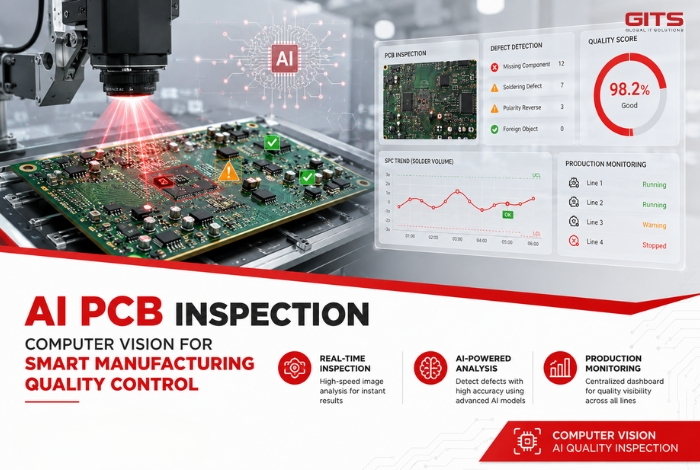
Manufacturers use Enterprise AI Infrastructure to support predictive maintenance, quality control, production optimization, and smart factory initiatives.
Logistics and Supply Chain
AI-powered infrastructure enables demand forecasting, route optimization, inventory management, and supply chain visibility.
Healthcare
Healthcare organizations use AI infrastructure to support clinical decision-making, medical imaging analysis, and operational efficiency improvements.
Retail and E-Commerce
Retailers leverage AI infrastructure for personalized recommendations, demand forecasting, customer service automation, and inventory optimization.
Business Benefits of Enterprise AI Infrastructure
Organizations that invest in scalable infrastructure gain advantages that extend beyond technology.
Key benefits include:
– Faster AI deployment cycles
– Improved operational efficiency
– Enhanced decision-making capabilities
– Greater scalability for AI initiatives
– Reduced security and compliance risks
– Increased employee productivity
– Higher return on AI investments
Most importantly, Enterprise AI Infrastructure enables organizations to transition from isolated AI experiments to enterprise-wide transformation.
Enterprise AI Market Trends Shaping 2026 and Beyond
Several trends are influencing the future of Enterprise AI Infrastructure.
Organizations are increasingly investing in:
– AI Agents and Agentic AI platforms
– Multi-Agent Systems
– Enterprise Large Language Models
– Retrieval-Augmented Generation architectures
– AI Governance frameworks
– AI Operating Models
– Autonomous business processes
As these trends accelerate, infrastructure maturity will become a major competitive differentiator.
Companies that build scalable AI foundations today will be better positioned to lead tomorrow’s AI-driven economy.
>>> See More: Agentic AI Frameworks: What Enterprises Need Before Scaling AI
Frequently Asked Questions
What is Enterprise AI Infrastructure?
Enterprise AI Infrastructure is the combination of technologies, data systems, governance frameworks, and operational capabilities required to develop, deploy, and scale AI solutions across an organization.
Why is Enterprise AI Infrastructure important?
It provides the foundation necessary to support AI adoption, improve governance, ensure security, and scale AI initiatives efficiently.
How does Enterprise AI Infrastructure support AI Agents?
It enables AI Agents to access data, integrate with enterprise applications, operate securely, and perform tasks reliably at scale.
What is the difference between AI Infrastructure and traditional IT Infrastructure?
Traditional IT infrastructure focuses on application and system operations, while AI infrastructure supports data-intensive workloads, machine learning, AI Agents, and intelligent decision-making systems.
How can organizations prepare for AI Transformation?
Organizations should assess AI readiness, improve data quality, establish governance frameworks, modernize infrastructure, and develop AI operating models.
What role does AI Governance play in Enterprise AI Infrastructure?
AI Governance ensures AI systems operate securely, ethically, transparently, and in compliance with organizational policies and regulations.

Building the Foundation for Enterprise AI Success
Enterprise AI Infrastructure has become one of the most critical enablers of AI Transformation. As organizations move beyond experimentation and embrace AI Agents, Agentic AI, and intelligent automation, the need for scalable infrastructure continues to grow.
Companies across Japan, South Korea, Vietnam, and global markets are recognizing that successful AI adoption depends on more than advanced models. It requires a secure, governed, and scalable foundation capable of supporting enterprise-wide innovation.
Organizations that invest in Enterprise AI Infrastructure today will be better positioned to accelerate AX, unlock greater business value, and build the autonomous enterprise of the future.