







Today’s customers expect a seamless shopping experience across ecommerce, marketplaces, mobile apps, and physical stores. However, many retailers still struggle with disconnected systems that create inventory inaccuracies, delayed fulfillment, and inconsistent customer experiences.
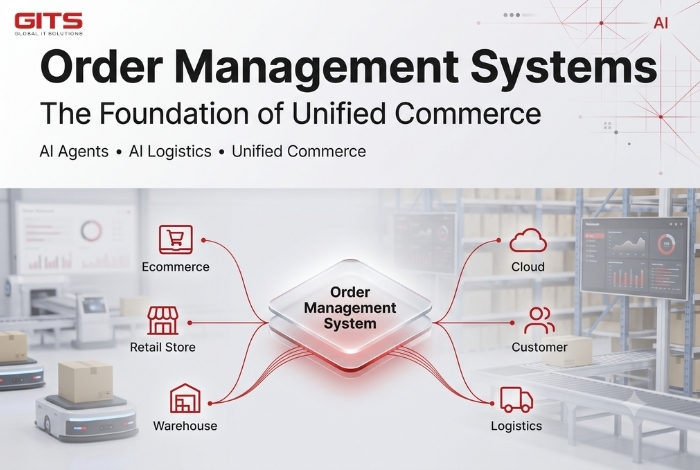
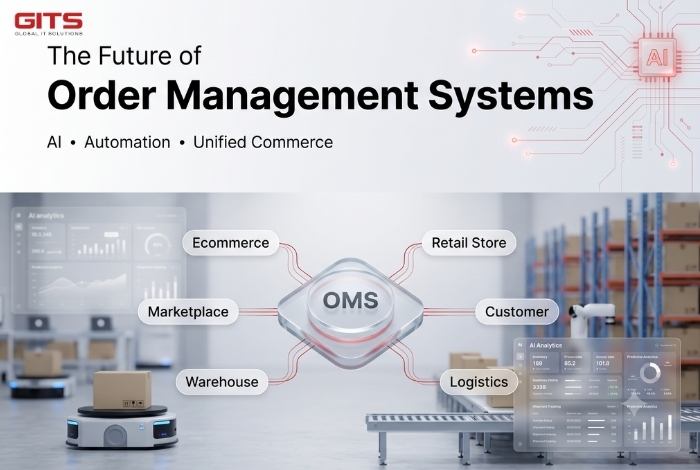
Modern Order Management Systems (OMS) solve this challenge by acting as the orchestration layer of retail operations. Rather than simply processing orders, they connect inventory, warehouses, stores, logistics partners, and customer data into a single operational workflow. Combined with AI Agents and AI Logistics, OMS has become a key enabler of Unified Commerce and enterprise-wide AI Transformation (AX).
What Is an Order Management System?
An Order Management System is a centralized platform that manages the entire order lifecycle, from order capture and inventory validation to fulfillment, delivery, returns, and customer notifications.
Unlike traditional order processing software, modern OMS provides:
– Real-time inventory visibility across all channels
– Distributed Order Management (DOM) for intelligent order routing
– Omnichannel fulfillment, including Buy Online Pick Up In Store (BOPIS) and Ship from Store
– Integration with ERP, WMS, TMS, POS, CRM, and ecommerce platforms
– AI-driven recommendations for inventory allocation and fulfillment optimization
This enables retailers to operate from a single source of truth while delivering faster, more consistent customer experiences.
Why Retailers Are Moving to Unified Commerce
Many businesses operate separate systems for ecommerce, stores, warehouses, and customer service. As order volumes increase, these disconnected platforms lead to inventory mismatches, delayed fulfillment, higher operational costs, and limited visibility.
Unified Commerce addresses these issues by centralizing data and operations across every sales channel.
Instead of managing multiple inventories and isolated customer records, retailers gain:
– One inventory view
– One customer profile
– One pricing and promotion strategy
– One fulfillment network
– One real-time operational dashboard
For global retailers, especially in Japan, South Korea, and Vietnam, this approach improves agility while supporting scalable growth.

How AI Agents Enhance Order Management Systems
AI Agents do not replace Order Management Systems. Instead, they make OMS significantly smarter by continuously analyzing operational data and recommending the best actions.
AI-powered OMS can:
– Predict demand using historical sales and market trends
– Optimize inventory allocation across warehouses
– Recommend the fastest and lowest-cost fulfillment option
– Detect inventory shortages before they affect customers
– Automate exception handling and order prioritization
By combining automation with intelligent decision support, AI Agents reduce manual intervention while improving operational efficiency.
AI Logistics Creates Smarter Fulfillment
OMS delivers its greatest value when integrated with AI Logistics.
Real-time logistics intelligence enables businesses to optimize warehouse capacity, transportation planning, last-mile delivery, and inventory balancing across fulfillment centers.
Together, OMS and AI Logistics create an intelligent fulfillment ecosystem that improves delivery speed, reduces logistics costs, and enhances customer satisfaction.
The Technology Behind Unified Commerce
Successful Unified Commerce relies on an integrated technology ecosystem rather than a single application.
Core components include:
– Order Management Systems (OMS)
– Warehouse Management System (WMS)
– Transportation Management System (TMS)
– Enterprise Resource Planning (ERP)
– Customer Relationship Management (CRM)
– Point of Sale (POS)
– AI Agents
– AI Solutions
– Cloud APIs and Data Analytics
These technologies share real-time data, enabling faster decisions and more resilient retail operations.
>>> See More: Unified OMS Strategy for Omnichannel Retail Success
The Future of Order Management Systems
The future of Order Management Systems extends beyond transaction processing.
As AI adoption accelerates, OMS will become increasingly autonomous through predictive analytics, intelligent workflow orchestration, and real-time operational optimization.
Organizations investing in Unified Commerce today will be better prepared to deliver personalized customer experiences, improve supply chain resilience, and scale efficiently across global markets.
FAQ
What is an Order Management System?
An Order Management System (OMS) is a platform that manages the complete order lifecycle, including order capture, inventory validation, fulfillment, shipping, returns, and customer communication.
What is the difference between OMS and Unified Commerce?
OMS manages order execution, while Unified Commerce connects inventory, customers, stores, and fulfillment into a single operational ecosystem. OMS is one of the core technologies enabling Unified Commerce.
How do AI Agents improve Order Management Systems?
AI Agents enhance OMS by predicting demand, optimizing inventory allocation, recommending fulfillment decisions, detecting operational risks, and automating repetitive workflows.
OMS Is the Core of Intelligent Retail Operations
Modern Order Management Systems have evolved from transaction management tools into intelligent orchestration platforms that connect inventory, fulfillment, logistics, and customer experiences.
When integrated with AI Agents, AI Logistics, and enterprise AI Solutions, OMS enables retailers to build a Unified Commerce ecosystem that is more agile, efficient, and customer-centric. As retail continues to evolve, organizations that modernize their OMS strategy will be best positioned to compete in the next generation of digital commerce.