







WMS vs Inventory Management: Key Differences

As supply chains become increasingly complex, warehouse management is no longer just about tracking incoming and outgoing goods. Businesses must maintain accurate inventory records, optimize storage space, accelerate order fulfillment, and minimize operational errors.
However, many businesses still confuse a Warehouse Management System (WMS) with an Inventory Management System (IMS) when choosing warehouse management software. Although these solutions share certain functions, they serve different operational needs.
So, what sets WMS apart from Inventory Management? And which solution is right for your business?
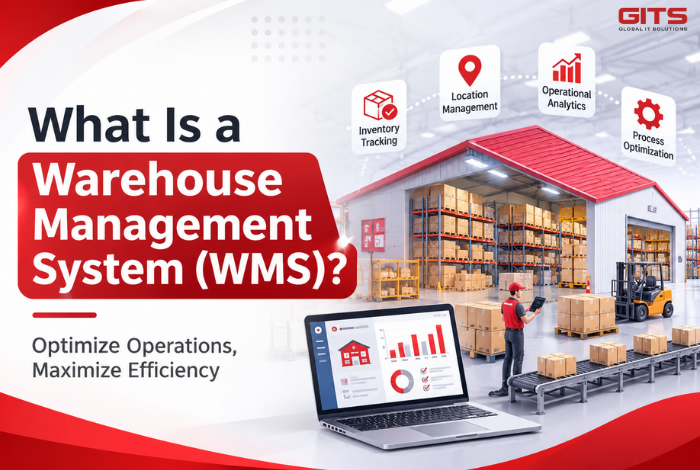
What Is a Warehouse Management System (WMS)?
A Warehouse Management System (WMS) is software designed to manage and optimize warehouse operations, covering everything from receiving and putaway to picking, packing, and shipping.
Unlike basic inventory tracking tools, a WMS provides detailed visibility into product locations, inventory movements, and warehouse workflows.
Key features include:
- Receiving, shipping, and stock transfer management.
- Bin and storage location management.
- Barcode, QR code, and RFID integration.
- Picking, packing, and shipping optimization.
- Lot, batch, and expiration date tracking.
- Real-time inventory visibility and performance reporting.
WMS is particularly valuable for businesses managing multiple warehouses, large SKU volumes, or complex fulfillment operations.
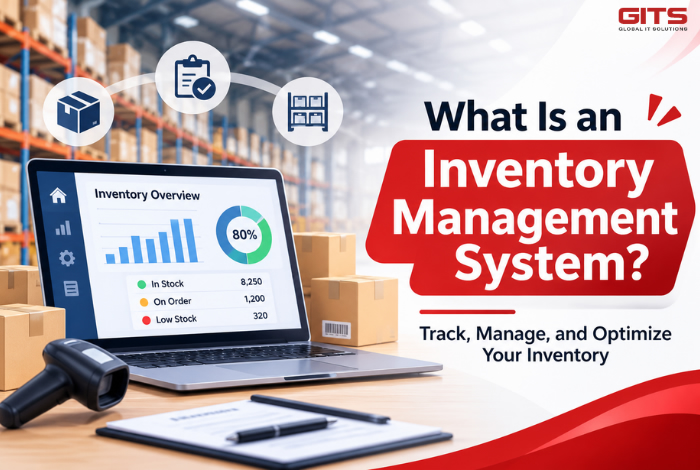
What Is an Inventory Management System?
An Inventory Management System (IMS) focuses on tracking stock quantities, inventory value, and product availability across business operations.
It helps businesses understand what is in stock, when to replenish products, and how much inventory is needed to meet demand.
Typical features include:
- Real-time stock level monitoring.
- Purchase order and sales order tracking.
- Inventory receiving and issuing management.
- Low-stock alerts and replenishment notifications.
- Stocktaking and inventory reconciliation.
- Inventory valuation and turnover reporting.
IMS is suitable for businesses that need better inventory visibility and control without requiring advanced warehouse workflow management.
WMS vs Inventory Management: Key Differences
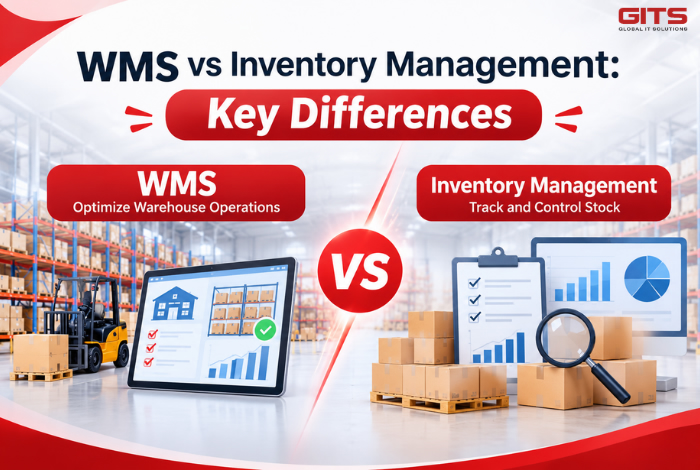
The biggest difference lies in their scope. Inventory Management answers the question, “How much stock do we have?” while WMS goes further by determining where products are stored and how warehouse activities should be executed.
| Criteria | Inventory Management | WMS |
|---|---|---|
| Primary Focus | Stock control | Warehouse operations |
| Location Tracking | Warehouse-level | Bin-level |
| Receiving & Shipping | Records transactions | Manages workflows |
| Order Picking | Basic picking lists | Optimized picking routes |
| Stocktaking | Quantity reconciliation | Location-based inventory control |
| Automation | Stock alerts and updates | Workflow and task automation |
| Reporting | Stock levels and valuation | Operational performance |
| Best For | Simple inventory operations | Complex warehouse environments |
Inventory Visibility vs. Operational Control
An Inventory Management System may show that a warehouse has 500 units of Product A. However, without detailed location tracking, employees may still need to search manually to find those products.
A WMS can identify the exact storage location, such as aisle B02, shelf 03, bin 05, and guide employees directly to the right picking location.
This distinction is especially important for e-commerce, retail, and manufacturing businesses handling large SKU volumes and frequent orders.
Which Solution Should Your Business Choose?
Not every business needs an advanced WMS from the beginning. The right choice depends on warehouse size, inventory complexity, operational requirements, and long-term growth plans.
Choose Inventory Management if your business:
- Operates a small warehouse with limited SKUs.
- Has relatively simple receiving and shipping processes.
- Primarily needs stock tracking and replenishment management.
- Does not require detailed warehouse task coordination.
Choose WMS if your business:
- Operates multiple warehouses or distribution centers.
- Handles high SKU volumes and growing order numbers.
- Frequently experiences inventory discrepancies or picking errors.
- Struggles with product location tracking and order fulfillment.
- Needs integration with ERP, OMS, TMS, Barcode, or RFID systems.
- Wants to standardize workflows and automate warehouse operations.
For growing businesses in manufacturing, distribution, and e-commerce, upgrading from spreadsheet-based inventory tracking to WMS can be a critical step toward operational efficiency.
>>> See More: Effective Inventory Management: Methods & Technology Solutions
Can WMS and Inventory Management Work Together?
Yes. In fact, integrating both systems can create a more connected and efficient inventory management environment.
Inventory Management handles stock quantities, inventory valuation, and replenishment planning. Meanwhile, WMS manages physical warehouse activities, including receiving, putaway, picking, packing, and shipping.
When integrated with ERP, OMS, and TMS, these systems enable seamless data exchange across business operations.
For example, when a customer places an online order, OMS processes the order and checks product availability. WMS then identifies storage locations and coordinates picking and packing. Once the shipment is ready, order information is transferred to TMS for transportation management.
This integrated approach reduces manual data entry, minimizes information gaps, and improves end-to-end supply chain visibility.
The Future of Smart Warehousing: AI and Automation
Digital transformation is reshaping modern warehouse operations. Instead of simply recording inventory movements, next-generation WMS solutions can leverage AI, IoT, and automation to support smarter operational decisions.
Key applications include:
- AI Demand Forecasting: Analyzes historical data to predict demand and improve inventory planning.
- AI Agents: Detects operational anomalies, generates alerts, and recommends corrective actions.
- IoT and RFID: Improves real-time visibility into inventory status and product movements.
- Warehouse Automation: Connects WMS with robotics and automated material handling systems.
For businesses pursuing Smart Warehouse strategies, these technologies create opportunities to improve productivity, reduce operational costs, and build more resilient supply chains.
However, successful AI adoption requires reliable data, standardized workflows, and a scalable WMS architecture.

GITS: Building Smarter Warehouse Management Solutions
Choosing the right warehouse management software is not simply about improving inventory tracking. It is about creating a foundation for long-term operational efficiency and digital transformation.
With expertise in B2B technology development, GITS helps businesses explore and implement warehouse management solutions tailored to their operational requirements, from inventory control to advanced WMS capabilities.
By leveraging modern technologies and integrating WMS with ERP, OMS, TMS, and AI-powered solutions, businesses can streamline warehouse workflows, improve data visibility, and optimize operational performance.
WMS vs. Inventory Management is not just a choice between two software solutions. It is a decision about how effectively your business can control, optimize, and scale its warehouse operations. Investing in the right technology today helps build a smarter, more accurate, and future-ready supply chain.