






Warehouse operations have become significantly more complex over the past few years. Rising customer expectations, labor shortages, growing SKU counts, omnichannel fulfillment requirements, and increasing pressure to reduce operational costs are forcing businesses to rethink how warehouses are managed.
Across Japan, South Korea, Vietnam, and global markets, companies are facing a common challenge: traditional warehouse processes can no longer keep up with modern supply chain demands.
Many organizations continue to rely on spreadsheets, manual tracking, disconnected software, or legacy warehouse systems. While these approaches may have worked during earlier growth stages, they often create bottlenecks as businesses scale.
The question is no longer whether warehouse operations should be digitized. The real question is whether your current warehouse infrastructure can support future growth.
If your organization is experiencing any of the following warning signs, it may be time to invest in a modern Warehouse Management System (WMS).
Why Warehouse Management Matters More Than Ever in 2026
Global supply chains are entering a new era driven by automation, artificial intelligence, and real-time data.
Warehouses are no longer simply storage facilities. They have become strategic hubs that directly impact customer satisfaction, operational efficiency, and profitability.
At the same time, several trends are reshaping warehouse operations worldwide:
– Increasing labor shortages across logistics industries
– Rapid growth of eCommerce and omnichannel fulfillment
– Rising customer expectations for same-day or next-day delivery
– Growing complexity of inventory management
– Expansion of multi-location warehouse networks
– Adoption of AI logistics and warehouse automation technologies
Organizations that fail to modernize warehouse operations risk falling behind competitors that are leveraging intelligent automation and AI-driven decision-making.
What Happens When Businesses Delay WMS Adoption?
Many companies postpone implementing a Warehouse Management System because existing processes appear to be functioning adequately.
However, operational inefficiencies often remain hidden until business growth exposes them.
The consequences typically include:
– Higher warehouse labor costs
– Inventory inaccuracies
– Delayed shipments
– Reduced customer satisfaction
– Inefficient warehouse space utilization
– Limited scalability
By the time these issues become visible, businesses may already be losing revenue, productivity, and market competitiveness.

Inventory Accuracy Continues to Decline
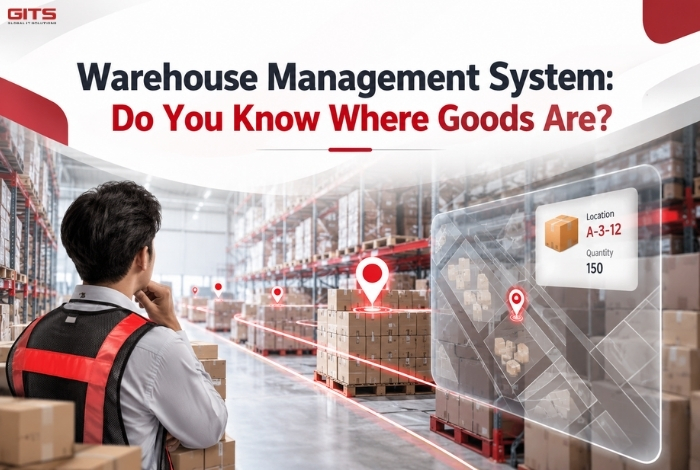
Inventory visibility is the foundation of effective warehouse operations.
If warehouse teams regularly encounter discrepancies between physical inventory and system records, the organization is likely experiencing a serious operational issue.
Common symptoms include:
– Frequent stockouts
– Unexpected excess inventory
– Order fulfillment delays
– Increased inventory write-offs
– Difficulty conducting inventory audits
Industry studies consistently show that organizations implementing a Warehouse Management System can improve inventory accuracy to over 99%.
How a Warehouse Management System Improves Inventory Visibility
A modern Warehouse Management System tracks inventory movement in real time across receiving, putaway, storage, picking, packing, and shipping processes. Through barcode scanning, RFID integration, and automated inventory updates, businesses gain complete visibility into stock levels and inventory locations at all times.

Order Fulfillment Is Slower Than Customer Expectations
Today’s customers expect fast, accurate, and transparent delivery experiences.
Whether operating in manufacturing, retail, healthcare, or eCommerce, businesses that cannot fulfill orders efficiently risk losing customers to more agile competitors.
Warning signs include:
– Increasing order backlogs
– Missed shipping deadlines
– Rising customer complaints
– Frequent fulfillment errors
– High return rates
Organizations that implement Warehouse Management Systems often achieve significant improvements in picking speed, order accuracy, and fulfillment efficiency.
Warehouse Management System Supports Faster Fulfillment Operations
A WMS optimizes warehouse workflows by guiding employees through the most efficient picking routes, reducing unnecessary travel time and minimizing operational delays.
As a result, warehouses can process higher order volumes without proportionally increasing labor resources.

Your Warehouse Struggles to Support Business Growth
Growth often reveals weaknesses in warehouse operations.
What worked when managing hundreds of orders may become unsustainable when handling thousands.
This challenge becomes especially apparent when organizations:
– Expand product catalogs
– Enter international markets
– Add new warehouse locations
– Increase online sales channels
– Launch omnichannel fulfillment strategies
Without a scalable Warehouse Management System, warehouse complexity can quickly outpace operational capabilities.

The Challenge of SKU Explosion
Many businesses today manage significantly more products than they did just a few years ago.
As SKU counts increase, locating inventory, optimizing storage space, and maintaining inventory accuracy become increasingly difficult without automation.
A WMS provides the structure needed to manage inventory complexity at scale.
Labor Costs Are Rising Faster Than Productivity
Labor shortages remain one of the most pressing challenges facing logistics operations worldwide.
This issue is particularly significant in Japan, where an aging workforce is creating ongoing labor constraints, and in South Korea, where rapid delivery expectations place additional pressure on warehouse operations.
Many organizations respond by hiring more employees.
However, adding labor without improving processes often increases costs without delivering proportional productivity gains.

AI Logistics and Workforce Optimization
Modern Warehouse Management Systems now integrate AI logistics capabilities that help organizations:
– Optimize workforce allocation
– Prioritize warehouse tasks dynamically
– Improve picking efficiency
– Reduce employee travel distance
– Increase labor productivity
Many organizations report productivity improvements ranging from 20% to 40% after implementing warehouse optimization technologies.
>>> See More: AI Agents Reduce Warehouse Operation Costs by 30%
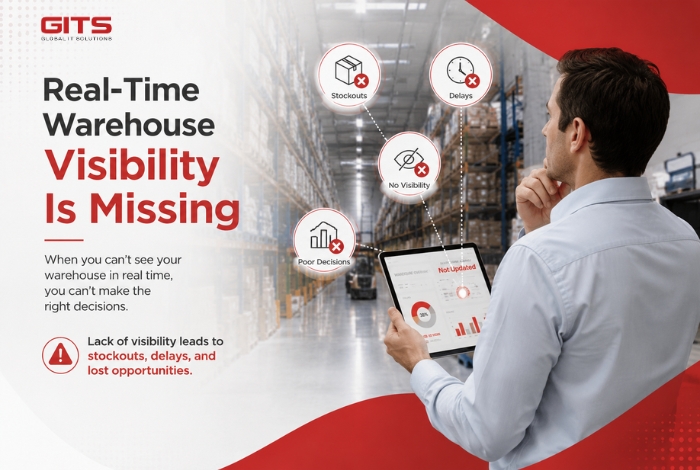
Real-Time Warehouse Visibility Is Missing
Can your team answer the following questions instantly?
– Which products are moving fastest today?
– Which warehouse zones are causing bottlenecks?
– Which orders are at risk of delay?
– Which inventory items may run out within the next week?
If obtaining these answers requires multiple spreadsheets or manual reporting, operational visibility is insufficient.
Modern Warehouse Management Systems provide real-time dashboards that enable faster and more accurate decision-making.
Data-Driven Operations Create Competitive Advantage
Organizations that rely on real-time warehouse intelligence can identify inefficiencies earlier, optimize resource allocation, and respond more effectively to changing market conditions.
This capability becomes increasingly valuable as supply chains grow more complex.
Customer Satisfaction Is Being Impacted by Warehouse Performance
Warehouse operations directly influence customer experience.
A single inventory error or shipping delay can create lasting damage to customer relationships.
Common indicators include:
– Increasing customer complaints
– Declining retention rates
– Growing return volumes
– Negative online reviews
– Service-level agreement violations
A Warehouse Management System helps ensure orders are picked accurately, packed correctly, and shipped on time.
Omnichannel Fulfillment Requires Warehouse Excellence
Businesses serving customers through multiple channels face additional complexity.
A WMS centralizes inventory visibility across online stores, retail locations, marketplaces, distributors, and fulfillment centers, ensuring consistent service quality across all channels.
Business Decisions Depend on Assumptions Rather Than Data
Many warehouse decisions are still based on historical experience rather than real-time operational intelligence.
While experience remains valuable, modern supply chains require faster and more accurate decision-making.
Without reliable warehouse data, organizations struggle to:
– Forecast demand accurately
– Optimize inventory levels
– Improve warehouse utilization
– Reduce operational risks
– Identify hidden inefficiencies
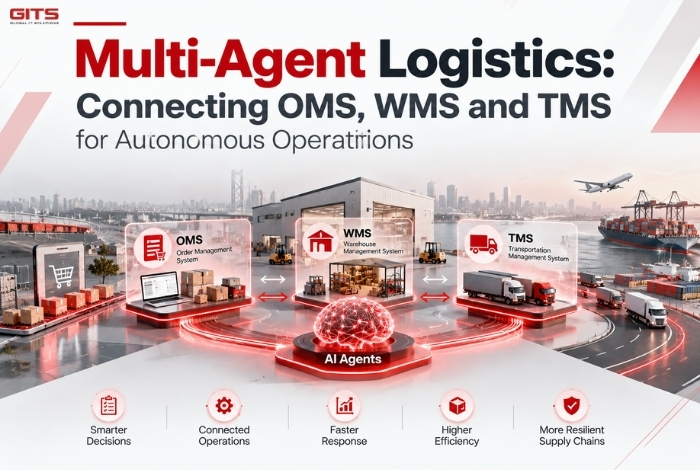
How AI Agents Are Transforming Modern Warehouse Operations
The next generation of Warehouse Management Systems is increasingly powered by AI Agents capable of continuously analyzing warehouse operations.
Unlike traditional automation tools, AI Agents can:
– Predict inventory shortages before they occur
– Recommend inventory replenishment actions
– Detect operational anomalies automatically
– Optimize warehouse slotting strategies
– Forecast labor requirements
– Support autonomous decision-making
This evolution is transforming warehouses from reactive environments into intelligent operational ecosystems.
Warehouse Management System vs Manual Warehouse Operations
| Operational Area | Manual Warehouse | Warehouse Management System |
|---|---|---|
| Inventory Accuracy | Moderate to Low | Above 99% Accuracy |
| Order Fulfillment Speed | Inconsistent | Optimized and Scalable |
| Labor Efficiency | Labor Intensive | Automated Workflows |
| Real-Time Visibility | Limited | Complete Visibility |
| Reporting Capability | Manual Reporting | Real-Time Analytics |
| Scalability | Limited | Highly Scalable |
| AI Integration | Not Available | AI-Driven Optimization |
The ROI of a Modern Warehouse Management System
While implementation costs vary, organizations commonly experience measurable returns through:
– Reduced inventory carrying costs
– Lower labor expenses
– Improved order accuracy
– Faster fulfillment cycles
– Better warehouse space utilization
– Increased customer satisfaction
For growing businesses, these benefits often generate substantial long-term operational savings and competitive advantages.
The WMS Readiness Framework
Organizations should strongly consider implementing a Warehouse Management System if three or more of the following conditions apply:
– Inventory accuracy falls below 95%
– Order volumes continue increasing
– Multiple warehouse locations exist
– Labor costs are rising rapidly
– Customer complaints are increasing
– Real-time inventory visibility is unavailable
– Warehouse decisions rely heavily on manual reporting
The more conditions that apply, the more urgent warehouse modernization becomes.

Future-Proof Your Warehouse Before Bottlenecks Limit Growth
Warehouse inefficiencies rarely disappear on their own. As organizations grow, operational challenges typically become more severe and more expensive to solve.
A modern Warehouse Management System provides the visibility, automation, and scalability required to support long-term growth. When combined with AI logistics technologies, warehouse automation, and intelligent AI Agents, businesses gain the ability to operate faster, smarter, and more efficiently.
For organizations preparing for the next phase of digital transformation, implementing a Warehouse Management System is no longer simply an operational upgrade. It has become a strategic investment in future competitiveness, resilience, and sustainable growth.