





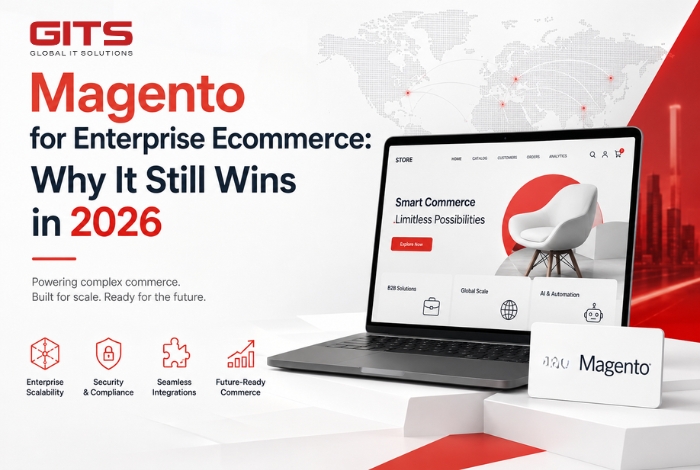
Magento is one of the most flexible ecommerce platforms for businesses that need more than a simple online store.
For enterprise companies, ecommerce is no longer just about selling products. It involves integrating sales, inventory, logistics, customer data, and AI-driven automation into one scalable ecosystem.
Magento stands out because it offers full control over architecture, customization, and long-term scalability.
Unlike many SaaS platforms, Magento gives enterprises the freedom to build according to their business model instead of forcing operations into a fixed framework.
This makes Magento highly relevant for fast-scaling businesses in Japan, Korea, Vietnam, and global markets.
Why Enterprise Brands Still Face Ecommerce Limitations
As companies expand, ecommerce complexity increases.
Many enterprises struggle with:
• Fragmented inventory systems
• Disconnected ERP and CRM tools
• Inconsistent customer experiences across regions
• Limited pricing flexibility for B2B models
• ifficulty integrating AI and automation
These challenges are especially common in manufacturing, logistics, healthcare, and wholesale sectors.
For enterprises in Japan and Korea, operational precision and system stability are critical.
For growing Southeast Asian businesses, scalability and localization become the top priority.
This is where Magento continues to outperform lighter ecommerce solutions.
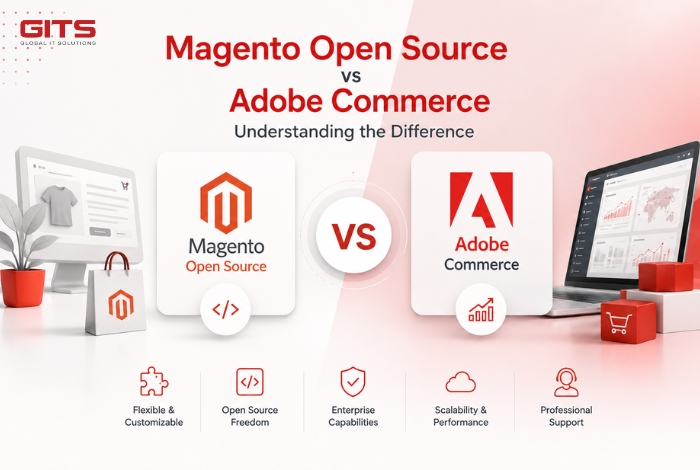
Magento Open Source vs Adobe Commerce: Understanding the Difference
One of the biggest mistakes businesses make is treating Magento as a single product.
Magento actually has two main versions:
Magento Open Source
Magento Open Source provides strong customization and flexibility.
It is suitable for businesses that need:
• Custom workflows
• API integrations
• Scalable product catalogs
• Lower licensing costs
However, it requires a stronger development team for enterprise-level expansion.
Adobe Commerce
Adobe Commerce is built for large enterprises.
It includes:
• Advanced B2B modules
• Customer segmentation
• Business intelligence tools
• Personalization engines
• Enterprise support
For enterprises managing multi-region operations, Adobe Commerce often becomes the stronger long-term choice.
Why Magento Remains Strong for Enterprise Ecommerce
Magento continues to lead because enterprise businesses need flexibility, not restrictions.
Full ownership of your ecommerce infrastructure
Unlike closed SaaS ecosystems, Magento gives full backend ownership.
This allows:
• Custom deployment strategies
• Private cloud hosting
• Custom security frameworks
• Scalable DevOps workflows
This is highly valuable for enterprise compliance requirements.
Advanced catalog and pricing management
Magento handles complex product ecosystems extremely well.
This includes:
• Millions of SKUs
• Customer-specific pricing
• Region-based pricing
• Contract-based B2B pricing
This is essential for manufacturers and wholesale distributors.
Strong integration capabilities
Magento integrates deeply with:
• ERP
• WMS
• OMS
• CRM
• AI engines
For enterprise operations, this connected infrastructure improves efficiency significantly.

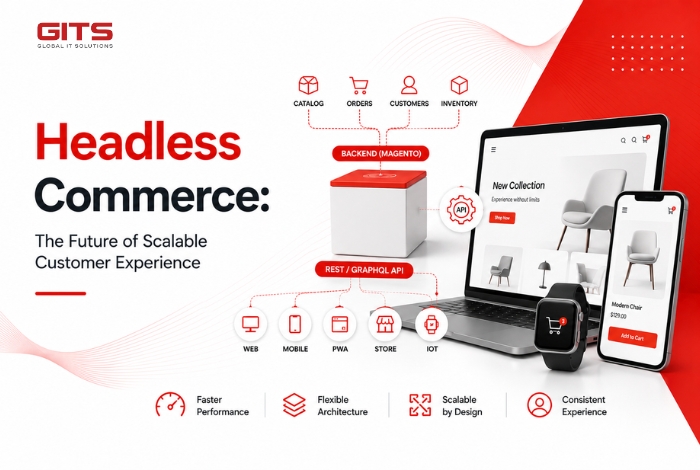
Magento Headless Commerce: The Future of Scalable Customer Experience
One of Magento’s biggest advantages in 2026 is its support for headless commerce.
Magento headless commerce allows businesses to separate frontend and backend systems.
Benefits include:
• Faster website performance
• Mobile-first experiences
• Easier omnichannel deployment
• Flexible frontend frameworks like React and Vue
• Faster experimentation
For Korean and Japanese brands focused on premium digital experiences, this model is becoming increasingly important.
Headless architecture also supports AI-driven personalization at a deeper level.
Why Magento Works Well with AI Agents and Automation
Modern ecommerce is moving toward intelligent automation.
Magento’s open architecture makes it highly compatible with AI Agents.
Instead of being easier to integrate, Magento provides greater architectural freedom for AI systems.
This enables businesses to build:
• AI customer support agents
• Predictive inventory systems
• Abandoned cart recovery automation
• Smart recommendation engines
• Fraud detection systems
• Logistics optimization agents
For companies pursuing AX (AI Transformation), Magento can become a central operational intelligence platform.
This is especially valuable in enterprise logistics and manufacturing.

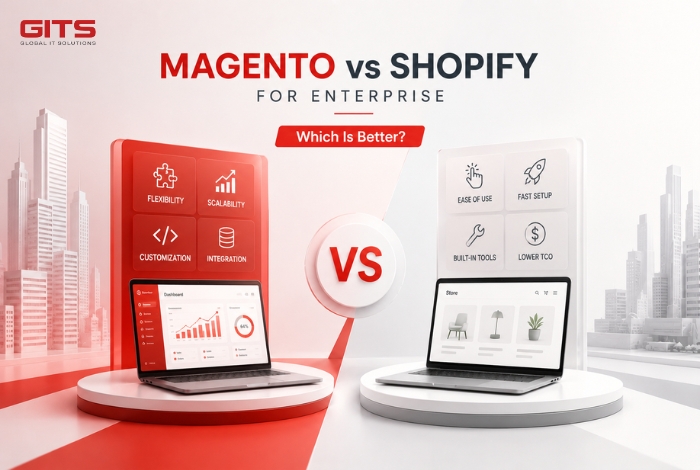
Magento vs Shopify for Enterprise: Which Is Better?
Shopify is excellent for speed and simplicity.
But enterprise needs often go beyond simplicity.
Magento wins when businesses need:
• Complex B2B workflows
• Custom pricing logic
• Multi-region infrastructure
• Deep ERP integrations
• Advanced AI integrations
• Full infrastructure control
Shopify wins when businesses need:
• Fast launch
• Minimal maintenance
• Lower technical overhead
• Easier onboarding
For enterprise-scale complexity, Magento usually offers stronger long-term value.
The Real Cost of Magento Development
Magento is powerful, but it comes with higher total cost of ownership.
Businesses should understand:
Development cost
Magento development often requires specialized engineers.
This increases initial setup investment.
Maintenance cost
Magento requires:
• Regular security patches
• Extension updates
• Performance optimization
• Server maintenance
Infrastructure cost
Enterprise Magento usually needs optimized hosting environments for speed and stability.
This can increase operational cost.
However, for companies needing long-term scalability, the ROI often justifies the investment.
Why Global Enterprises Choose Magento Outsourcing in Vietnam
For Japanese and Korean companies, Magento engineering resources are expensive and highly competitive.
This is why many companies choose IT outsourcing in Vietnam.
Vietnam offers:
• Strong Magento developer talent
• Competitive costs
• High adaptability
• Growing AI expertise
• Strong B2B software delivery capabilities
Combining Magento development with AI consulting creates strong value for enterprise transformation.
This hybrid outsourcing model is becoming more popular globally.
When Magento Is NOT the Right Choice
Magento is not the best fit for every business.
It may not be ideal if:
• You need ultra-fast launch with low budget
• You lack technical resources
• Your product catalog is small
• Your workflows are simple
For startups or lightweight ecommerce operations, simpler SaaS platforms may be more efficient.
Choosing Magento should be based on operational complexity, not trend.
Is Magento Still Worth It in 2026?
Yes, especially for enterprise businesses.
Magento remains highly relevant because the market is shifting toward:
• AI-driven commerce
• Operational automation
• Personalized customer journeys
• Global omnichannel expansion
• Data-centric decision-making
These require flexible infrastructure.
Magento continues to provide that foundation.
For businesses in Japan, Korea, Vietnam, and global markets, Magento remains one of the strongest enterprise ecommerce platforms available.
>>> See More: AI Agents vs Traditional Automation: 7 Critical Differences
Frequently Asked Questions About Magento
Is Magento good for B2B ecommerce?
Yes. Magento is one of the strongest platforms for B2B due to its pricing flexibility, catalog scalability, and workflow customization.
Is Magento better than Shopify for enterprise?
For complex enterprise operations, Magento usually provides better flexibility and integration depth.
How much does Magento development cost?
Costs vary depending on customization, integrations, and infrastructure. Enterprise builds often require higher initial investment but deliver long-term ROI.
Can Magento integrate with AI Agents?
Yes. Magento’s open APIs and modular architecture make it highly suitable for AI-powered automation and enterprise intelligence systems.
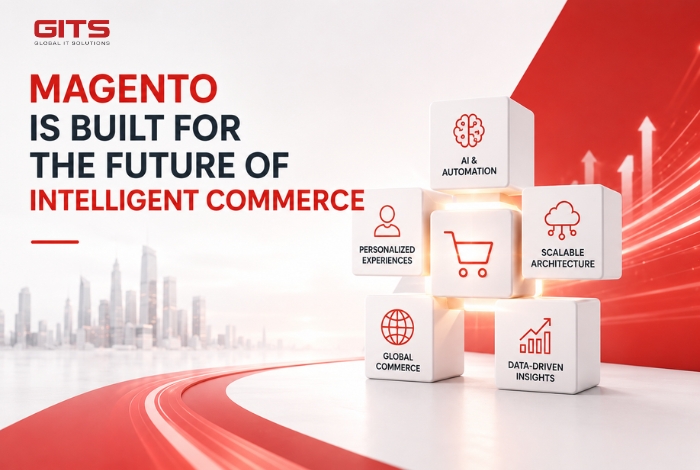
Magento Is Built for the Future of Intelligent Commerce
Enterprise ecommerce is becoming more complex, not simpler.
Businesses now need infrastructure that supports AI, automation, global scalability, and operational flexibility.
Magento remains powerful because it was designed for complexity.
While it requires more investment than SaaS alternatives, it delivers far greater long-term adaptability.
For enterprises planning digital transformation, AI adoption, or global expansion, Magento is not an old platform.
It is strategic infrastructure for the next generation of intelligent commerce.