






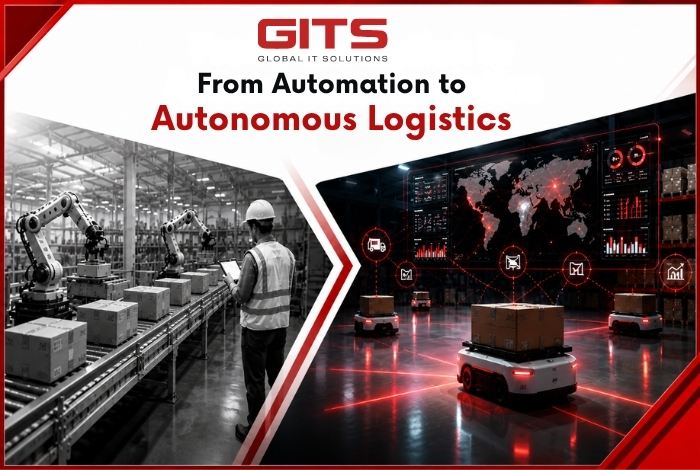
AI Agents in Logistics are rapidly becoming a core driver of digital transformation across supply chains. As logistics operations grow more complex, traditional automation systems are no longer sufficient to meet real-time demands.
Rising labor costs, unpredictable demand, and increasing operational pressure are forcing enterprises to rethink how logistics systems operate. While automation has improved efficiency in the past, it remains limited by its rule-based nature.
AI Logistics introduce a new paradigm by enabling systems to analyze data, make decisions, and continuously improve performance. This shift marks the transition from automation to autonomous logistics systems.
What Are AI Agents in Logistics
AI Agents in Logistics are intelligent systems designed to operate independently by processing real-time data and making decisions without constant human intervention. Unlike traditional systems, they are not restricted by predefined rules and can adapt dynamically to changing conditions.
These systems evaluate multiple operational factors such as inventory levels, order demand, and transportation constraints simultaneously. By doing so, they can optimize processes across the entire supply chain.
As a result, AI Agents in Logistics enable organizations to move from reactive operations to predictive and eventually autonomous logistics environments.
Why Automation Alone Is No Longer Enough
Traditional automation systems were built for stable environments where processes rarely changed. However, modern logistics operates in a highly dynamic environment where conditions shift continuously.
Automation systems struggle to respond to unexpected disruptions because they rely on fixed workflows. This leads to inefficiencies, delays, and increased operational costs.
AI Agents in Logistics address this limitation by introducing adaptability and intelligence. Instead of following static rules, they adjust operations in real time based on current data, ensuring optimal performance even in uncertain conditions.
How AI Agents in Logistics Transform Operations
AI Agents in Logistics fundamentally change how decisions are made within supply chains. By processing real-time data from multiple sources, they enable faster and more accurate decision-making.
One of the key advantages is predictive optimization. These systems can anticipate demand fluctuations and potential bottlenecks, allowing businesses to take proactive action before issues arise.
In addition, AI Agents improve coordination across logistics functions. They connect warehouse management, procurement, and transportation systems into a unified ecosystem where decisions are aligned and optimized across the entire operation.
GITS Logistics Ecosystem: Enabling AI-Driven Operations
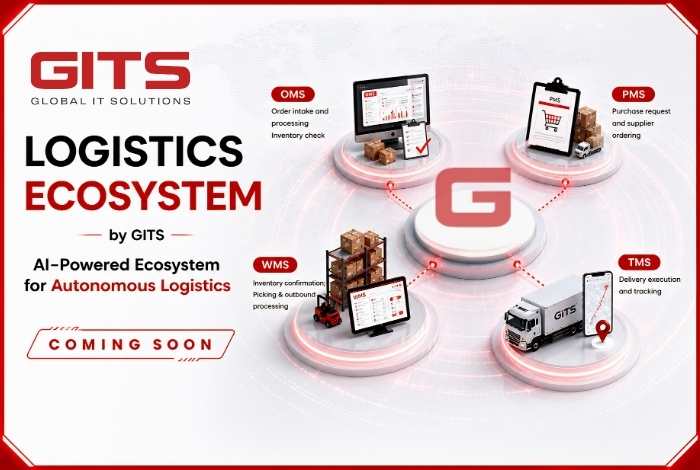
The GITS Logistics Ecosystem is designed to support enterprises in adopting AI Agents in Logistics through a modular and scalable architecture. This ecosystem integrates core logistics functions into a single platform that enables intelligent operations.
– The Order Management System handles order intake and processing while validating inventory in real time. This ensures accuracy and reduces delays at the initial stage of operations.
– The Purchase Management System manages procurement workflows and supplier coordination. It helps organizations maintain stable supply levels and optimize purchasing efficiency.
– The Warehouse Management System focuses on inventory accuracy and operational efficiency within warehouses. It improves picking processes and outbound handling.
– The Transportation Management System manages delivery execution and provides real-time tracking capabilities. This enhances visibility and ensures efficient transportation planning.
Together, these modules form a comprehensive logistics ecosystem powered by AI Agents.
>> See More: AI Agent Enabling Intelligent Operations Across Industries
Implementation Strategy for AI Logistics
Adopting AI Agents in Logistics requires a structured approach that aligns technology with business objectives. The process begins with ensuring data readiness, as accurate and accessible data is essential for AI performance.
Organizations must then integrate their existing systems to create a unified data environment. This allows AI Agents to access information across different functions and make informed decisions.
A pilot phase is recommended to test AI capabilities in specific use cases such as demand forecasting or warehouse optimization. Once proven effective, these capabilities can be scaled across the entire logistics ecosystem.
Business Impact of AI Agents in Logistics
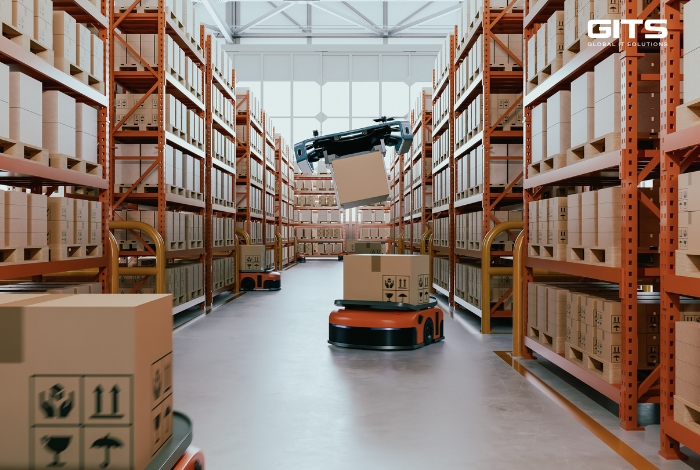
Enterprises implementing AI Agents in Logistics are seeing measurable improvements in operational performance. Warehouse efficiency increases as processes become more optimized and less dependent on manual intervention.
Operational costs are reduced through better resource allocation and more accurate decision-making. At the same time, organizations gain the ability to respond quickly to changes, improving overall competitiveness.
The most significant impact, however, is the transition toward autonomous operations, where systems can manage themselves with minimal human involvement.
Real-World Applications of AI Agents in Logistics
AI Agents in Logistics are already being applied across various operational areas. In warehouse management, they optimize storage allocation and picking routes to improve efficiency.
In inventory management, they provide accurate demand forecasting, helping businesses avoid both shortages and excess stock. In transportation, they optimize delivery routes and adjust plans in real time based on changing conditions.
These applications demonstrate how AI Agents can enhance every stage of logistics operations.

Why Businesses Must Adopt AI Agents Now
The logistics industry is evolving rapidly, and organizations that delay adopting AI risk losing their competitive advantage. Increasing operational costs and rising customer expectations are making traditional systems less effective.
AI Agents in Logistics provide the agility and intelligence needed to navigate these challenges. Businesses that adopt early can achieve significant improvements in efficiency, cost management, and scalability.
The key question is no longer whether to adopt AI, but how quickly it can be implemented.
The Future of Logistics: Autonomous Systems
The future of logistics lies in fully autonomous systems powered by AI Agents. These systems will not only execute tasks but also make decisions, optimize processes, and continuously improve performance.
AI Agents in Logistics will play a central role in building intelligent supply chains that are capable of adapting to change and scaling efficiently. This transformation represents a fundamental shift in how logistics operations are designed and managed.
AI Logistics are redefining the future of supply chain operations. By enabling real-time decision-making and continuous optimization, they allow businesses to move beyond automation and achieve true autonomy.
Enterprises that embrace this transformation early will gain a significant advantage in efficiency, cost control, and long-term growth. As the logistics landscape continues to evolve, AI-driven systems will become the new standard for operational excellence.