






As global healthcare systems accelerate digital transformation, hospital inventory management has become one of the most critical operational challenges for modern healthcare organizations. From pharmaceuticals and medical supplies to specialized equipment, hospitals require real-time inventory visibility to maintain treatment quality while optimizing operational costs.
However, many healthcare providers still rely on manual inventory workflows or disconnected systems, leading to supply shortages, overstocking, expired products, and limited operational visibility.
This is why AI hospital inventory management is rapidly becoming a strategic priority for smart hospitals across Japan, South Korea, Vietnam, and global healthcare markets.
By leveraging AI Agents, machine learning, and predictive analytics, healthcare organizations can automate inventory operations, forecast medical supply demand, optimize procurement, and improve healthcare supply chain management in real time.
Beyond operational efficiency, AI-powered hospital inventory systems also help healthcare providers build scalable and sustainable smart healthcare ecosystems for long-term growth.
Why Hospital Inventory Management Is Becoming a Global Challenge
Hospital inventory systems are highly complex environments that manage thousands of medical products daily, including medicines, consumables, surgical tools, diagnostic equipment, and emergency supplies.
In large healthcare organizations, even minor inventory inaccuracies can directly impact patient care and create significant financial losses.
Common inventory management challenges include:
• Medical supply shortages during peak treatment periods
• Excess inventory increasing operational costs
• Expired pharmaceuticals and medical products
• Disconnected inventory data across departments
• Limited forecasting capabilities in healthcare logistics
According to multiple healthcare operations reports, hospitals worldwide lose millions of dollars annually due to inefficient inventory management and supply chain inefficiencies.
At the same time, aging populations in countries such as Japan and South Korea are significantly increasing healthcare demand, making AI healthcare supply chain optimization a major investment priority for healthcare enterprises.

How AI Agents Work in Hospital Inventory Management
AI Agents function as intelligent operational assistants capable of analyzing data, detecting patterns, and making real-time decisions across healthcare inventory systems.
These AI-powered platforms can integrate directly with ERP, HIS, WMS, RFID, and IoT systems to continuously monitor hospital inventory data.
Using machine learning and predictive analytics, AI can identify usage trends, detect abnormal inventory fluctuations, and optimize healthcare logistics operations automatically.
More Accurate Medical Supply Forecasting
One of the most valuable advantages of AI inventory management is predictive demand forecasting.
AI systems analyze historical healthcare data, patient trends, and seasonal demand patterns to predict future medical supply requirements with greater accuracy.
For example, during flu seasons or ICU patient surges, AI can automatically recommend increasing stock levels for masks, medications, vaccines, or respiratory equipment before shortages occur.
This helps hospitals maintain operational stability while minimizing treatment disruptions.
Real-Time Inventory Visibility
When combined with RFID and IoT technologies, AI enables hospitals to track inventory location, quantity, and expiration dates in real time.
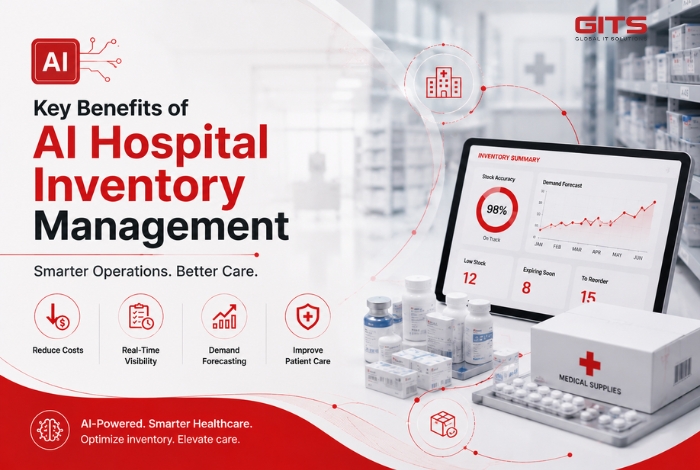
Centralized dashboards provide healthcare administrators with continuous operational visibility, helping teams make faster and more accurate decisions.
Automated Procurement Optimization
AI can analyze inventory turnover, supplier lead times, and healthcare demand fluctuations to recommend optimal purchasing schedules automatically.
As a result, hospitals can reduce overstocking while ensuring critical supplies remain available for patient care.

Key Benefits of AI Hospital Inventory Management
Reduced Healthcare Operational Costs
Inventory costs remain one of the largest financial pressures for healthcare organizations. AI-powered hospital inventory systems help reduce excess stock, minimize waste, and improve procurement efficiency.
Many healthcare organizations report inventory cost reductions of 20–30% after implementing AI-driven inventory optimization solutions.
Improved Patient Care Quality
When hospitals maintain stable access to essential medical supplies, healthcare professionals can focus more on patient treatment instead of resolving operational supply issues.
This is particularly important for ICUs, emergency departments, and surgical centers where supply availability directly affects treatment outcomes.
Better Data Visibility and Operational Control
AI centralizes inventory data across departments and provides healthcare leaders with real-time operational insights.
Hospital administrators can monitor inventory status, supply risks, and operational performance through a single integrated dashboard.
Stronger Smart Hospital Infrastructure
AI inventory management is becoming a core component of smart hospital strategies worldwide.
When integrated with robotics, cloud computing, and predictive healthcare analytics, AI supports the development of a fully connected healthcare automation ecosystem.
AI Hospital Inventory Case Studies in Japan and South Korea
Japan and South Korea are among the leading healthcare markets adopting AI-powered healthcare logistics solutions.
In Japan, hospitals are implementing AI hospital inventory systems to address workforce shortages and optimize healthcare supply chain operations in response to rapid population aging.
Several healthcare groups now use AI to monitor vaccine inventory in real time and forecast ICU supply demand based on patient treatment analytics.
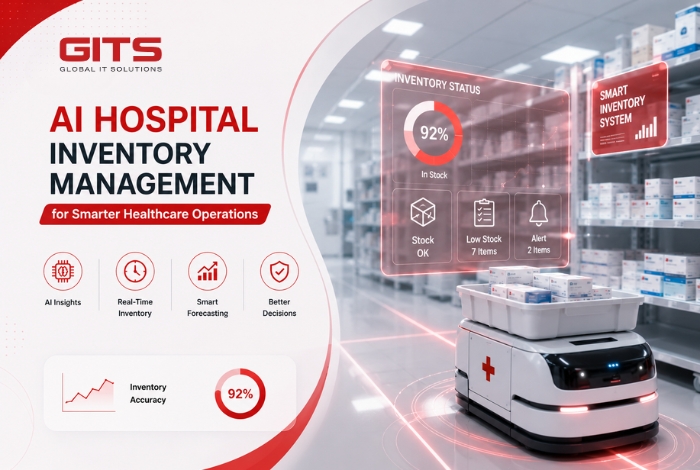
Meanwhile, South Korea is rapidly advancing smart healthcare ecosystems by integrating AI with autonomous hospital delivery robots and centralized healthcare analytics platforms.
These innovations improve emergency response capabilities while enhancing large-scale healthcare operations efficiency.

Future Trends in AI Hospital Inventory Management
Over the next decade, AI will evolve beyond inventory management and become the operational intelligence layer of smart hospitals.
Next-generation AI healthcare systems will be able to:
• Predict global pharmaceutical supply risks
• Forecast healthcare demand in real time
• Optimize multi-location hospital logistics
• Connect directly with autonomous robots and smart warehouses
• Support healthcare decision-making using predictive analytics
This transformation is shaping a new era of healthcare automation and digital healthcare operations worldwide.

What Healthcare Organizations Should Prepare Before Implementing AI
To successfully deploy AI hospital inventory management systems, healthcare organizations must first standardize operational and inventory data.
AI platforms should also integrate seamlessly with ERP, HIS, and WMS systems to ensure full data synchronization across healthcare operations.
Beyond technology infrastructure, healthcare providers must prioritize cybersecurity, compliance, and long-term scalability — especially in highly regulated markets such as Japan, South Korea, and global healthcare sectors.
Key factors healthcare organizations should prioritize:
• Flexible and scalable AI infrastructure
• Integration with ERP, HIS, and healthcare analytics systems
• Real-time inventory monitoring dashboards
• Automation and predictive analytics capabilities
• International data security and compliance standards
Healthcare enterprises evaluating AI inventory management solutions should prioritize platforms capable of supporting long-term healthcare digital transformation strategies.
>>> See More: AI-Powered Patient Workflow Optimization
FAQ About AI Hospital Inventory Management
Can AI hospital inventory management reduce operational costs?
Yes. AI helps healthcare organizations optimize stock levels, reduce supply waste, minimize expired products, and improve procurement efficiency, significantly lowering operational costs.
What types of hospitals can benefit from AI inventory management?
AI inventory management solutions are ideal for general hospitals, hospital chains, large medical centers, and healthcare enterprises managing complex healthcare logistics operations.
Can AI integrate with existing ERP and HIS systems?
Most modern AI healthcare platforms are designed to integrate seamlessly with ERP, HIS, WMS, and existing hospital management systems.
AI Hospital Inventory Management Is Shaping the Future of Smart Healthcare
AI hospital inventory management is no longer an experimental technology trend. It is becoming a strategic operational foundation for modern healthcare organizations worldwide.
By implementing AI Agents, hospitals can optimize healthcare operations, improve supply chain visibility, reduce operational costs, and enhance patient care quality in a more sustainable way.
As smart hospitals and healthcare automation continue to expand globally, AI-powered hospital inventory management will play a critical role in the digital transformation strategies of healthcare organizations across Japan, South Korea, Vietnam, and international markets.