






Retail today is no longer just about selling products. It is about delivering speed, precision, and seamless customer experiences across every channel. Whether customers buy online, in-store, through marketplaces, or across borders, they expect fast and accurate fulfillment every time.
Behind this growing demand lies one major challenge: fragmented operations.
Many retailers across Japan, South Korea, Vietnam, and global markets still manage orders through disconnected systems. Inventory sits in one platform, warehouses operate in another, and logistics teams rely on separate tools. This creates delays, inventory mismatches, rising shipping costs, and failed delivery promises.
As omnichannel commerce becomes the standard, these disconnected workflows are becoming a serious barrier to growth.
This is where Unified OMS becomes essential.
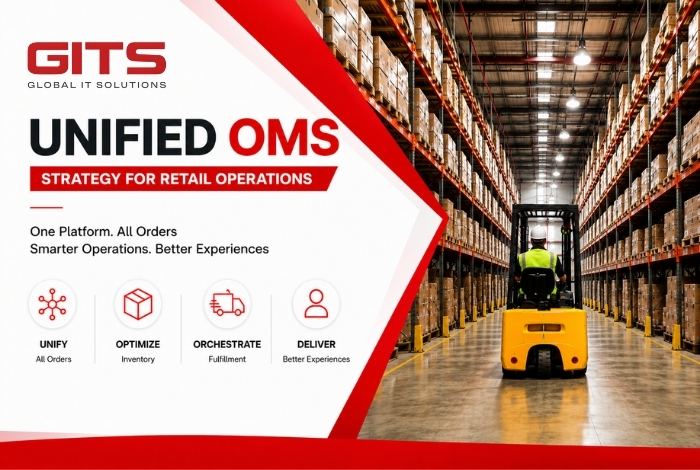
A Unified OMS centralizes order orchestration, inventory visibility, and fulfillment decision-making into one intelligent ecosystem. More importantly, it builds the operational foundation for AI logistics, automation, and future AI transformation.
According to Gartner, supply chain visibility and intelligent orchestration remain top priorities for enterprise retail transformation through 2026.
Why Traditional Order Management Is Failing Modern Retail
Retail operations have become far more complex over the past few years. Businesses now manage multiple channels at the same time, from ecommerce and physical stores to mobile apps, marketplaces, and B2B sales. However, many backend systems have not evolved at the same speed.
This gap creates major operational pain points.
The first challenge is inventory visibility. Without unified stock synchronization, retailers often oversell products or fail to allocate available stock efficiently. This directly impacts customer trust and increases cancellation rates.
The second issue is slow fulfillment decision-making. Many businesses still rely on static rules or manual processes to determine where orders should ship from. This slows down operations and reduces flexibility.
The third challenge is logistics cost. When order data is fragmented, businesses often choose inefficient fulfillment paths, leading to unnecessary split shipments, higher transportation costs, and delayed deliveries.
Another major issue is exception handling. Every retail business faces order exceptions such as stock shortages, carrier delays, failed deliveries, or SLA violations. Without a Unified OMS, these issues are often handled too late.
For businesses expanding into Asia-Pacific markets, these operational gaps become even more critical. Customer expectations in Japan and Korea are among the highest in the world, making speed and accuracy non-negotiable.
What Is a Unified OMS in Retail Operations?
A Unified OMS is an intelligent order orchestration platform that centralizes every order-related activity into one system. It connects order capture, inventory synchronization, fulfillment routing, delivery tracking, returns management, and customer communication.
Instead of operating in silos, businesses can manage the full order lifecycle through one connected platform. This creates better visibility, faster decision-making, and stronger operational control.
However, it is important to understand that Unified OMS does not replace warehouse or transportation systems.
A WMS focuses on warehouse execution such as picking, packing, and stock movement. A TMS handles transportation planning, carrier management, and shipment tracking. Unified OMS acts as the intelligence layer that coordinates both.
This orchestration model is widely used by enterprise platforms such as SAP, Oracle, and Manhattan Associates.
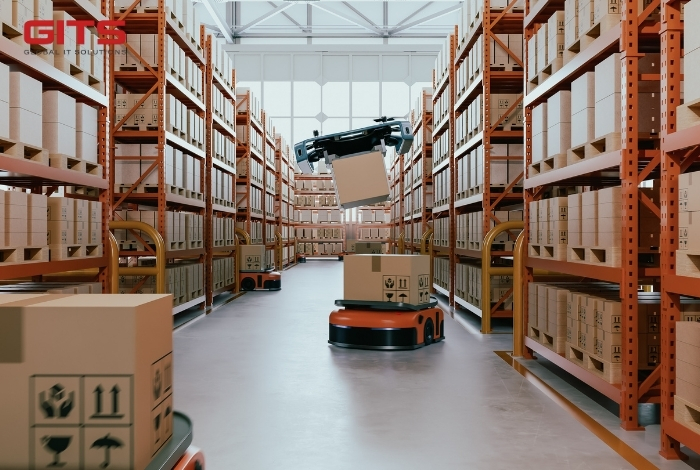
Unified OMS and Distributed Order Management in Modern Retail
Modern retail operations are increasingly moving toward Distributed Order Management, also known as DOM. This is the next evolution of Unified OMS.
DOM allows retailers to dynamically decide where an order should be fulfilled based on live operational conditions. Instead of using fixed fulfillment logic, businesses can route orders more intelligently.
For example, a retailer may choose to fulfill an order from Busan instead of Tokyo if inventory levels, delivery speed, and shipping cost create a better outcome.
This decision can be based on several factors:
• Inventory availability
• Warehouse proximity
• Carrier performance
• Shipping cost
• Delivery SLA
• Regional fulfillment capacity
This is especially valuable for enterprise retailers managing multiple warehouses across regions.
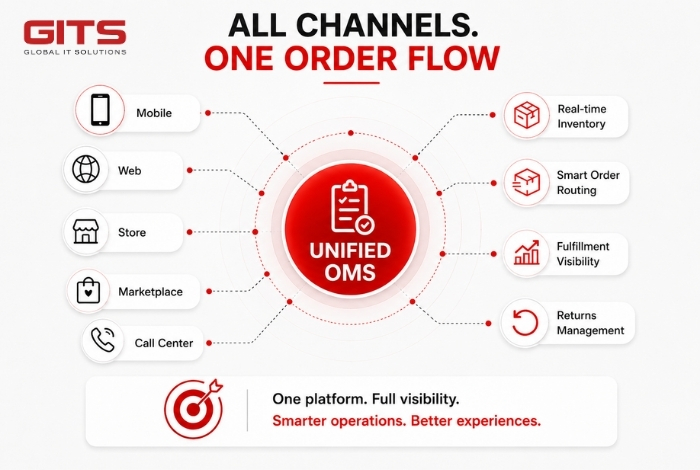
How Unified OMS Powers AI Logistics and AI Agents
AI logistics depends on connected, real-time operational data. Without centralized order intelligence, AI systems have limited visibility and cannot make effective decisions.
This is where Unified OMS creates its biggest strategic value.
Unified OMS acts as the data layer for AI Agents. These agents can automate critical retail workflows such as order rerouting, stock rebalancing, delay detection, customer notifications, and demand forecasting.
For example, if one warehouse is out of stock, an AI Agent can automatically reroute the order to another node without manual intervention. If a carrier delay is detected, the system can trigger an alternative shipping route before the SLA is impacted.
This transforms logistics from reactive execution into predictive operations.
Companies like Amazon and Shopify have already made AI-driven fulfillment orchestration a core part of their retail strategy.

Unified OMS as the Foundation of AI Transformation
Many companies invest in AI too early. They implement AI tools without first fixing fragmented operational systems. This often leads to isolated automation with limited business impact.
Unified OMS solves this problem by creating structured, connected, and real-time operational data.
This supports broader AI transformation strategies, often referred to as AX. Instead of using AI as a standalone tool, businesses can embed AI directly into order operations, fulfillment workflows, and logistics decisions.
For retailers in Japan and Korea, where enterprise AI adoption is accelerating, Unified OMS is one of the fastest ways to build a scalable AI foundation.
How to Implement Unified OMS in Retail
Successful Unified OMS implementation requires more than technology deployment. It requires operational redesign.
The first step is centralizing inventory visibility across warehouses, stores, and supplier networks. This creates one source of truth for stock management.
The second step is integrating OMS with WMS and TMS. This ensures full operational coordination from order creation to final delivery.
The third step is building automated exception workflows. Businesses should prepare for inventory shortages, delayed shipments, and failed deliveries with predefined response logic.
The fourth step is deploying AI Agents into repetitive, high-frequency workflows. This creates faster ROI and reduces operational pressure on human teams.
The final step is scaling through IT outsourcing. Many Japanese and Korean enterprises are now partnering with technology teams in Vietnam to accelerate OMS deployment, reduce development costs, and improve system flexibility.
Vietnam is quickly becoming a strategic hub for retail digital transformation.
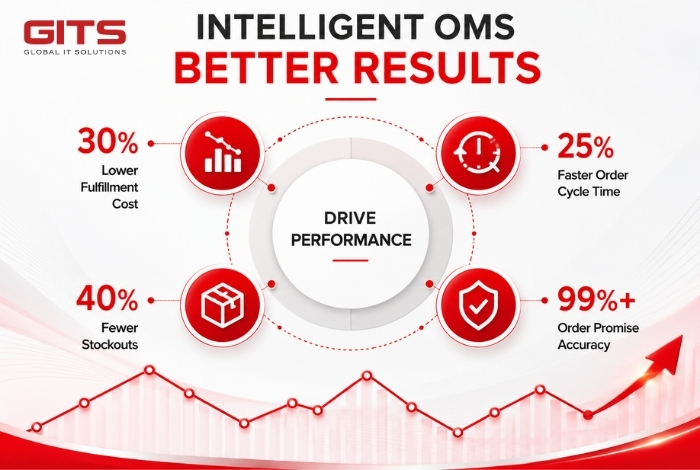
Business Impact of Unified OMS Adoption
Retailers adopting Unified OMS often see measurable business improvements. Order processing becomes faster, inventory accuracy improves, and logistics costs decrease due to smarter routing.
Many businesses also achieve stronger SLA performance, fewer fulfillment errors, and higher customer retention.
According to McKinsey & Company, companies with strong supply chain visibility and digital orchestration can significantly improve resilience and reduce operational costs.
Unified OMS is not simply a system for managing orders. It is a strategic layer for improving operational performance.
>>> See More: AI in logistics optimize supply chain operations
Why Unified OMS Will Define Retail Success in 2026 and Beyond
Retail is entering an AI-first operating era. Customer expectations continue to rise, while delivery windows are shrinking. At the same time, cross-border commerce is accelerating and operational costs are increasing.
To stay competitive, businesses need intelligent orchestration, automated exception handling, and flexible fulfillment models.
Unified OMS sits at the center of these capabilities. It connects inventory, logistics, and customer operations into one synchronized system.
For enterprise retailers, this is becoming the digital command center of modern commerce.
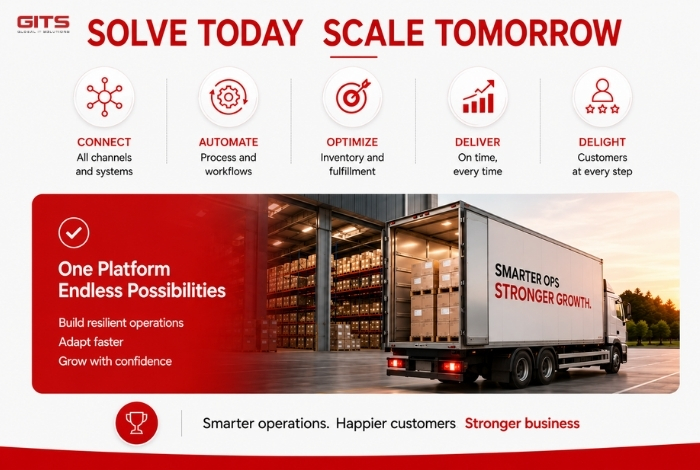
Unified OMS Is the Operational Core of Future Retail
Retail transformation does not begin with AI. It begins with operational unification.
A strong Unified OMS strategy helps businesses eliminate fragmented workflows, improve fulfillment efficiency, reduce logistics costs, and build the infrastructure required for AI Agents and AI logistics.
For retailers in Japan, Korea, Vietnam, and global markets, Unified OMS is no longer just a technology upgrade. It is the operational core of scalable growth, AI transformation, and long-term resilience.
In the next era of retail, the winners will not be the companies with the most sales channels. They will be the companies with the most connected operations.